News|Videos|March 27, 2026

Takeaways from Vision Expo's debut singular event in 2026

Eye care providers took on dry eye, pediatric eye care, contact lens wear, and more.

Vision Expo rang in its 40th anniversary in its debut as a single event earlier this month, allowing industry leaders to join forces with practitioners. Having run from March 11-14 in Orlando, Florida, the conference featured the latest in clinical practice, fashion, and technology. In case you missed it, here are the CE highlights from the conference, starting with Sheila Morrison, OD, MS, on pediatric eye care.
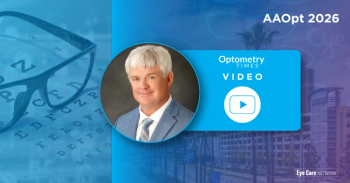
“In our course today for the Vision Expo, Dr. Shalu Pal and I discussed some of the behavioral modifications that can be useful to recommend to parents and families when dealing with screens,” Morrison said. “So, definitely breaks from screens is always recommended. We know, though, that there are going to be things that kids are expected to do on their devices, and we do see in the literature that when it comes to myopia, there's really no difference in the risk looking at a screen with a light versus a book that you're flipping the pages that was near tasks. They both have a role. And one of the things that is very easy to educate families on is arms distance away, minimum. Also when we're having certain activities done on screens and devices whenever possible, if you could shift that out to a larger screen, maybe put it on a monitor that's further away. Those are things that are very easy in many cases, to do for families, that can kind of reduce the number of hours spent on devices that are very close.

“Now, when it comes to dry eye and ocular comfort, we talked a little in our lecture about how there is a difference between, say, a book that you flip the pages versus a screen with the backlit lighting, there is a difference in our blink rate and how we feel after we use a device that's on a screen versus a book, and it is something to be mindful of.

“The thing that stands out the most for me when it comes to looking at treating pediatric patients, we need more research,” Morrison concluded. “We need more attention to it is preventative care, and that is in all facets of what we do, myopia, dry eye, anything that we're doing for kids, really could have more of a focus on prevention than reaction.”

The Eye Care Netowkr also spoke with Mark Schaeffer, OD, FAAO, and Andrew Bruce, LDO, ABOM, NCLEM, FCLSA, on recent Contact Lens Institute (CLI) data.

“If you look at original research, we can see that patients, 6 out of 10 of them, have, like no opinion on whether or not lenses are different,” Schaeffer said. “So I don't think they understand everything that goes into the contact lenses themselves, why we as providers choose the lens that we prescribe, why we're picking that lens, and the selection process that goes into it, along with the features and benefits that go along with that. So when they go into their optometry office, they just think I'm getting a lens, and so they don't understand everything that we're doing to choose that lens and how that impacts their everyday life. Whether they're waking up at 5 am to wear the lens all day long, or if they need that crisp nighttime vision or want to be able to see far away and up close, they need to understand why we're choosing what we're choosing, and how we choose that lens they're looking for education. And I think the important thing is patients want to know everything that they can. And in our time in a primary care setting, we have a lot of things we have to discuss with their eye care, their general eye health, their prescription the lens we're selecting, are they at risk for things like glaucoma, diabetes, macular degeneration, so a lot of it gets lost, and so that's where it really benefits us to have partners like opticians that can help educate and continue that message. So consumers and patients are really looking for as much education from as many different places as possible, whether that's in the chair in the dispensary as they dispense their lenses, as they're training to take in and out their lenses. They're looking for every way to get as much education as possible. And we need to have partners that allow for us to do that in the office.

“It depends on the practice. It really does,” Bruce said. I think we need to increase the awareness of doctors that opticians can be extremely valuable to the doctor and save them a lot of time, because doctors are primarily focused on taking care of the exam and performing the exam, whereas opticians generally have more time with the patient to spend on educating and just discussing other opportunities for contact lenses. As far as doesn't have to be one or the other, it doesn't have to be glasses or contacts, talking about the option of dual wear, you know, letting patients know that, ‘Hey, have you ever thought about contact lenses? Have you ever considered contact lenses?’ ‘Well, I hate wearing my glasses to go-to the gym.’ ‘Okay, contact lenses are an ideal option for that, an ideal alternative. It's good to have both.’”

Jay Henry, OD, MS, spoke on how utilizing artificial intelligence (AI) can prevent eye care provider burnout.

“Burnout and optometry is obviously very well-documented, but think there's a lot of different ways to look at that,” Henry said. “I think all of us providers, we went into optometry for a reason, right? We wanted to diagnose disease. We wanted to solve complex problems. We wanted to engage meaningfully with our patients. We really want to build those relationships with patients and their families. But so often, in so many environments, our day-to-day gets time constraints, right? We have all these things that are demanding other than patient care – whether it's administrative tasks, whether it's repetitive things that need done, or staffing issues – and that sucks us away from the part of optometry we love. That's, I think, where a lot of the burnout starts to happen. You know, in my own career, there's days that definitely volume starts to dictate what I do, and I just feel like, you know, I'm going through the motions, I'm checking off the boxes, but I'm not giving that meaningful care that I really want to do, and that's where the script I think we need to talk about workflows, improved efficiencies.

“Now, new technology, AI, that's where we're really headed. AI can bring us back some of that stuff. So, you know, if we let AI technology work in the background for us, it can do some of those repetitive tasks for us. It can give us some time back. It can let us do things like, it can be a scribe for us in the exam room so I can maintain eye contact with the patient instead of staring at a computer all day. It can look at an image and do an analysis for me and suggest like, hey, maybe this or that finding would be something that you should consider. It can do billing for our staff. It can do patient engagement for us. So it gives us time back as providers, and really it lets us get back to what we want to do is take care of our patients, and not sit and stare at a computer screen all day. So I think you know, the part of burnout is, yes, it's not just about optometry burnout, but it's all these other tasks that get into our day, and now we gain some time back, and AI and technologies in general give us that time to let us enjoy what we really want to do, take care of our patients.”


Latest CME