






Cornea
Latest News
Advertisement
Latest Videos






Shorts

1:29
Alexandra Allen, OD, on her takeaways from this year's FitAcademy
11 days ago
by
Alexandra Allen, OD
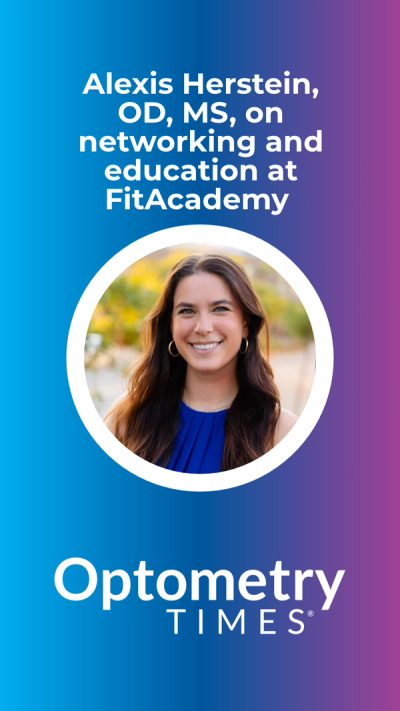
0:46
Alexis Herstein, OD, MS, on networking and education at FitAcademy
12 days ago
by
Alexis Herstein, OD, MS

0:49
Preventing edema formation during scleral lens fitting
2 months ago
by
Obinwanne Chukwuemeka Jr., OD, MOptom, DipAAO, FAAO, FLVPEI, FSLS
1:14
Day 2 recap: Myopia, glaucoma, and keratoconus
2 months ago
by
Hamza Shah, OD, MS, FAAO

1:00
Defining success after corneal surgery for Keratoconus
2 months ago
by
Clark Y. Chang, OD, MSA, MSc, FAAO

1:05
Day 1 recap: Keratoconus, herpes, and more
2 months ago
by
Hamza Shah, OD, MS, FAAO

0:32
Following the patient's lead on wavefront-guided scleral lenses
10 months ago
by
Jordana Joy, Editor

0:53
Seeking the best lens fit for patients with HOAs
10 months ago
by
Jordana Joy, Editor

0:37
Why fighting off NEI consolidation matters
a year ago
by
Jordana Joy, Editor
0:23
Managing neuropathic corneal pain
a year ago
by
Jordana Joy, Editor
Podcasts

CME Content



Advertisement
More News
Zachary Keaney, CPOA, discusses the lens care steps patients skip most often and why early diagnosis of lens-related keratitis is critical.

A pair of cases from Academy 2026 show scleral lens refits for severe keratoconus, one addressing focal corneal edema and one fitting around glaucoma tube shunts.

Startup S5G Therapeutics aims to move ubiquinol technology from the laboratory toward treatments for dry eye, Fuchs dystrophy, and other corneal conditions.

Neel S. Vaidya, MD, MPH, MBA, on why keratoconus can progress aggressively in children and teens—and how early topographic screening and prompt crosslinking protect long-term vision.

Findings highlight the need for routine bilateral endothelial assessment in herpetic eye disease.

PROSE treatment and Mackie stage improvement in neurotrophic keratitis: retrospective study design and primary results.

The trial will enroll approximately 111 patients across the US and Europe following positive FDA feedback from a Type D meeting

A new pilot trial tests ZOC2017217 lanosterol-derived cataract eye drops, aiming to slow lens clouding and guide Phase 3 development amid mixed human evidence.

The meeting featured advances in contact lens technology, evolving approaches to keratoconus management, and new insights into dry eye disease treatment.

Epion completes phase 3 follow-up for EpiSmart epi-on corneal cross-linking in keratoconus, advancing toward FDA NDA and a less painful alternative.

Clark Chang, OD, MSA, MSc, FAAO, FSLS, and Susan Gromacki, OD, MS, FAAO, FSLS, provide insights into their expertise.

The topical synthetic peptide receives orphan drug and fast track status and enters phase 2 as a first-in-class treatment for a rare degenerative corneal disease.

A pilot study shows that analyzing how the cornea moves under air-puff stimulation may improve early keratoconus detection.
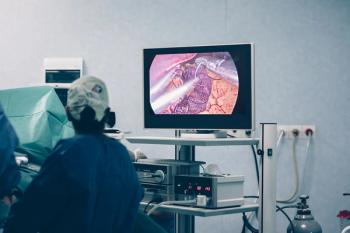
New Turkish study links sleeve gastrectomy weight loss to clearer cornea and lens, lower eye pressure, and widened anterior chamber in 6 months.

CMS assigns billing code to support reimbursement for the keratoconus therapy.
Study demonstrates 0.025% atropine balancing efficacy and tolerability in Chinese pediatric patients
All 3 concentrations evaluated in the study were associated with reduced myopia progression.

The trial is evaluating AURN001, a single-administration regenerative cell therapy for corneal edema secondary to corneal endothelial dysfunction.

The study demonstrates that Corynebacterium mastitidis, a bacterium that resides on the ocular surface, can be genetically modified to secrete the anti-inflammatory cytokine interleukin-10.
An off-the-shelf corneal cell injection targets FECD and bullous keratopathy, aiming to restore vision and ease donor shortages.

Michael Raizman, MD, and colleagues evaluated the efficacy and safety of epithelium-on oxygen-enriched corneal CXL in a sub-group analysis of 30 eyes of 22 pediatric patients aged 13 to 17 years.
Advertisement
Advertisement
Trending on Optometry Times - Clinical News & Expert Optometrist Insights
1
Tenpoint Therapeutics submits NDS for Yuvezzi presbyopia drop to Health Canada
2
Binasal occlusion in a patient with suspected postconcussion syndrome
3
Polygenic risk flags patients likely to need more glaucoma treatment
4
BL1332 misses primary end point in phase 2 post-PRK ocular pain study
5