

Pediatrics
Latest News
Advertisement
Latest Videos



Shorts
0:58
Myopia control lenses provide early pediatric intervention
6 days ago
by
Monica Jong, BOptom, PhD, FAAO, FBCLA(+1 more)
0:38
Protecting pediatric patients' eyes from digital strain
a month ago
by
Mile Brujic, OD, FAAO(+2 more)
0:36
Utilizing a patient's community to promote myopia management
a month ago
by
Maria Sampalis, OD
0:44
Reframing pediatric compliance
a month ago
by
Mile Brujic, OD, FAAO
1:06
Advising patients on the timeline for LASIK treatment
a month ago
by
Katie W. Chu, OD
1:05
Discussing children's risk of genetic predisposal to myopia with parents
a month ago
by
Leslie Scher, OD
0:53
Comprehensive eye exams versus vision screenings
2 months ago
by
Mile Brujic, OD, FAAO
1:01
Comparing comprehensive eye exams to standard vision screenings
2 months ago
by
Leslie Scher, OD

0:48
Preparing for patient influx
2 months ago
by
Mile Brujic, OD, FAAO
0:35
Must-have products to suggest for pediatric patients with dry eye
2 months ago
by
Pamela E. Theriot, OD, FAAO
Podcasts


CME Content




Advertisement
More News
Jem Martin, OD, discusses the accommodations and referrals any provider can offer, the red flags that should raise suspicion of CVI, and how the free TEACHCVI screening tool works in practice.
AMA resolution backs classifying myopia as a disease, aiming to expand insurance coverage for pediatric myopia control treatments.

Catch up on the top stories in optometry during the week of September 7-September 11.

Merabet, OD, PhD, MPH, discusses what his research on motion processing reveals about the neural roots of CVI and where diagnostic tools like neuroimaging and eye tracking are headed.
SightGlass Vision reports the milestone just 1 year after reaching 1 million users.

The findings extend prior Asian efficacy data to a diverse North American cohort for Stellest lenses.

Neel S. Vaidya, MD, MPH, MBA, on why keratoconus can progress aggressively in children and teens—and how early topographic screening and prompt crosslinking protect long-term vision.
Noha Ekdawi, MD, FAAP, explains why pediatric myopia demands individualized, progression-based management.

Teacher-led vision screening identified about 3 in 4 children with refractive error and correctly cleared most unaffected students.
Catch up on the top stories in optometry during the week of August 17-21.
Catch up on the top stories in optometry during the week of August 3-7.
Myopia-control spectacle lenses reduce short-term progression in children by about 50%, though efficacy and long-term durability vary.

NEI-funded US trial compares HALT MAX lenses, 0.05% atropine, and combination therapy to slow childhood myopia and axial elongation.

As of July 13, 2026, a meeting date has not been set.

Screen time's derailing of the circadian rhythm could contribute to behavioral difficulties in pediatric patients.

Choosing the right patients for soft lenses, orthokeratology, and spectacle lenses has long-lasting effects on the vision health of those with myopia.

The free web-based tool guides eye care providers through evidence-based amblyopia diagnosis and treatment without requiring pediatric subspecialty training.
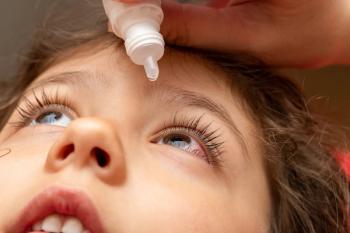
Researchers analyzed data from 13 randomized controlled trials involving children and adolescents with myopia.
For Erin Tomiyama, OD, PhD, FAAO, managing myopia in pediatric patients involves decisions that extend well beyond updating a glasses prescription.
Maria Liu, OD, PhD, MPH, MBA, FAAO, is taking the recent decision as an opportunity to reassess the role atropine plays in myopia control.
This study sheds light on use of the 0.05% atropine, which has been reported to be effective against myopia progression in some but not all studies.
For Langis Michaud, OD, MSc, FAAO, FSLS, FBCLA, FEAOO, low-atropine options are a must for eye care providers in the treatment of myopia.
Michael Raizman, MD, and colleagues evaluated the efficacy and safety of epithelium-on oxygen-enriched corneal CXL in a sub-group analysis of 30 eyes of 22 pediatric patients aged 13 to 17 years.

The study was carried out between July 8 and August 1, 2024, and included 127 eyes from 68 children aged 8–14 years.
Explore why near work—not just screens—drives kids’ myopia risk, while silent dry eye worsens early; learn practical habits to boost prevention and compliance.
Advertisement
Advertisement
Trending on Optometry Times - Clinical News & Expert Optometrist Insights
1
Johnson & Johnson Acuvue Oasys lenses demonstrate favorable moisture retention
2
AAOpt 2026: CLI releases full contact lens profitability report
3
EyeCon 2026: Jade Coats, OD, FAAO, on dry eye disease comorbidities
4
Aldeyra to appeal FDA rejection of reproxalap as a treatment for dry eye disease
5