


Pediatrics
Latest News

Advertisement
Latest Videos






Shorts

0:53
Comprehensive eye exams versus vision screenings
2 months ago
by
Mile Brujic, OD, FAAO
1:01
Comparing comprehensive eye exams to standard vision screenings
2 months ago
by
Leslie Scher, OD

0:48
Preparing for patient influx
3 months ago
by
Mile Brujic, OD, FAAO
0:35
Must-have products to suggest for pediatric patients with dry eye
3 months ago
by
Pamela E. Theriot, OD, FAAO

0:14
A series to prepare you for back-to-school season
3 months ago
by
Mile Brujic, OD, FAAO

1:47
From Paper to Clinic: The importance of parental influence in pediatric care
3 months ago
by
Hamza Shah, OD, MS, FAAO(+1 more)

1:59
From Paper to Clinic: Should you involve the patient in pediatric care conversations?
3 months ago
by
Hamza Shah, OD, MS, FAAO(+1 more)

1:23
From Paper to Clinic: SYD 101's nonapproval and what the data really show
4 months ago
by
Hamza Shah, OD, MS, FAAO(+1 more)
1:00
From Paper to Clinic: The "fitted bedsheet" retina analogy
4 months ago
by
Hamza Shah, OD, MS, FAAO(+1 more)

0:28
From Paper to Clinic: Episode 5, coming Monday, July 6
4 months ago
by
Hamza Shah, OD, MS, FAAO
CME Content












Advertisement
More News
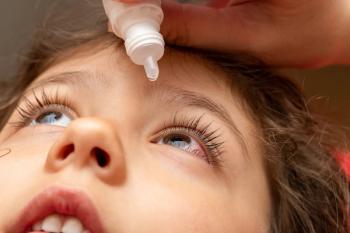
Researchers analyzed data from 13 randomized controlled trials involving children and adolescents with myopia.

For Erin Tomiyama, OD, PhD, FAAO, managing myopia in pediatric patients involves decisions that extend well beyond updating a glasses prescription.
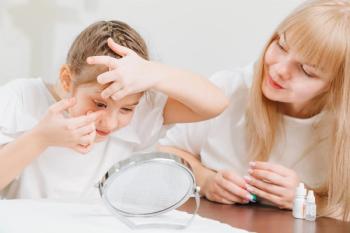
Maria Liu, OD, PhD, MPH, MBA, FAAO, is taking the recent decision as an opportunity to reassess the role atropine plays in myopia control.
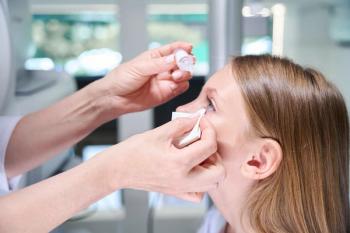
This study sheds light on use of the 0.05% atropine, which has been reported to be effective against myopia progression in some but not all studies.
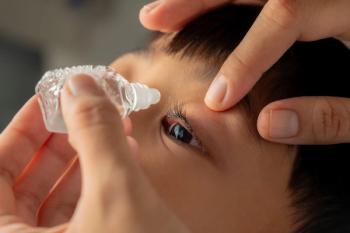
For Langis Michaud, OD, MSc, FAAO, FSLS, FBCLA, FEAOO, low-atropine options are a must for eye care providers in the treatment of myopia.
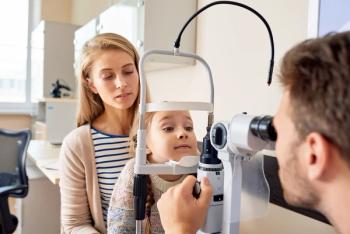
Michael Raizman, MD, and colleagues evaluated the efficacy and safety of epithelium-on oxygen-enriched corneal CXL in a sub-group analysis of 30 eyes of 22 pediatric patients aged 13 to 17 years.

The study was carried out between July 8 and August 1, 2024, and included 127 eyes from 68 children aged 8–14 years.
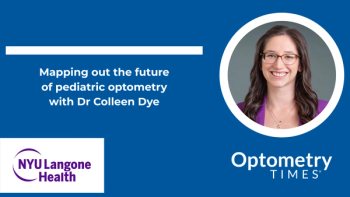
Dye, OD, details exciting new trials for amblyopia that are in the works at NYU Langone Eye Center.
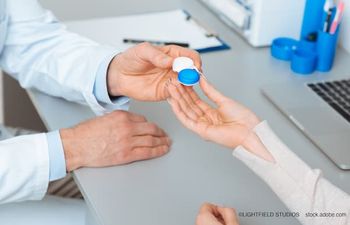
Today’s tools let clinicians fine-tune fits with accuracy, while solving old challenges and unlocking complex optical corrections.

The trial met its primary efficacy and key secondary end points.

One in 3 children worldwide has myopia, and the prevalence is rising so steadily that if it continues as predicted, there will be more than 740 million pediatric cases by 2050.
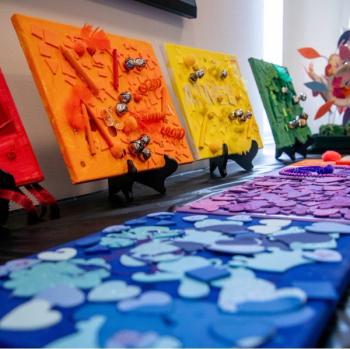
Boston event will shed light on cerebral/cortical visual impairment (CVI), a leading cause of pediatric blindness
Ocular salvage and preservation of vision are essentially dependent on early diagnosis, and several studies have been conducted to identify the factors leading to delayed diagnosis at presentation.

Santen introduces low-dose atropine in Germany, marking a significant advancement in myopia management for children amid a global epidemic.

New research reveals collagen mimetic peptides may effectively restore ocular tissue stiffness, offering hope for myopia and other eye diseases.

A recent study reveals that ADHD in schoolchildren correlates with lower myopia prevalence and shorter eye length, suggesting intriguing links between vision and attention disorders.

The primary study outcomes were the cumulative incidence rate of myopia, with myopia defined as an SER −0.50 diopter (D) or less and the percentage of participants who had a fast myopic shift that was defined as a spherical equivalent myopic shift of 0.50 D or greater over the course of 1 year.

A study reveals that secondhand smoke significantly increases the risk of myopia in Chinese children, highlighting the need for smoke-free environments.

The expansion includes community health centers in the greater Boston area and Rhode Island.
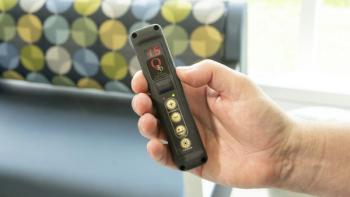
The device was developed by Curators’ Distinguished Teaching Professor Carl Bassi and research collaborators Michael Howe and Wayne Garver of the University of Missouri – St Louis.

Erin Tomiyama, OD, PhD, FAAO, offers actionable advice for myopia management and perspective for practitioners ready to refine their approach.

The 0.1 mg/mL atropine eye drop for pediatric myopia is licensed from Sydnexis, Inc.

An official approval by the FDA in the United States can boost adoption rate of atropine and antimyopia glasses, which will change the landscape of myopia management.
The investigators described the CASIA2 (Tomey Corporation) instrument, which is a new AS-OCT device with a swept-source laser wavelength of 1310 nm that can scan at a speed of 50,000 A-scan/second.
Advertisement
Advertisement
Trending on Optometry Times - Clinical News & Expert Optometrist Insights
1
FDA approves Brytly eye drops for ocular redness relief lasting up to 12 hours
2
Brepocitinib for noninfectious uveitis meets all phase 3 trial end points
3
More than monitoring: Using AMD visits to promote healthy vision aging
4
BIM-IOL System holds 37% IOP reduction at 4 years in first-in-human trial
5