






Pediatrics
Latest News
Advertisement
Latest Videos







CME Content













Advertisement
More News
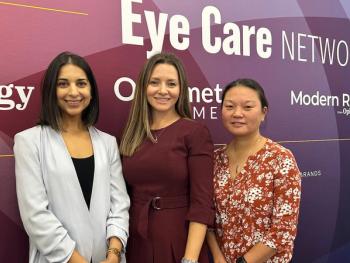
Noreen Shaikh, OD, Magdalena Stec, OD, FAAO, and Brenda Bohnsack, MD, PhD, emphasize that collaboration and communication are key to proper diagnosis and treatment.

Additional research is needed to establish best diagnostic and management strategies for increasingly common condition.
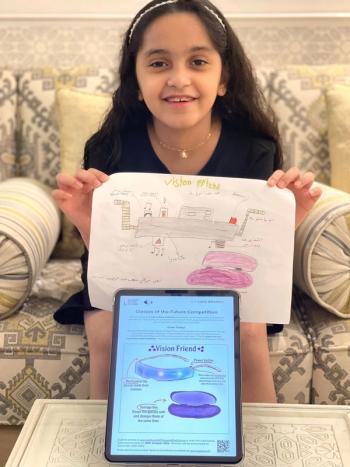
Lama Albadeen, 8, of Saudi Arabia, and Grace Retta, 5, of Kenya, will receive cash prizes for their schools.

Miriam Korik, OD, and Justin Kwan, OD, FAAO, discuss the shift of myopia management from a specialty to a vital aspect of primary care optometry, emphasizing the need for more practitioners to integrate effective strategies and collaborate for better patient outcomes.

Relationship between the brain and vision took center stage at 2024 International Congress of Behavioral Optometry.

Danielle Crull, ABOM, details Truffles' story and new initiatives she has taken on to destigmatize glasses and patching for children.

Justin Kwan, OD, FAAO, shares his journey from optometrist to myopia management advocate and provides some tips for getting started on your own journey.

By alternating the focus area—or the clear zone of the lens—and defocus area—the honeycomb-shaped segment of the lens—the spectacle lenses achieve clear vision and manage myopia progression.



This year's theme, "Love Your Eyes," focuses on children's vision and eye health.
It's time for back-to-school eye exams, and host Miriam Korik, OD, teams up with Eyes Up host Damaris Raymondi, OD, FAAO, to chat about how to handle pediatric eye exams efficiently, thoroughly, and confidently.

Educating parents of pediatric patients starts with getting staff on the same page.

Pediatric TINU syndrome is rare, but responds well to treatment.
ARVO 2024: CHAMP Phase 3 trial finds myopia controlled by low-dose atropine 0.01% over 4-year course
This study also found that upon discontinuation, myopia development did not rebound, with NVK002 0.01% as a potential long-term treatment for pediatric myopia.
The collective enhances education, research, and quality of life.

The important role eye care providers play in lessening the burden of myopia treatment for pediatric specialists.

A research report compiled by The Vision Council reveals that most parents are aware of myopia but remain in the dark about prevalence and how to prevent progression.

Research presented during the 2023 American Academy of Optometry meeting highlighted the importance of myopia management techniques to control and slow the progression of myopia.
Set your young patients—and their caregivers—up for success in treatment.

Research from Orbis International analyzes the overall wellbeing of children with common childhood vision problems.

Documenting the visual effects and simplifying visual life.

In this part 2 of the pediatric myopia and keratoconus series, Drs Chan and Swartz dive into ortho-k and crosslinking in children.

Johnson & Johnson Vision’s ACUVUE Abiliti brand announces its back-to-school campaign to inform parents about myopia and the growing risk of the disease

Pediatric keratoconus is often more challenging to diagnose, resulting in treatment delay and vision loss.
Advertisement
Advertisement
Trending on Optometry Times - Clinical News & Expert Optometrist Insights
1
FDA approves Brytly eye drops for ocular redness relief lasting up to 12 hours
2
Brepocitinib for noninfectious uveitis meets all phase 3 trial end points
3
More than monitoring: Using AMD visits to promote healthy vision aging
4
BIM-IOL System holds 37% IOP reduction at 4 years in first-in-human trial
5