

Yuvezzi Health Canada submission builds on BRIO-I and BRIO-II phase 3 data.
Yuvezzi Health Canada submission builds on BRIO-I and BRIO-II phase 3 data.
Polygenic risk scores predicted glaucoma onset and treatment course better than family history alone in a 400,000-person biobank.
The phase 2 EMERALD trial compares 2 doses of EO2002 with placebo, with a 15-letter BCVA gain at 26 weeks as the primary end point.
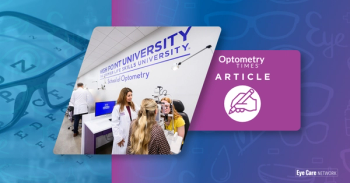
The school will be admitting its inaugural Doctor of Optometry class in summer 2027, with full accreditation possible in 2030-31.

The FDA approved the Supplemental New Drug Application for phentolamine 0.75% (Ryzumvi, Opus Genetics/Viatris) to treat presbyopia.
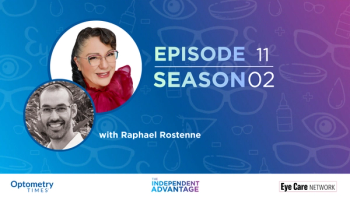
Will AI reinvent the way patients book appointments in the next 5 years? Raphael Rostenne weighs in in the season 2 finale of The Independent Advantage.
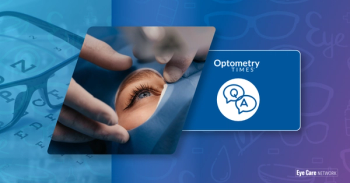
Trained Alberta optometrists may now perform SLT, peripheral iridotomy, and YAG capsulotomy in the office.

In this case of multiple evanescent white dot syndrome, a 20-year-old Hispanic woman first presented with new onset floaters in the left eye.
For Veterans Day, this week’s recap spotlights veterans’ eye care, plus a GLP-1 label change and VR perimetry for glaucoma.
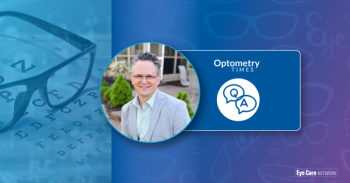
In this Q&A, Nicholas Garn, OD, discusses surgeon contracts, cost planning, and sharing surgical time at his OD-owned suite in Indiana.
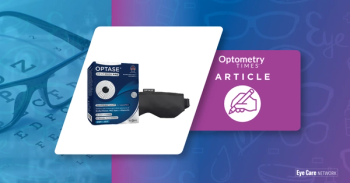
The reusable moist heat mask gives ODs another at-home option for patients seeking dry eye and MGD symptom relief.
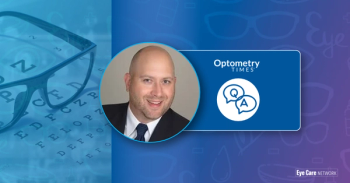
Jarett Mazzarella, OD, discusses his path to VA optometry, common eye conditions in veterans, and advice for ODs considering VA.
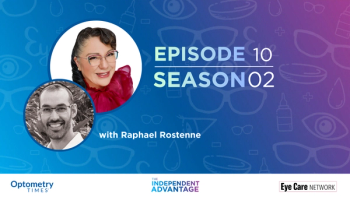
Raphael Rostenne walks Diana Canto-Sims, OD, through demos on EyeCarePro's AI voice agent for fielding phone calls.
Ahead of Veterans Day, Paul Barney, OD, urges optometrists to watch for combat- and trauma-related eye injuries in veterans.

Through Tenpoint Therapeutics’ new telehealth program, eligible adults with presbyopia can receive Yuvezzi at home.
The agency concluded that GLP-1 receptor agonists carry a potential increased risk of the rare optic neuropathy and is adding it to the Warnings and Precautions section of every product's label.

More consumers spent $100 to $199 on eyewear in Q3 2026, and managed vision care coverage reached a 5-quarter high of 72%.

As artificial intelligence advances, so do VR devices.
A wet AMD biosimilar approval leads this week’s recap, plus Medicare pay updates and tips to avoid burnout and losing patients.
MyoSpectrumNet pulls 3 public fundus datasets into 1 multi-output framework. Screening and grading accuracy held up against dedicated models.

ODs face a $32.63 Medicare conversion factor in 2027, plus 80% payment for the lower-cost service when an E/M visit and 0-day procedure share a date.
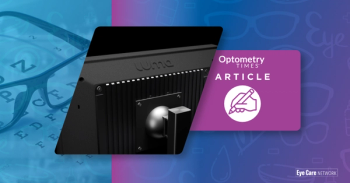
Luma, an eye-tracking and assessment tool, helps eye care professionals gain objective insights into visual performance.

Christopher Browning, OD, and Nicholas Garn, OD, now offer cataract surgery and refractive lens exchange in their own practices.
According to Raphael Rostenne, CTO of EyeCarePro, "anything that takes time" has the potential to frustrate patients, especially before they're in a practitioner's chair.
Now on EYE7 smart glasses, Eva goes beyond answering questions by reasoning about user needs and controlling vision-enhancement features.

Kansas, Tennessee, and Vermont expanded optometric scope in 2026, while vision plan reform and a proposed Medicare fee schedule cut affect practice management.

Bita Asghari, OD, FAAO, FSLS, discusses diagnosing ocular surface inflammation, recognizing atypical keratitis, and knowing when to refer to a cornea specialist.

The approval followed complete response letters tied to inspection and manufacturing issues.

What to take away on PBM, hormonal eye health, and GLP-1 receptor agonists from this year’s meeting.
Host Hamza Shah, OD, MS, FAAO, is joined by Melissa Barnett, OD, FAAO, FSLS, FBCLA, to discuss burnout among US optometrists, inspired by Abbott et al's nationwide survey.