
Conference Coverage
18 days ago
AAOpt 2026: Equipping your amblyopia toolboxLatest Content
Oct 26, 2026 | Commentary
Where contact lens wearers cut corners and what it can cost them
Takeaways from this week in optometry: October 16-23
Oct 24, 2026

Study: OCTA analysis tools report different macular vessel density values for glaucoma
Oct 23, 2026

BIM-IOL System holds 37% IOP reduction at 4 years in first-in-human trial
Oct 22, 2026

Brepocitinib for noninfectious uveitis meets all phase 3 trial end points
Oct 22, 2026







Advertisement
Shorts
0:56
The Independent Advantage: Patients still seek out phone calls
17 hours ago
by
Raphael Rostenne
1:35
First Dr Google, now Dr AI?
4 days ago
by
Masoud Nafey, OD, MBA, FAAO
0:40
The Independent Advantage: AI voice assistants help optometry practices answer more patient calls
8 days ago
by
Diana Canto-Sims, OD
1:05
Three questions to ask before buying an AI tool
8 days ago
by
Masoud Nafey, OD, MBA, FAAO
0:23
The Independent Advantage: Can an AI voice assistant help optometry practices capture more appointments?
11 days ago
by
Diana Canto-Sims, OD
1:15
Buying time back with AI scribes
11 days ago
by
Masoud Nafey, OD, MBA, FAAO
1:57
Myopia management data underscores Stellest lens success for September
11 days ago
by
Monica Jong, BOptom, PhD, FAAO, FBCLA(+2 more)
0:39
The Independent Advantage: AI can add revenue by freeing ODs to see more patients
13 days ago
by
Diana Canto-Sims, OD(+1 more)
0:55
From Paper to Clinic: How Dynamic Muscle Stimulation Targets the Blink
15 days ago
by
Hamza Shah, OD, MS, FAAO(+1 more)
1:15
From Paper to Clinic: Where DMST Fits Alongside IPL and Radiofrequency
18 days ago
by
Hamza Shah, OD, MS, FAAO(+1 more)
Podcasts

Videos





Optometry Times Digital Edition

Interim 48-month data show 86% of patients with glaucoma or ocular hypertension remain off topical drops after a single cataract procedure, although the drop-free rate has eased from earlier timepoints.
Christina M. Danley, OD, FOVDR, explores the many nuances that require consideration when answering a common question asked by parents of children with myopia.

A young woman had years of headaches, dizziness, and intolerance of her phone despite normal routine eye examinations. A modest prism gave her immediate relief.

Are our children truly ready to see—and learn?
Mary Beth Yackey, OD, outlines all that you need to know about the role of oculomics in eye care.
Optometrists should know what is expected, what is concerning, and when to contact the surgeon.

Periocular skin treatment is emerging as a complementary treatment for dry eye disease.

The evolution of IPL is not limited to its expanding role in ocular surface disease.

This review summarizes major contact lens risks, solution-related adverse effects, higher-risk populations, and practical prevention strategies for optometric practice.

Recommending omega-3 fatty acids in the diet of a patient with DED could lead to improved tear osmolarity and tear breakup time and thus fewer dry eye symptoms.
Continuing Medical Education













All News
Advertisement
Advertisement
Drs Bryce St. Clair and Behrad Garmsiri explain how they build trust, improve health literacy, and destigmatize future interventions for patients with AMD.
Diana Canto-Sims, OD, introduces the second guest of Season 2, Raphael Rostenne, who will be discussing AI-assisted front desk management.

Duravyu gained 2.5 letters vs 6.1 with aflibercept at week 52/56, missing noninferiority in a second phase 3 wet AMD trial.

FDA approves Brytly eye drops for ocular redness relief lasting up to 12 hours
Published: | Updated:
Alcon's Brytly eye drops received FDA approval for OTC temporary relief of minor ocular redness.

From dry eye to GLP-1s, this year's conference brought a variety of insights from key experts in optometry.
Ryzumvi gained a presbyopia indication in adults based on the phase 3 VEGA-2 and VEGA-3 trials, adding a pharmacologic option for managing near vision loss.

Enspryng is the first subcutaneous, at-home treatment option for TED and the first IL-6 receptor inhibitor approved for this indication.
Susan Gromacki, OD, MS, FAAO, FSLS, details one of her AAOpt 2026 sessions, titled "Advances in Contact Lens Care for the New Contact Lens Technologies."
Three researchers share the prize for discovering channelrhodopsin, a light-sensitive protein now being tested to restore vision in retinal disease.
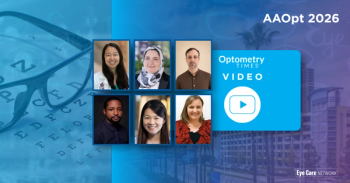
Presenters from AAOpt26's research symposium share their findings, applications for optometric practice, and goals for future study.
Advertisement

FDA advisers review SYD-101, low-dose atropine 0.01% for pediatric myopia, on Oct 30 after a 2025 complete response letter.
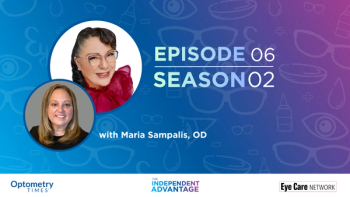
For Maria Sampalis, OD, implementing AI isn't an excuse for practice owners to replace their staff with new technology; it should instead lift the burden of certain tasks to make for more patient visits.
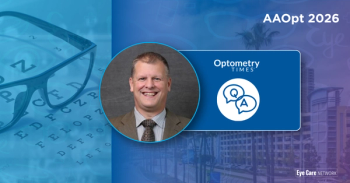
Walline, American Academy of Optometry president, shares this year's conference attendance numbers, clinical pearls, and what he hopes to see in 2027.
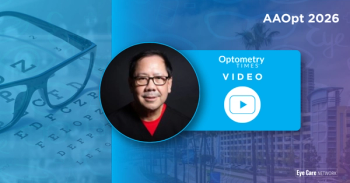
Thomas Wong, OD, FAAO, details a session he presented alongside Ronald Gentile, MD, FACS, FASRS, at AAOpt 2026.
Christina M. Danley, OD, FOVDR, explores the many nuances that require consideration when answering a common question asked by parents of children with myopia.
Advertisement
Advertisement
Trending on Optometry Times - Clinical News & Expert Optometrist Insights
1
Where contact lens wearers cut corners and what it can cost them
2
Study: OCTA analysis tools report different macular vessel density values for glaucoma
3
BIM-IOL System holds 37% IOP reduction at 4 years in first-in-human trial
4
Takeaways from this week in optometry: October 16-23
5