
In this closing segment, the expert panel reflects on how clinicians can confidently introduce new dry eye therapies into practice while keeping care simple, approachable, and effective.
In this closing segment, the expert panel reflects on how clinicians can confidently introduce new dry eye therapies into practice while keeping care simple, approachable, and effective.
In this segment, the expert panel turns its attention to unmet needs in dry eye disease and the future direction of therapy.
In this segment, the expert panel discusses the complexities of managing dry eye disease as a chronic, often lifelong condition.
In this segment, the expert panel focuses on patient counseling, adherence, and expectation-setting when initiating Acoltremon.
In this segment, the expert panel reviews the COMET-1 and COMET-2 clinical trials, highlighting how these studies evaluated both signs and symptoms of dry eye disease to determine the therapeutic impact of Acoltremon.
In this segment, the expert panel discusses how Acoltremon fits within the broader treatment landscape for dry eye disease, particularly in relation to anti-inflammatory therapies.
In this segment, the expert faculty explore the mechanism and clinical role of Acoltremon, a newly available dry eye therapy that targets sensory innervation to stimulate basal tear production.
The experts further discuss managing neuropathic pain, differentiating peripheral from central mechanisms, validating patients’ symptoms, and using imaging technologies to enhance education and track progress.They describe strategies that rebuild trust, including clearly explaining findings during the exam, demonstrating abnormalities the patient can feel or visualize, and confidently outlining a tailored plan. The experts also find it helpful to show patients a comprehensive list of available treatments, reinforcing that many options remain. The panel highlights the importance of frequent follow-ups—often at 4 weeks, then every 3–6 months—to maintain partnership, monitor progress, and ensure patients never feel abandoned in their care. They also stress collaboration with local physicians for those traveling long distances, reinforcing continuity and shared control in management.
In this segment, the expert panel reflects on the rapid evolution of dry eye therapeutics and the impact of newer pharmacologic options on clinical practice.
In this segment, the expert panel addresses one of the most challenging aspects of dry eye management: engaging frustrated patients who have seen multiple clinicians without meaningful relief. The faculty note that by the time these individuals reach a dry eye specialist, many have lost hope, feel dismissed, or are emotionally exhausted from living with constant ocular discomfort. The panel emphasizes that validation and empathy are essential first steps—acknowledging the chronic, psychologically taxing nature of the disease immediately helps patients feel heard. They describe strategies that rebuild trust, including clearly explaining findings during the exam, demonstrating abnormalities the patient can feel or visualize, and confidently outlining a tailored plan. The experts also find it helpful to show patients a comprehensive list of available treatments, reinforcing that many options remain. The panel highlights the importance of frequent follow-ups—often at 4 weeks, then every 3–6 months—to maintain partnership, monitor progress, and ensure patients never feel abandoned in their care. They also stress collaboration with local physicians for those traveling long distances, reinforcing continuity and shared control in management.
In this segment, the expert panel focuses on how they individualize dry eye disease treatment by interpreting symptom patterns, clinical findings, and patient-specific factors. They acknowledge that the expanding range of therapeutic options can feel overwhelming, but emphasize that effective care comes from methodically analyzing what each patient’s presentation reveals. The faculty explain that targeted questioning—such as whether symptoms are worse upon waking or later in the day—can differentiate between issues like poor lid seal, nocturnal exposure, or evaporative stress. They highlight the importance of performing a structured slit lamp examination, waiting the full two minutes after fluorescein instillation, assessing corneal and conjunctival staining, evaluating tear meniscus height, and observing eyelid mechanics. These findings guide decisions about anti-inflammatory therapy, anti-evaporative strategies, obstruction relief, or eyelid-focused interventions. The panel also stresses environmental and behavioral contributors, using real-world examples to educate patients and encourage active participation. Visual tools—including photos, videos, and simple imaging—help patients understand their condition and the chronic, multifactorial nature of dry eye disease.
In this segment, the expert panel discusses the clinical importance of distinguishing basal tear production from reflex tearing when evaluating patients with dry eye disease. They explain that although both types of tears share many biochemical components, basal tears contain these elements in much higher concentrations, making them essential for epithelial health, nerve function, and overall ocular surface stability. Reflex tears, by contrast, simply wet the surface temporarily and often run down the cheek—giving patients the misleading impression that their eyes “can’t be dry.” The faculty note that this distinction frequently arises in patient conversations, especially when individuals believe that tearing rules out dryness. They use relatable examples, such as tearing from cutting onions or removing debris from the eye, to illustrate that reflexive tearing does not replace true basal tear function. The panel reflects on how treatment options for dry eye have expanded significantly over time, allowing clinicians to better address deficiencies in the tear film’s protective baseline components.
In this discussion, the expert panel emphasizes practical, accessible strategies for identifying underlying contributors to ocular surface disease and dry eye. They note that clinicians do not need advanced or expensive technology to diagnose dry eye effectively; instead, consistency and recognition of key signs and symptoms are essential. The panel highlights the value of brief, structured assessments—such as a “90-second workup”—that incorporate symptom questionnaires like the OSDI, fluorescein and lissamine green staining, and simple tear break-up time measurements. Several faculty members underscore the importance of evaluating meibomian gland structure, whether through meibography or basic transillumination. They discuss the usefulness of rigidly separating aqueous deficient from evaporative dry eye, describing the condition instead as a continuum where each subtype often leads to the other. Tear meniscus height is identified as a powerful but underutilized diagnostic cue. The panel also stresses the importance of considering patient-specific factors—environment, hobbies, and prior eyelid surgery—that influence tear film stability and symptom severity.

Selina McGee, OD, shares what she wants to see in future State of Dry Eye surveys and how this year's results will affect her patient care.

Selina McGee, OD, FAAO, Dipl ABO, shares key takeaways and a personal anecdote relating to the State of Dry Eye survey results.
Selina McGee, OD, FAAO, Dipl ABO, shares some statistics on dry eye as outlined in the State of Dry Eye report recently released by Bausch + Lomb.

Neda Shamie, MD; Selina McGee, OD, FAAO, Dipl ABO; and Jacob Lang, OD, FAAO, provided their insights during CIME 2025 on May 4.
Selina McGee, OD, FAAO, emphasized that today’s approach to presbyopia correction must move beyond traditional methods like spectacles and contact lenses.
At Controversies in Modern Eye Care, Dr McGee talks about helping patients and clinicians expand their understanding of oculoplastics.
Focusing on the care of patients with MGD, Jessilin Quint, OD, MBA, FAAO, and Selina McGee, OD, FAAO, provide key takeaways on treatment practices.
Dry eye experts provide comprehensive insights on the role of in-office procedural therapies.
Selina McGee, OD, FAAO, discusses the role of cyclosporine ophthalmic solution (VEVYE) in the treatment of dry eye disease.
Experts provide clinical insights on the first FDA-approved treatment for evaporative dry eye, perfluorohexyloctane ophthalmic solution (MEIBO).
Selina McGee, OD, FAAO, and Jessilin Quint, OD, MBA, FAAO, discuss the first-line treatment of MGD, highlighting factors that inform treatment selection.
Experts on dry eye describe the potential long-term consequences for patients if MGD is left untreated.
Dry eye specialists provide detailed insights on the differences between aqueous-deficient and evaporative dry eye disease.
Jessilin Quint, OD, MBA, FAAO, and Selina McGee, OD, FAAO, provide an overview of meibomian gland dysfunction (MGD) and its causes.
Selina McGee, OD, FAAO, shares an overview of a panel on Thyroid Eye Disease that took place at Controversies in Modern Eye Care.
In this episode, four expert faculty talk about the importance of early diagnosis and treatment of thyroid eye disease. They discuss the differential diagnosis, screening tests, and the need for multidisciplinary management for these patients.
At AAOpt, Justin Schweitzer, OD, FAAO, and Selina McGee, OD, FAAO, Dipl ABO, discuss the intersection of dry eye and glaucoma.
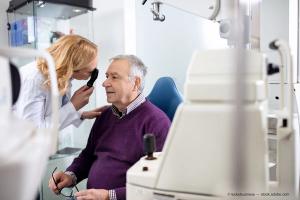
September 6th 2023
August 24th 2023
March 10th 2022