
Opinion|Videos|December 3, 2025
Advantages of Neurogenic Stimulation and Identifying Ideal Dry Eye Candidates for Acoltremon
In this segment, the expert panel discusses how Acoltremon fits within the broader treatment landscape for dry eye disease, particularly in relation to anti-inflammatory therapies.
Advertisement
Episodes in this series
In this segment, the expert panel discusses how Acoltremon fits within the broader treatment landscape for dry eye disease, particularly in relation to anti-inflammatory therapies. The faculty compare Acoltremon’s mechanism—a neuromodulatory stimulation of basal tear production—to traditional approaches such as topical steroids and immunomodulators. One expert explains that while steroids remain valuable for short-term control of inflammation, many patients have cycled through these agents without meaningful improvement. For these individuals, Acoltremon offers a distinctly different option that provides a perceptible increase in natural tear volume, often giving patients immediate feedback that therapy is working.
The panel emphasizes the importance of understanding the entire dry eye disease cascade—from tear film instability to hyperosmolarity, ion channel dysfunction, epithelial damage, and inflammation—to determine where Acoltremon can provide benefit. They note that because it modulates TRPM8 and related ion channels, it can be used alone or in combination with other therapies to restore ocular surface homeostasis. Experts conclude that Acoltremon fits broadly across patient types, particularly those dependent on artificial tears or those who have plateaued on cyclosporine or steroids, and they anticipate its role will continue to expand as clinical experience grows.
Advertisement
Related to this article
CLARITY program data show significantly longer time to treatment failure and higher rates of steroid-free quiescence vs placebo.
Drs Bryce St. Clair and Behrad Garmsiri explain how they build trust, improve health literacy, and destigmatize future interventions for patients with AMD.
Alcon's Brytly eye drops received FDA approval for OTC temporary relief of minor ocular redness.

Ryzumvi gained a presbyopia indication in adults based on the phase 3 VEGA-2 and VEGA-3 trials, adding a pharmacologic option for managing near vision loss.
Enspryng is the first subcutaneous, at-home treatment option for TED and the first IL-6 receptor inhibitor approved for this indication.
Susan Gromacki, OD, MS, FAAO, FSLS, details one of her AAOpt 2026 sessions, titled "Advances in Contact Lens Care for the New Contact Lens Technologies."
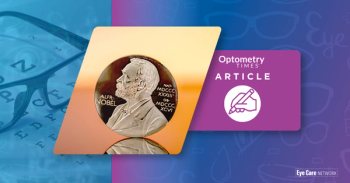
Three researchers share the prize for discovering channelrhodopsin, a light-sensitive protein now being tested to restore vision in retinal disease.
FDA advisers review SYD-101, low-dose atropine 0.01% for pediatric myopia, on Oct 30 after a 2025 complete response letter.
Advertisement
Advertisement
Trending on Optometry Times - Clinical News & Expert Optometrist Insights
1
BIM-IOL System holds 37% IOP reduction at 4 years in first-in-human trial
2
Takeaways from this week in optometry: October 16-23
3
Brepocitinib for noninfectious uveitis meets all phase 3 trial end points
4
More than monitoring: Using AMD visits to promote healthy vision aging
5