

Mitch Ibach, OD, FAAO; Nate Lighthizer, OD, FAAO; and Austin Lifferth, OD, FAAO, discuss how they evaluate patients with borderline findings but significant risk factors
Mitch Ibach, OD, FAAO; Nate Lighthizer, OD, FAAO; and Austin Lifferth, OD, FAAO, discuss how they evaluate patients with borderline findings but significant risk factors
New Turkish study links sleeve gastrectomy weight loss to clearer cornea and lens, lower eye pressure, and widened anterior chamber in 6 months.
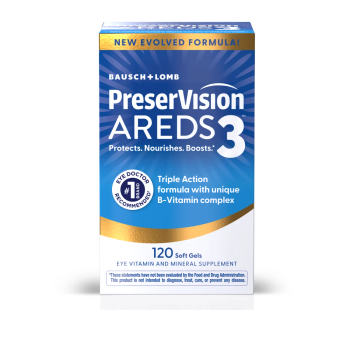
AMD affects approximately 28 million people in the US and is a leading cause of vision loss among older adults.
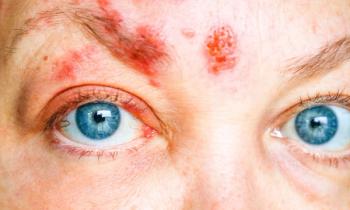
A rare case study demonstrates the importance of vaccination to reduce the incidence of severe complications associated with HZO.

Avacincaptad pegol may help preserve driving-related vision in geographic atrophy, but post hoc data did not reach statistical significance.

At ARVO Michael Siatkowski, MD, and Jody Summers, PhD, stopped to discuss the rising rates of myopia in children and if anti-inflammatory drugs could play a role in slowing progression.

Danish JAMA Dermatology trials show short-term topical or oral corticosteroids don’t raise intraocular pressure, easing glaucoma worries in atopic dermatitis care.
Andrew Pucker, OD, PhD, FAAO, FSLS, FBCLA, talked about a recent paper in which he proposed the renaming of artificial tears and rewetting drops to lubricating drops.
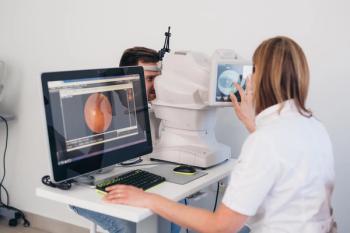
Ischemic retinal disorders may signal underlying cardiovascular risk, making diagnostic imaging workup essential.
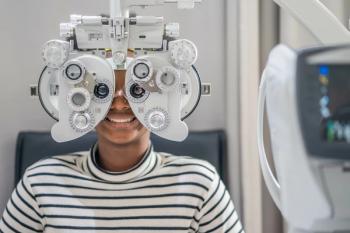
Jeffrey J. Walline, OD, PhD, shares practical perspectives on counseling families, selecting treatment options based on lifestyle and compliance, and more.

Mile Brujic, OD, FAAO, provides insight into the intellectual conception of the patent-pending tool and the manufacturing process.

Regina Morales-Reyes details her poster presentation titled "Ten-Year Change in Contact Lens Use Prevalence and Its Determinants in University Students: A Comparison of 2015 and 2025 Cohorts."

The study, conducted across 6 clinical sites in the US, enrolled 30 participants aged 40 years and older who were established progressive lens wearers and used digital devices for at least 4 hours per day.
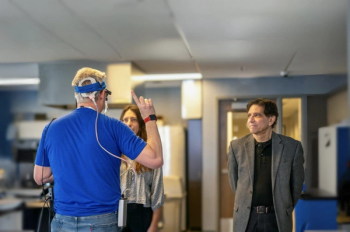
The device is described as “a wireless brain implant designed to provide artificial vision for people with total blindness by bypassing the eyes and optic nerves and connecting directly to the brain’s visual cortex.
Dimitra Skondra, MD, PhD, discussed her talk on how the diet and gut microbiome can affect the development of age-related macular degeneration.
Samuel Berchuck, PhD, discussed his poster on sequential screening for psychological distress in glaucoma clinics using AI-assisted methods.

Jessilin Quint, OD, MBA, MS, FAAO, shares strategies for improving adherence, building trust through patient communication, and more.

Knowing the shared signs and symptoms can lead to proper diagnosis.

The organization is highlighting traumatic brain injury in Hispanic and Latino communities as part of its Cultural Responsiveness blog series.

Mark Bullimore, PhD, MCOptom, consultant for Sydnexis, weighs in on the CRL received by the company for SYD-101.

vailable in both English and Spanish, the activity is designed to help students reflect on their interests, preferences, and strengths.
Madhura Tamhankar, MD, took some time at the ARVO conference in Denver, Colorado, to discuss a poster on disease progression in thyroid eye disease, stressing what we know about the Rundle curve may not be accurate.


ECG-synchronized Doppler holography provides repeatable measurements of the retinal blood flow.
Giannie Castellanos, OD, outlines what ODs can implement into their communications strategies today to strength the referral power between MDs and ODs.

The randomized controlled trial included 196 schoolchildren in Hong Kong aged 4 to 12 years with myopia who completed the study.

Research suggests that one drop of atropine is all it takes for beneficial effects.
Host Hamza Shah, OD, MS, FAAO, is joined by Michael Twa, OD, PhD, to discuss artificial intelligence, inspired by Paredes et al's paper, "A Review of Recent Developments in Artificial Intelligence and Big Data Technologies for Ophthalmology Referrals and Clinical Practice."

This case study highlights the tension between what patients report and what clinicians observe and measure.
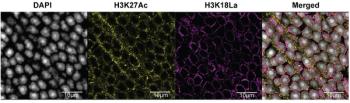
The study, published in PLoS Genetics, examined how glucose metabolism affects gene expression in light-sensing photoreceptors.