






Cornea
Latest News
Advertisement
Latest Videos






Shorts

0:49
Preventing edema formation during scleral lens fitting
5 days ago
by
Obinwanne Chukwuemeka Jr., OD, MOptom, Dipl AAO, FAAO, FLVPEI, FSLS
1:14
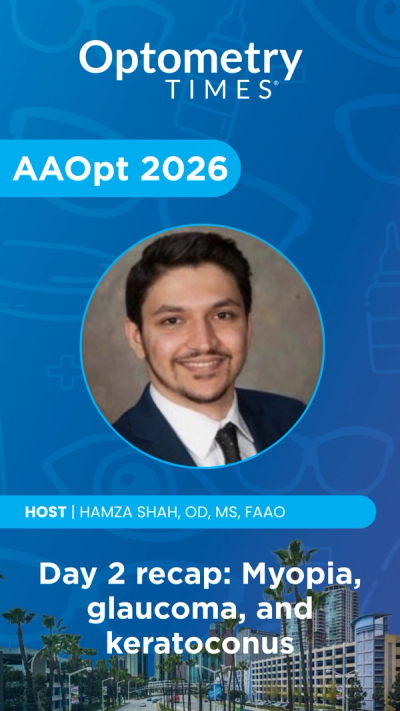
Day 2 recap: Myopia, glaucoma, and keratoconus
8 days ago
by
Hamza Shah, OD, MS, FAAO

1:00
Defining success after corneal surgery for Keratoconus
9 days ago
by
Clark Y. Chang, OD, MSA, MSc, FAAO

1:05
Day 1 recap: Keratoconus, herpes, and more
9 days ago
by
Hamza Shah, OD, MS, FAAO

0:32
Following the patient's lead on wavefront-guided scleral lenses
9 months ago
by
Jordana Joy, Editor

0:53
Seeking the best lens fit for patients with HOAs
9 months ago
by
Jordana Joy, Editor

0:37
Why fighting off NEI consolidation matters
a year ago
by
Jordana Joy, Editor
0:23
Managing neuropathic corneal pain
a year ago
by
Jordana Joy, Editor
Podcasts

CME Content














Advertisement
More News

The trial will enroll approximately 111 patients across the US and Europe following positive FDA feedback from a Type D meeting

A new pilot trial tests ZOC2017217 lanosterol-derived cataract eye drops, aiming to slow lens clouding and guide Phase 3 development amid mixed human evidence.

The meeting featured advances in contact lens technology, evolving approaches to keratoconus management, and new insights into dry eye disease treatment.

Epion completes phase 3 follow-up for EpiSmart epi-on corneal cross-linking in keratoconus, advancing toward FDA NDA and a less painful alternative.

Clark Chang, OD, MSA, MSc, FAAO, FSLS, and Susan Gromacki, OD, MS, FAAO, FSLS, provide insights into their expertise.

The topical synthetic peptide receives orphan drug and fast track status and enters phase 2 as a first-in-class treatment for a rare degenerative corneal disease.

A pilot study shows that analyzing how the cornea moves under air-puff stimulation may improve early keratoconus detection.
New Turkish study links sleeve gastrectomy weight loss to clearer cornea and lens, lower eye pressure, and widened anterior chamber in 6 months.
CMS assigns billing code to support reimbursement for the keratoconus therapy.
Study demonstrates 0.025% atropine balancing efficacy and tolerability in Chinese pediatric patients
All 3 concentrations evaluated in the study were associated with reduced myopia progression.

The trial is evaluating AURN001, a single-administration regenerative cell therapy for corneal edema secondary to corneal endothelial dysfunction.

The study demonstrates that Corynebacterium mastitidis, a bacterium that resides on the ocular surface, can be genetically modified to secrete the anti-inflammatory cytokine interleukin-10.
An off-the-shelf corneal cell injection targets FECD and bullous keratopathy, aiming to restore vision and ease donor shortages.
Michael Raizman, MD, and colleagues evaluated the efficacy and safety of epithelium-on oxygen-enriched corneal CXL in a sub-group analysis of 30 eyes of 22 pediatric patients aged 13 to 17 years.

QoL areas measured included enjoying relationships/life, overall mood, and time spent thinking of eye pain.
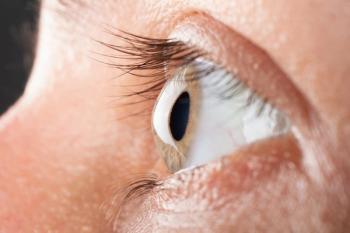
Amniotic membrane therapy has been used in refractory cases to protect the ocular surface, modulate inflammation and fibrosis, and promote epithelial healing.
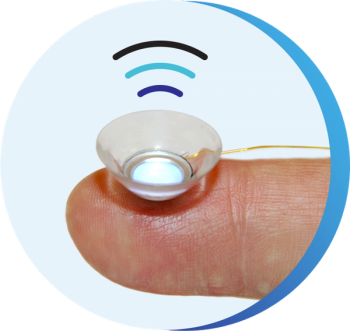
The clinical study will evaluate a noninvasive corneal strengthening procedure designed to reshape the cornea and correct refractive errors in-office without tissue removal.

A recent nonrandomized trial has demonstrated toric IOLs’ efficacy in providing long-term visual outcomes, reducing amblyopia compared to non-toric lenses.
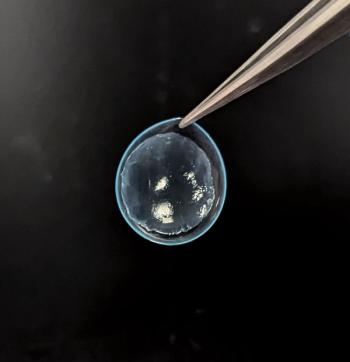
Rachon, OD, FAAO, DipABO, details her SECO 2026 poster presentation, "Treatment of Stage 1 NK Secondary to Acoustic Neuroma Removal with Cryopreserved Amniotic Membrane."

Glaukos noted under the updated labeling, physicians may now re-administer iDose TR more than once in patients who maintain a healthy cornea, as defined by corneal endothelial cell density parameters.
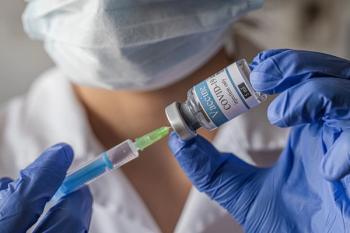
The study looked at 128 eyes in 64 patients before and after they had received the vaccine.

FDA authorizes compassionate use of urcosimod for neuropathic corneal pain, a condition that causes severe pain and sensitivity of the eyes, face, or head.

Bisant A. Labib, OD, FAAO, DipAAO, gives her insights on the causes and management of anterior uveitis during Island Eyes 2026.

Kuzniar's OGSLS 2026 poster presentation provides a follow-up to previous fitting findings for the Zenlens Chroma HOA lens.
Advertisement
Advertisement
Trending on Optometry Times - Clinical News & Expert Optometrist Insights
1
AAOpt 2026: Patient-reported blurred vision improvement with Vevye
2
AAOpt 2026: Equipping your amblyopia toolbox
3
AAOpt 2026: Evaluating the comfort and usability of Acuvue Vita contact lenses
4
AAOpt 2026: Oculomics for early intervention and comanagement
5