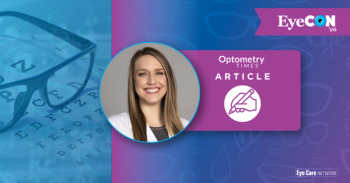
EyeCon is an opportunity for ophthalmologists and optometrists to sit down together.
Mitch Ibach, OD, FAAO, said that medication optimization is key when taking the interventional approach to glaucoma.
Mitch Ibach, OD, FAAO, from Vance Thompson Vision in Sioux Falls, South Dakota, presented an optometric perspective on interventional glaucoma at the AOA Optometry’s Meeting in Phoenix, Arizona. His core message is that optometrists should be active participants in interventional care, not limited to prescribing topical medications, and should thoughtfully sequence multiple therapeutic modalities to best serve each individual patient.
He began by emphasizing medication optimization, advocating for consolidation of therapy where possible. This includes moving patients to fixed-dose combinations to simplify regimens and reduce preservative load, and considering preservative-free formulations to minimize ocular surface toxicity. Ibach noted that preservatives can contribute to significant comorbidities, including conditions such as neurotrophic keratitis, and that these risks should inform decisions about long-term topical therapy.
Ibach then discussed selective laser trabeculoplasty (SLT) as a key interventional tool. He described SLT as a way to “rejuvenate” or clean out the eye’s natural drainage system, either complementing drops or reducing the medication burden. Importantly, he argued that whether the optometrist can perform SLT themselves should not determine whether patients are offered it; instead, optometrists should collaborate with ophthalmologists when needed to ensure access to appropriate procedures.
He also highlighted sustained drug delivery technologies, such as bimatoprost SR and travoprost sustained-release devices. These options maintain the advantages of proven pharmacologic agents while bypassing day-to-day patient administration, thereby directly addressing adherence challenges. For many patients, shifting more of the responsibility for treatment success from the patient to the clinician or procedure can be transformative.
Finally, Ibach situated minimally invasive glaucoma surgery (MIGS) within a broader, multimodal framework that includes drops, laser, drug delivery, and surgery. The central clinical task, he suggested, is not whether to use one modality or another, but how to sequence and combine them appropriately. Throughout, he underscores the importance of careful listening, detecting non-adherence and ocular surface problems, and maintaining confidence in recommending what the clinician would choose for themselves. His overarching theme is collaborative, patient-centered glaucoma care that leverages interventional strategies to improve outcomes and reduce reliance on patient compliance.