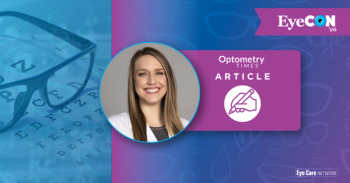
EyeCon is an opportunity for ophthalmologists and optometrists to sit down together.
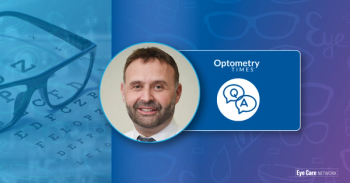
Nathan Lighthizer, OD, FAAO, presented on laser trabeculoplasty for glaucoma management at this year's conference.
Nate Lighthizer, OD, FAAO, presented on laser trabeculoplasty for glaucoma management, with a focus on selective laser trabeculoplasty (SLT) and direct SLT (DSLT), and how their roles have evolved in the treatment paradigm at SECO 2026.
Traditionally, glaucoma treatment began with topical medications (eye drops) as first-line therapy to lower intraocular pressure (IOP). Laser trabeculoplasty, including SLT, was generally reserved as second-line therapy, considered only after maximizing medical therapy with one or more drops. However, over the last decade, influenced heavily by the SLT Med Study and particularly the LiGHT trial, clinical thinking has shifted. These studies support that SLT not only could be, but should be offered as first-line therapy for many glaucoma patients.
Lighthizer explained that offering SLT first-line—before starting any drops—can significantly ease the treatment burden on patients. Instead of managing multiple daily medications (drop one, drop two, drop three), patients may rely on laser therapy to achieve pressure reduction, potentially reducing or delaying the need for drops. He noted that SLT has clear indications and contraindications, and like any procedure, carries potential complications, though these are not detailed in the brief excerpt.
He then introduced DSLT, a newer, automated, transscleral technology that has been FDA-approved for a little over two years. Dslt delivers 120 laser shots over approximately 2.4–2.5 seconds, in contrast to conventional SLT, which typically requires 1–4 minutes per eye, depending on treatment extent and provider experience. While DSLT is faster, patients may feel it more during the brief treatment because higher energy is needed to pass through the sclera.
In terms of efficacy, Lighthizer stated that first-line SLT generally yields about a 20–35% IOP reduction. The GLAUrious trial of dslt demonstrated an 18–27% pressure reduction, suggesting comparable efficacy between the two modalities based on current clinical trial data.
He also addressed durability and repeatability. SLT works in roughly 80–90% of patients, but its effect is not permanent, typically lasting 3–7 years, with some variability. Importantly, multiple studies, including the LiGHT trial, have shown that SLT is repeatable once the effect wears off, allowing re-treatment at intervals of a few years. For DSLT, long‑term data and repeatability evidence are still emerging, as the technology is in its early (infancy) stages, but he suggests it may behave similarly in theory.
Lighthizer closed by encouraging eye care providers—optometrists and ophthalmologists, in both laser-privileged and non-laser states—to think of SLT as a proven first-line option and to utilize or refer for it earlier in the course of glaucoma therapy, as this is when it appears to work best.