Mary Beth Yackey, OD, outlines all that you need to know about the role of oculomics in eye care.
ZEISS partners with Envision to expand evidence-backed VR perimetry, enabling more accessible, gamified home visual field testing for glaucoma monitoring.
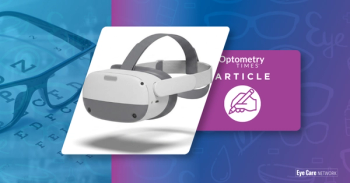
According to a new announcement from Carl Zeiss Meditec AG, ZEISS Medical Technology has entered a strategic collaboration with Envision Health Technologies to advance gamified virtual reality (VR)-based visual function testing for glaucoma care.1 Envision Health Technologies was founded by glaucoma surgeon Lama A. Al-Aswad, MD, MPH, and focuses on software-driven, data-driven approaches to vision care delivery. The collaboration aims to combine ZEISS' decades of perimetry leadership with Envision's digital eye health platform to develop more flexible, patient-accessible visual field testing options.1
Visual field testing continues to play an important role in glaucoma diagnosis and monitoring in optometric practice.2 However, access challenges remain. Traditional visual field testing requires specialized equipment, dedicated space, and patient cooperation.3 As a result, interest in portable, software-based alternatives has grown as practices look for more flexible testing options.1
"As glaucoma care continues to evolve, clinicians are looking for solutions with improve patient accessibility, flexibility, and experience without compromising clinical confidence," Anuj Kalra, head of Chronic Disease Management at ZEISS Medical Technology, said in the news release.1 "Our collaboration with Envision Health Technologies reflects ZEISS’ commitment to advancing practical, clinician-driven innovation that can help expand access to visual function testing across a range of care settings."
The partnership focuses on proving that VR-based visual field testing is accurate and reliable enough for broader clinical use. A 2025 systematic review in PLOS ONE evaluating 14 studies of VR perimetry (VRP) against standard automated perimetry (SAP) found overall results promising, while noting test-retest repeatability data remain insufficient to fully validate the technology for clinical adoption.4 Ten different VRP devices—including the VisuALL, Vivid Vision Perimeter, and Virtual Field—were assessed against the Humphrey Field Analyzer (HFA; Carl Zeiss Meditec) or Octopus 900. The review authors concluded VRP holds strong potential but additional validation work is required before widespread clinical integration.4 The partnership is designed to strengthen the evidence behind VR-based visual field testing by applying ZEISS' established testing methods to new VR platforms.1
Published patient-experience data reinforce the rationale for pursuing VR-based testing. A 2025 prospective study in Ophthalmology Science found high acceptance and tolerability of home-based visual field testing via VR headset, with participants citing portability and reduced postural demands as key advantages over clinic-based perimetry.3 Gamification, a core feature of Envision's platform, has also shown benefits in patient engagement and reliability in populations where standard perimetry compliance is difficult to achieve.1 A study at Toronto Western Hospital found that 25 glaucoma patients were able to complete home visual field testing with a portable VR device every 2 weeks for 2 years, supporting the feasibility of long-term home monitoring.4 Simulation analyses from high-frequency testing suggested VRP may enable earlier progression detection compared to standard annual or biannual clinic testing schedules.4
"We believe the future of visual function testing should be more accessible, flexible, and patient-centered while remaining grounded in clinical rigor," Lama A. Al-Aswad, MD, MPH, founder and CEO of Envision Health Technologies, said in the news release.1 "Collaborating with ZEISS allows us to combine cutting-edge software innovation with decades of trusted market leadership in perimetry."
For optometrists, the collaboration signals a meaningful shift in how visual field testing infrastructure may evolve across care settings. ODs who perform glaucoma monitoring, screen high-risk patients, or comanage with glaucoma specialists may eventually see VR perimetry options integrated into existing diagnostic workflows. No specific product release timeline or regulatory submission was announced as part of this collaboration.¹