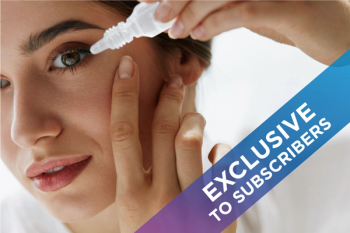
Kaleb Abbott, OD, MS, FAAO, FOWNS; and Andrew Pucker, OD, PhD, FAAO, FSLS, FBCLA, are advocating for refreshed terminology when it comes to artificial drops. In an opinion article published in The Ocular Surface titled “It's Time to Retire the Terms Artificial Tears and Rewetting Drops: A Call for Accurate Terminology and Updated Clinical Usage in Eye Care,” the doctors stated that the term artificial tears:
- Does not accurately reflect the role that eye drops play in lubricating the eyes
- Misrepresents these drops as replacements for the natural tear film.
“In contrast to the natural tear film, over-the-counter eye drops commonly referred to as ‘artificial tears’ or ‘rewetting drops’ lack the molecular complexity, biological functionality, and structural sophistication of their namesake. These drops are, in fact, lubricating solutions that provide transient relief from ocular surface symptoms, but they do not replicate the tear film's multifaceted functions,” the authors wrote.
Abbott told Optometry Times that the article is not to criticize artificial drops or their producers, as they play a vital role in providing comfort for patients with dry eye, among other benefits. "Products currently labeled as 'artificial tears’ do offer tremendous value for patients with dry eye and those wearing contact lenses. These sophisticated formulations deliver multiple benefits, including rehydrating the surface, protecting cells from osmotic stress, stabilizing the tear film, and supporting healing," he said.
Abbott and Pucker sat down with Optometry Times to discuss their suggestions on how other eye care providers can effectively refer patients to artificial drops, ensuring they provide the most accurate information and quality care.
Key takeaways
- The authors suggest replace outdated terms with scientifically accurate language.
- Eye care provides should educate patients to set realistic expectations.
- Eye care providers should use consistent terminology across clinical practice and the profession.
What are some recommendations you outlined in the article?
Andrew Pucker, OD, PhD, FAAO, FSLS, FBCLA:
Calling these products tears suggests they can replace or replicate the natural tears,...an extraordinarily complex structure containing thousands of proteins, lipids, mucins, vitamins, and growth factors. No OTC drop comes close to matching this level of biological complexity. Using outdated terminology can mislead patients about what these products can realistically do and may delay more effective treatments when needed. It can also confuse contact lens wearers: Many assume these drops are unsafe with lenses, when in reality, preservative-free lubricating drops or preserved lubricating drops that are used 4 or fewer times per day have been shown through numerous studies to be safe and effective for treating contact lens discomfort.
Kaleb Abbott, OD, MS, FAAO, FOWNS:
We propose adopting lubricating drops. This term precisely describes their primary, reliable action: providing lubrication and comfort. This shift is not a critique; it is a move toward transparent communication and accurate terminology that avoids implying complete tear replication while highlighting the consistent relief and protection these products provide.
How does referring to artificial drops as tears perpetuate misinformation to patients?
Abbott:
Our recommendation is to retire the terms artificial tears and rewetting drops and use the more accurate term lubricating drops. These products are helpful for symptom relief, but the current terminology creates unrealistic expectations for patients and may inadvertently misguide providers as well. We also encourage journals, manufacturers, and clinicians to adopt consistent, clear terminology that aligns with current science.
How can ODs apply the information in this piece to their daily practice?
Abbott:
Clinicians can improve patient communication by using clearer terminology, such as lubricating drops, which sets accurate expectations and helps patients understand that these products provide short-term symptom relief, not true tear replacement. This clarity also encourages dialogue about additional, more effective treatments when appropriate. Ultimately, more precise language supports better education, better decision-making, and stronger trust in care.
Reference
Abbott KS, Pucker AD. It’s time to retire the terms artificial tears and rewetting drops: a call for accurate terminology and updated clinical usage in eye care. Ocul Surf. 2025;39:46-48. doi:10.1016/j.jtos.2025.08.010