





Comprehensive Eye Exams
Latest News
Advertisement
Latest Videos



Podcasts

CME Content










Advertisement
More News

Increased amounts of time spent in physical activity are independent predictors of a slower rate of visual field mean deviation loss in patients with primary open angle glaucoma.

One in 3 children worldwide has myopia, and the prevalence is rising so steadily that if it continues as predicted, there will be more than 740 million pediatric cases by 2050.

A rare case of tubulointerstitial nephritis and uveitis syndrome in a teenager highlights the importance of multidisciplinary diagnosis and management.
Ocular salvage and preservation of vision are essentially dependent on early diagnosis, and several studies have been conducted to identify the factors leading to delayed diagnosis at presentation.

In this podcast, Marjan Farid, MD; Beeran Meghpara, MD; and John Hovanesian, MD; review the role of neuromodulation in the pathogenesis of dry eye disease (DED). Additionally, the expert panel discusses a case study of a typical patient presenting with DED and reviews current and newly available treatment options.

The EyeSouth affiliate network now includes more than 320 doctors providing medical and surgical eye care services at over 235 locations.

Santen introduces low-dose atropine in Germany, marking a significant advancement in myopia management for children amid a global epidemic.

Survey participants cited cost concerns, perceived inevitability, and deprioritization as obstacles to receiving eye care.

New research reveals collagen mimetic peptides may effectively restore ocular tissue stiffness, offering hope for myopia and other eye diseases.
These screening solutions will work to make early detection of diabetic retinopathy easier with on-the-spot screening.

Explaining how different examinations are billed by insurance to patients can make a difference in patient care.
In this podcast, experts Quan Dong Nguyen, MD, MSc; and Cecelia Koetting, OD, FAAO, DipABO; discuss the diagnosis, staging, and treatment of NK, focusing on early-stage disease.
In this podcast, experts Deborah Ristvedt, DO; and Melissa Tawa, OD, FAAO, discuss individualizing glaucoma therapy with selective laser trabeculoplasty and sustained-release drug implants, providing key take-home insights for optimizing glaucoma management across diverse patient profiles.
Embracing new technology is good for patients and provides protection against malpractice claims.

Maggie Cline, MPH, initially joined the organization in 2022 and served as Executive Director Utah.

The report highlights clinical successes, innovation, research, and patient outcomes.

Bryce St Clair, OD, MPH, authors the June edition of the Cultural Responsiveness Blog, and urges doctors to consider cultural and socioeconomic backgrounds when caring for patients.

Erin Tomiyama, OD, PhD, FAAO, offers actionable advice for myopia management and perspective for practitioners ready to refine their approach.

An official approval by the FDA in the United States can boost adoption rate of atropine and antimyopia glasses, which will change the landscape of myopia management.

The qVPT, a suprathreshold test comprised of 15 trials at 9 cycles per degree and 20% contrast, measures the patient’s response time to visual stimuli and the number of correct responses.

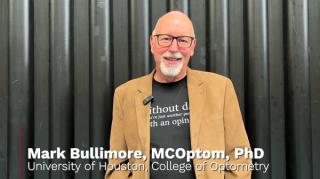
Mark Bullimore, MCOptom, PhD, details the importance of preparing optometric students for myopic patient care in a Collaborative Care Symposium (CCS) 2025 presentation.

In this Q&A, John D. Gelles, OD, and Steven Greenstein, MD, chat about what inspired them to launch the symposium, what makes this year’s agenda especially exciting, and why the future of refractive care depends on stronger collaboration between ODs and MDs.


Advertisement
Advertisement
Trending on Optometry Times - Clinical News & Expert Optometrist Insights
1
AAOpt 2026: Demodex tied to worse MGD as dry eye questionnaires miss blepharitis
2
AAOpt 2026: The real-world impact of treatment switch to latanoprostene bunod
3
AAOpt 2026: Perfluorohexyloctane ophthalmic solution and contact lens wear
4
AAOpt 2026: The underutilization of latanoprostene bunod 0.024% in glaucoma care
5