




Glaucoma
Latest News
Advertisement
Latest Videos






CME Content












Advertisement
More News


The study will be evaluating the safety, tolerability, and efficacy of QLS-111 in adult patients with normal tension glaucoma.
Researchers found that patients with primary open-angle glaucoma have less agmatine and thiamine in the aqueous humor than patients without glaucoma.

Increased amounts of time spent in physical activity are independent predictors of a slower rate of visual field mean deviation loss in patients with primary open angle glaucoma.

In this podcast, Marjan Farid, MD; Beeran Meghpara, MD; and John Hovanesian, MD; review the role of neuromodulation in the pathogenesis of dry eye disease (DED). Additionally, the expert panel discusses a case study of a typical patient presenting with DED and reviews current and newly available treatment options.

The campaign provides tools to patients, researchers, clinicians, industry, and advocates with tools to tell their stories that advocate for vision research.

Nicox’s nitric oxide (NO)-donating bimatoprost eye drop works to lower intraocular pressure (IOP) in patients with glaucoma or ocular hypertension.
From blue light blockers to sleep apnea, Jacqueline Theis, OD, FAAO, FNAP; and Joseph Allen, OD, FAAO, Dipl ABO, outlined how sleep can influence brain and ocular health, and vice versa.

The DSLT technology has been fully commercially available in the US since February 2025.

New clinical trials reveal PER-001 as a groundbreaking treatment for glaucoma and diabetic retinopathy, showing significant vision improvements and safety.
In this podcast, experts Quan Dong Nguyen, MD, MSc; and Cecelia Koetting, OD, FAAO, DipABO; discuss the diagnosis, staging, and treatment of NK, focusing on early-stage disease.
In this podcast, experts Deborah Ristvedt, DO; and Melissa Tawa, OD, FAAO, discuss individualizing glaucoma therapy with selective laser trabeculoplasty and sustained-release drug implants, providing key take-home insights for optimizing glaucoma management across diverse patient profiles.
In this podcast, experts Marc R. Bloomenstein, OD, FAAO; Cory J. Lappin, OD, MS, FAAO; and Selina R. McGee, OD, FAAO, discuss the roles of ophthalmologists and optometrists in managing DED in an evolving treatment landscape, from screening and diagnosis to disease management.
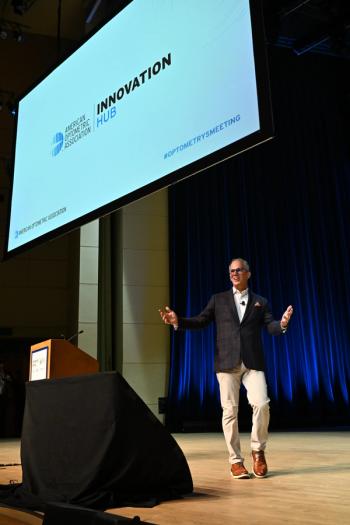
The Innovation Hub was split into 3 panel discussions on assessing future health through AI-enabled tools, addressing patient workflow challenges through AI, and enhancing treatment through new technologies.

A $2.5 million endowment establishes the Herbert Simon Chair in Glaucoma Research and Innovation, advancing treatments and research led by renowned glaucoma researcher Alon Harris, PhD, MS, FARVO.

This new QLS-111 and latanoprost fixed-dose combination (QLS-111-FDC; Qlaris) is in development for the treatment of primary open-angle glaucoma, ocular hypertension, and normal-tension glaucoma in patients whose optimal intraocular pressure control may remain “unachievable” due to needing to lower episcleral venous pressure.

The study was an outgrowth of the phase 1 and 2 Ocular Hypertension Treatment Study (OHTS).

Mitch Ibach, OD, FAAO, details a presentation he gave with Tanner Ferguson, MD, at the Collaborative Care Symposium 2025.
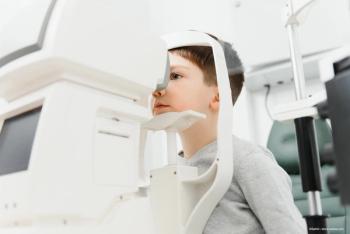
The investigators described the CASIA2 (Tomey Corporation) instrument, which is a new AS-OCT device with a swept-source laser wavelength of 1310 nm that can scan at a speed of 50,000 A-scan/second.
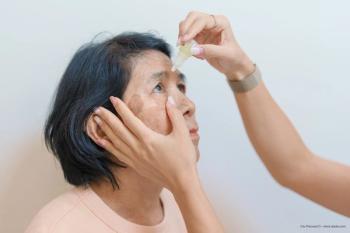
NCX 470, Nicox’s lead clinical product candidate, is a novel NO-donating bimatoprost eye drop with a dual mechanism of action (nitric oxide and prostaglandin analogue).

Knowing the truths concerning patient adherence and history and visual field tests can make a difference in care quality.

The first-in-class endothelin antagonist intravitreal implant aided in increasing ocular blood flow and improved both visual function and anatomic structure, according to the company.

The trial assesses GAL-101 as an oral therapy designed to treat Alzheimer disease, dry age-related macular degeneration, and glaucoma.

Hammond and his team focused on creating a reliable conversion factor between 2 widely used optical coherence tomography (OCT) systems—the TopCon Maestro2 and the ZEISS Cirrus 5000. Their work specifically looked at ganglion cell–inner plexiform layer and retinal nerve fiber layer thickness measurements, which are critical markers in glaucoma diagnosis and monitoring.
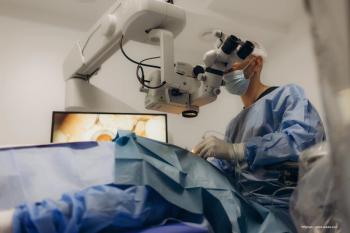
Results from the first-in-human study of SpyGlass Pharma's bimatoprost-eluting IOL showed significant reduction in IOP and improved best-corrected distance visual acuity.
Advertisement
Advertisement
Trending on Optometry Times - Clinical News & Expert Optometrist Insights
1
The screen time question: What to ask and when to look deeper
2
FAQ: What clinicians should know as SYD-101 heads to FDA advisory committee
3
The Independent Advantage S02 E06: Taking the strain of undesirable tasks off staff with AI
4
AAOpt 2026: Understanding the gene therapy landscape for retinitis pigmentosa
5