
News


All series


All News

At a recent meeting I attended one of the discussions included a quick and brief outline of what is termed SWOT. SWOT stands for Strength, Weaknesses, Opportunities, and Threats. The idea here is that a scan of the internal and external environment is an important part of a strategic planning process for any business.
Let’s talk about an elephant in the room. Some practices are incredibly effective at selling annual supplies of contact lenses, and some practices are not. Just like daily disposables, low sales numbers are blamed on “the demographics of my practice.”

I started my own practice on January 4 -finally-after six years in practice. This decision was hardly a hasty one because I dreamed of having my own practice since the first day of OD school. Like most ODs fresh out of school, however, I was saddled by debt and fear of the unknown.

Optometrists can play key roles in women’s health, especially in macular degeneration and obesity. Include a conversation about cosmetic use in discussions with female patients as well.

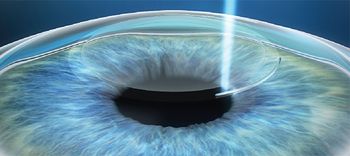
The femtosecond laser has brought many significant advances to eye surgery. For more than a decade, it has been used to create lamellar corneal flaps for laser in situ keratomileusis (LASIK), and more recently this laser is used to precisely perform several steps in cataract surgery.

With the advent of electronic health records, it is now easier than ever to keep up with what medications a patient is actually taking, and (especially in the arena of glaucoma) the several classes of medications, such as steroids, beta blockers, and antihistamines, that can influence how patients’ eyes behave. With this in mind, I had a patient come in the other day with an interesting question regarding her intraocular pressure (IOP).

Point-of-care (POC) diagnostic laboratory testing is not common in eye care. This is not due to any lack of clinical need-it is rather the result of a lack of specific tests known to demonstrate diagnostic and/or treatment relevance to the optometrist and a general resistance to adopting new diagnostic technologies.

It’s been a busy week for ophthalmology research and news after both the Association for Research in Vision and Ophthalmology (ARVO) annual meeting in Seattle and the American Society of Cataract and Refractive Surgery (ASCRS) annual meeting in New Orleans.

As optometry’s scope of practice has increased, optometrists have embraced allergic eye disease. Ocular allergies have multiple effects to patients in our practice. But, if allergies are unidentified because symptoms may not be present during office visits, patients may treat themselves.

Among the thoughts I’ve had since the Super Outbreak of tornadoes that hit Alabama on April 27, 2011, is this: if there’s not already an ICD-10 code for “Tornado-induced viral conjunctivitis, bilateral, initial encounter,” there probably should be.

Optometrists in a practice unaffiliated with a tertiary care center will rarely see patients ocular cancer, a disease that is both sight threatening and life threatening. Because it’s impossible to predict who will walk through your door, it’s necessary to remain vigilant for signs of ocular melanoma, basal cell carcinoma, ocular lymphoma and leukemia, as well as cancers that have metastasized to the eye.

Dry eye represents a major opportunity with more than 25 million people suffering from the condition in the U.S.,1 and meibomian gland dysfunction (MGD) is thought to be the most common cause of dry eye.2 During a session at SECO, Walt Whitley, OD, MBA, FAAO, shared his tips for making the most of this opportunity in your practice.

An optometric practice is a business just like any other business where the same rules apply-revenues minus expenses equals profit. Too many times we borrow ideas from mediocre businesses, practices, and people.

A U.S. Senator from Wisconsin, Gaylord Nelson, founded Earth Day in 1970, and it has been celebrated annually since that time on April 22. In 1990, his efforts were revamped to include recycling efforts. This got me thinking-how am I addressing this in my office now, and what can I do better?

When we need a good laugh, we love to head over to Twitter and find out what patients are saying about their optometrists. Check out what they had to say.

I know that I am hurtling toward eternity each passing day, but I don't dwell on it. Life gets in the way, you know? Yet nothing makes you face you own mortality than the death of someone close.

Mass media and medical publications have been warning for years that the incidence of diabetes is rising rapidly and predicting a “health catastrophe” in which more than 10 percent of the U.S. population would be living with this disease.

In this issue you'll find an article on clinical laboratory testing for optometry. It is my new passion. It’s something I do in my office on a daily basis, and I find it really helps me in my clinical decision-making.

The burden of student loan debt is one of the hottest topics in the optometric community. Catherine Dimon, CFP, of Morgan Stanley shared her advice for debt management for young optometrists at Vision Expo East.

Executives from online refraction companies discussed their services during Vision Expo East. Opternative CEO Aaron Dallek; EyeNetra CTO Vitor Pamplona, PhD; and myVisionPOD Founder Hal Wilson shared information about their companies and answered questions from the audience about the future of online refraction.