

Many eyecare providers use some type of electronic health records (EHR) system by now. I also realize that almost all eyecare providers seem to have complaints about whatever system they use and quite a few would prefer to go back to paper charts.
Many eyecare providers use some type of electronic health records (EHR) system by now. I also realize that almost all eyecare providers seem to have complaints about whatever system they use and quite a few would prefer to go back to paper charts.
North Carolina has always been a very progressive state as far as optometry is concerned, so I assumed that all the states were like North Carolina.
The University of Central Arkansas (UCA) recently announced it is assessing the possibility of opening a new school of optometry.
Reuters recently reported on a new wave of drugs in development that it says will shake up glaucoma treatments. When the consumer media is giving your patients direct information about eye care, are you ready to answer their questions?
Never before have we had such a plethora of choices at our disposal when it comes to offering solutions to visual needs. It seems as though what used to require occasional education on new products and their benefits has now become an ongoing necessity as advances in technology grow by leaps and bounds.

Postoperative patients with PXF pose both short- and long-term concerns due to the underlying pathological changes that occur from the fibrillar deposition with some complications arising years after the surgery.
When we discuss specialty lenses, most doctors think of multifocal or toric soft lenses. The overwhelming market share of contact lens fits are in soft lenses. However, there is a resurgence of use of gas permeable materials. This has been led by the introduction of scleral and semi-scleral gas permeable lenses.
Glaucoma is a term that describes a family of progressive optic neuropathies. All of the glaucomas share characteristic and progressive cupping of the optic nerve head, and this cupping is most easily viewed by means of direct stereoscopic evaluation through a dilated pupil.
I recently finished reading Doctored: The Disillusionment of an American Physician by Sandeep Jauhar, MD. In general, the book is a scathing criticism of our healthcare system, told in an honest and quite open manner. Reading early on, I found myself substituting the word “optometry” for “medicine” and found there were a lot of messages we ODs could gleam from his missive.
Optometry offers a challenging, interesting, and rewarding career path. Optometrists can choose to practice in many different locales, to specialize in diverse areas of patient care, and to work in a myriad of different practice situations.
A Vancouver optometrist has accused online review website Yelp of extortion, according to The Globe and Mail.
The Institute of Medicine (IOM) recently released a report that called for increased sharing of clinical trial data in order to advance scientific discovery and avoid duplicate trials.
Patients were eager for their free eye care, and they crowded around the doors to our clinics, making entrance into the clinics a near impossible task; however, 2,693 patients were cared for in our five days of clinics.
A recent report from Accenture says two thirds of U.S. health systems will offer self-scheduling services online by 2019.
If you’ve been putting off preparing for ICD-10 due to cost, you may be out of excuses. A recent study published in the Journal of the American Health Information Management Association found that the costs of converting to ICD-10 was much lower than previously reported for small practices.
A recent in-depth report from Medscape took a look at the complex history and causes of skyrocketing drug prices in the United States.
A recent study of children ages 7 to 12 with residual amblyopia did not find an advantage with the use of levodopa compared with a placebo group, according to Michael X. Repka, MD, MBA.
The new rule in Tennessee has reignited a debate across the country about similar rules creating a separation-both physical and professional-between ODs and retail spaces.
My residency preceptor, Dr. John Potter, was a bucking fire hose of clinical aphorisms. Among the pithy pearls he doused me with was this oldie but goodie: “The last doctor’s always the smartest.”
In my practice, we screen patients age 25 and over. This is a relatively arbitrary number, but I wanted to skew younger. We often think of dry eye disease as being an older person’s disease. There are a number of reasons why I decided to look at younger patients.
Before recommending laser vision correction for your patient, there are a number of factors you as an eyecare practitioner must consider.
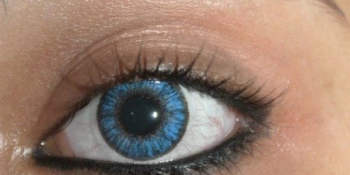
Optometric practices offer tinted and colored contact lenses to aid in cosmetic enhancement; however, many eyecare practices are unaware of the therapeutic effects that tinting a lens (contact or spectacle) can offer.
How often do you ask a child in the exam chair if her eyes were ever itchy or watery? When I started to ask this question to every patient in my pediatric population, it was quite evident that there was an undiscovered gold mine in my anterior segment practice. Allergies in the pediatric population are trending upward in a startling and truly dangerous manner.
A 76-year-old white female presented for her periodic diabetic eye examination at UAB Eye Care in July 2014. She admitted to blurry vision in her left eye for approximately one week.
The National Expert Panel to the National Center for Children’s Vision and Eye Health at Prevent Blindness has issued new recommendations to provide an evidence-based approach to screening children from 36 months to 72 months old.
Corneal size does matter. In fact, it can turn a simple soft contact lens fitting into a complex clinical puzzle.
On Sunday, September 1, 2013, life was breathed into this idea we now call the Energeyes Association. I am humbled by the experience to have completed our first full calendar year of operations. It is no longer about launching or “getting off the ground” but the true operationalizing, the implementation, and the hard part of putting a great idea into action.
In lieu of improving diagnostic tests, symptoms have been shown to be more repeatable than clinical findings.
The advent of spring yields the annual pilgrimage of patients into our offices complaining of the itchy, watery eyes of allergy. As any eyecare practitioner can attest, ocular allergy is one of the most common presentations to an eyecare practice.
I was the kid who was in the optometrist’s office when I was young because I couldn’t see the chalkboard when I was in third grade. My optometrist put me in contact lenses at the age of nine, and I’ve been wearing them ever since, so I spent a bunch of time in my optometrist’s office.