

News


All series


All News

Where does a visual impairment begin? Vision disorders can be influenced by a combination of genetic factors, environmental conditions, and lifestyle choices. When taking these into account, beginning with proper prenatal care is a good place to start.

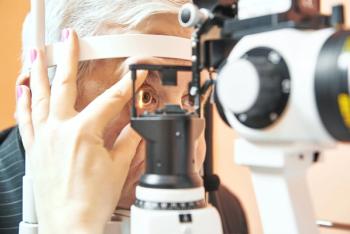
If patients are coming to us for a comprehensive examination, and vision begins at the tear film, why aren’t we routinely and objectively evaluating this critical layer?

Liverpool, UK-The British Contact Lens Association (BCLA) opened the first day of its 2015 conference with a day-long focus on myopia management. Ian Flitcroft, MA DPHIL FRCOPHTH, calls myopia a public health time bomb.

Liverpool, UK- The British Contact Lens Association (BCLA) opened the first day of its 2015 conference with a day-long focus on myopia management. Professor Brien Holden, BAppSc, PhD, DSc, chief executive officer of the Brien Holden Vision Institute, offers several points to remember when managing myopia with contact lenses.

Medscape recently released its annual list of the best and worst places to practice in the United States.But what makes a state great for MDs doesn’t always translate for ODs, of course. So, we asked ODs across the country about what makes their state a great place to practice optometry. Did your state make the list?

I recently read a blog from a first-year ophthalmology resident talking about how ODs shouldn’t be performing medical treatments. I’ll leave his utter ignorance of his own lack of knowledge aside for just a second and address the responses by my esteemed colleagues Drs. Ernie Bowling and Mohammad Rafieetary. You two are both extremely knowledgeable and way too nice.

I have very simple advice for students who are finishing up or new grads: figure out what you want to do. If your goal is to get out to work for a big box store or in a commercial setting, then go into that right when you’re done.

Because of its potential to reveal serious retinal, neurologic or other disease, pupil testing is a crucial part of the ophthalmic examination and requires astute observation. This procedure should be included as a component of every comprehensive examination or any time a patient needs to be dilated-in addition to any problem-focused visit involving eye health, such as a red eye visit, ocular emergency, or intraocular pressure (IOP) check.

Recently, a colleague wrote me to express his concern about a primary care physician (PCP) in his community acquiring digital retinal photographs of his diabetes patients. One of those patients presented to the optometrist’s office with the impression that “all he needed was a refraction” since the PCP had “already checked him for diabetic retinopathy.”

Developing and fostering positive relationships with colleagues is instrumental to an optometry practice’s success. However, relationship building should extend not only to internal but also to external colleagues.

By now you have heard and read a lot regarding ICD-10 changes coming in October. This is the most significant coding change in health care in more than 30 years, and the impact on healthcare practices cannot be overstated. Let’s discuss some of the changes in the new diagnosis coding system and how you can prepare for the transition.

Last month, I wrote about diagnosing my father-in-law’s branch retinal artery occlusion (BRAO) and then teaming up with a vascular surgeon for his subsequent carotid endarterectomy. After the successful “slam dunk” surgery, the nurse who discharged him advised him to “go to the ER” should he have any changes in vision, and in the process, dropped the ball.

Rather than simply limiting my thought process to overcoming obstacles, I have expanded my thought process to include the systems that go hand in hand with achieving my goals.

I can assure you that as consumers, we are all looking for the first-class treatment. When it comes to recommendations for your patients, do you offer them best-in-class treatments, or do you hold back?

Researchers at the Cullen Eye Institute at Baylor College of Medicine have developed nanowafer technology to delivery ocular drugs, an alternative to inefficient eye drops.