


The exploratory descriptive study cites that posterior cortical atrophy may be the most significant clinical indicator for Alzheimer disease.
The exploratory descriptive study cites that posterior cortical atrophy may be the most significant clinical indicator for Alzheimer disease.

The agreement redefines participant requirements and a slightly increased daily release of the drug, which is currently in a Phase 3 clinical trial.

The report, released by the American Optometric Association and the Deloitte Economics Institute, illustrates the significant impact that screens have made in the workplace, and why it’s important that eye care providers help ease its cost.

A task force of eye care providers is asking for feedback on newly-developed guidelines for managing diabetic retinopathy in their patients.

The event collaborates with a number of local Latin American organizations and will be held entirely in Spanish in a continued effort to combat myopia on a global scale.

Allergy testing and immunotherapy are the recommended steps to improve symptoms.

Catch up on what happened in optometry during the week of January 22-January 26.

OCULUS’ new perimetry device allows for more patient autonomy and easy data compilation for eye care providers by providing visual field tests via a virtual reality headset.
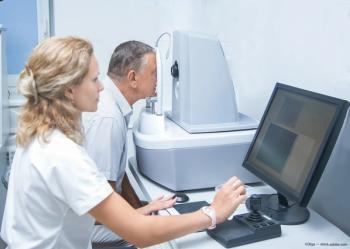
Retinal imaging and genetics data was used to predict future disease risk in a recent study.

The company’s inSights Research Program found that an increase in eye exams and prescription eye care products sold in 2023 resulted in slight industry growth.

Oculomics and oculometrics are part of an emerging field that looks at using the eye and eye movements as a biomarker for systemic and neurologic health. This article will review some of the recent findings correlating ocular structures and eye movement function with neurologic and cerebrovascular disease and discuss the future of eye care in the neurologic space.

The study, based out of India, successfully transplanted 32 of 34 corneas harvested from drowning victims.

Bonnie An Henderson, MD, cofounder of EnVision Summit, sits down with Optometry Times to detail the upcoming event that takes a unique, family-friendly approach to centering diversity in the eye care profession.

Osama Said, OD, details the advancements made to multifocal contact lenses, and what biometric considerations clinicians undertake for their patients.
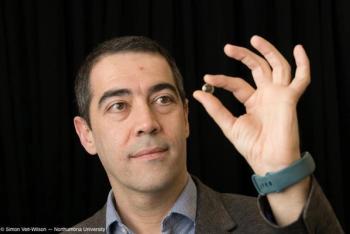
The new contact lenses contain micro-sensors which monitor changes in IOP over a period of several hours, sending the data collected wirelessly so it can be analyzed by an eye care provider and a diagnosis given.

Recent research gives clinicians another reason to encourage cessation.
Catch up on what happened in optometry during the week of January 15-January 19.

A new case-control study found that older people ages 70 and older living in South Korea’s urban areas were at a significantly higher risk for developing incident exudative age-related macular degeneration.

The European companies are collaborating in part of a strategic distribution partnership before the eProgressive smart glasses are available to the public later this year. The smart glasses use switchable lens technology to provide ease and comfort to patients needing progressive lenses.
The 2024 EnVision Summit will feature a brand-new Optometry Program, co-chaired by Danica Marrelli, OD, FAAO, AAO Dipl, and Cecelia Koetting, OD, FAAO, DipABO.

Current optometry students Liliana Gonzalez, Emmanuel Nwagha, Anna Reard, Grace A Skarohlid, and Trevor Stiede have each been selected to receive a $2,500 scholarship from the online eyewear retailer.

A collaborative study has found that pupillometry as a clinical test may help identify biomarkers for major depressive disorder. The test identifies a subgroup of patients with anticipatory hypo-arousal subserving anhedonia symptomatology.

Robert Weiss, former president and CEO of The Cooper Companies, shares some of the latest optometric schooling developments from Vietnam in his work with Optometry Giving Sight, the Brian Holden Foundation, and Hanoi Medical University.

New developments to progress diagnostic criteria for Mild Traumatic Brain Injury (TBI) are discussed by The Mild Traumatic Brain Injury (TBI) Task Force of the American Congress of Rehabilitation Medicine Brain Injury Special Interest Group.
Catch up on what happened in optometry during the week of January 8-January 12.

The eye care company and nonprofit organization are teaming up to provide educational resources, patient stories, and a fundraising challenge to help find a cure for glaucoma.

Harrow’s Vevye is the first and only cyclosporine-based product approved for the treatment of both signs and symptoms of dry eye disease.
According to researchers, the strongest biomarker was achieved from a single bright flash of light to the right eye, with AI processing significantly reducing the test time.

AR-15512 is a topical transient receptor potential melastatin 8 (TRPM8) agonist designed to treat the signs and symptoms of DED via increased tear production.

According to OKYO Pharma, the first-in-human, randomized, double-masked, placebo-controlled trial of OK-101 “established a clear and informed path for further development in Phase 3 registration trials.”