

The company stated that 46.2% of patients demonstrated a 1- or 2-step improvement in the Diabetic Retinopathy Severity Scale (DRSS) at 40 weeks in the Axpaxli arm, compared to 0% in the control arm.
The company stated that 46.2% of patients demonstrated a 1- or 2-step improvement in the Diabetic Retinopathy Severity Scale (DRSS) at 40 weeks in the Axpaxli arm, compared to 0% in the control arm.

Analysis showed that patients with dry eye had “worse sleep quality than the healthy population," which could be due to incomplete eyelid closure, eye discomfort, and mental stress.
Andrew S. Morgenstern, OD, FAAO, FNAP, joins Dr. Korik to discuss a newly published study on the incidence of keratoconus among pediatric patients in a Chicago-based study. The pair also discuss the International Keratoconus Academy, and Morgenstern's experience working at Walter Reed Medical Center.

The new service, PolicyWatch, allows optometric practices and service providers as well as telemedicine solution companies to access real-time policy changes in their area of practice, spanning all 50 states and the District of Columbia.

UPFs include fast food, energy drinks and soda, sweets such as chocolates and candies, and much more.

Control measures in China are ahead of US measures.

Results from the THRIVE study found that when reading glasses were given to first-time wearers, monthly median incomes increased by 33%.
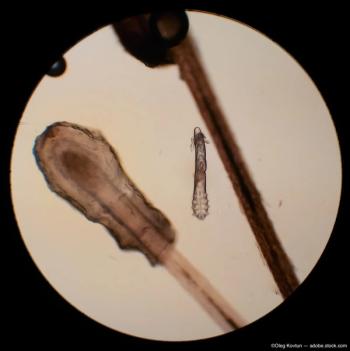
Trial findings show efficacy of lotilaner for killing mites

Catch up on what happened in optometry during the week of April 8-April 12.
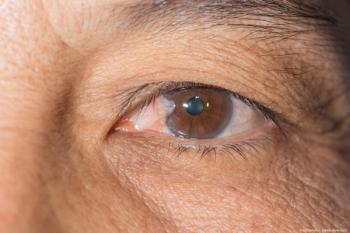
Pterygium is an ocular disease commonly referred to as “surfer’s eye,” which can result from exposure to high levels of UV radiation.
Before the ASCRS 2024 meeting, TheiaNova CEO Carissa Fonseca, PhD, pitched a novel keratoconus treatment.
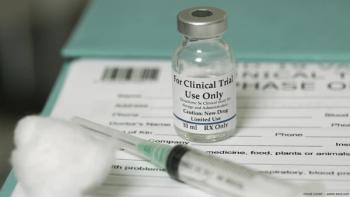
The Phase 1/2 study includes a dose-escalation phase of the study featuring 3 cohorts each one receiving either a low, medium, or high dose of OCU410.

The optometry school, founded in 1904, was the first of its kind in California.

The company selected LNZ100, designed to treat presbyopia, as its lead candidate and expects to submit an NDA in mid-2024.

The company now offers 3 different digital marketing plans for independent optometric offices, and will have a strategist dedicated to individual accounts.

The Phase 3 study will have a sample size of 150 participants—one arm of 75 participants with the RHO gene mutation and the other arm with 75 participants that are gene agnostic.
Bryan Wilson, executive director of medical affairs at Genentech, details why Birmingham, Alabama was chosen as the community to study the effects of diabetic eye disease among African Americans in a new manuscript from the ADA and Genentech.

The study authors also noted that patients responding well to routine intense pulsed light sessions do not need to undergo additional sessions.

Catch up on what happened in optometry during the week of April 1-April 5.

The Hadassah Self-Visual Acuity Screener (HSVA) has high test–retest reliability, accuracy, and alignment with clinical-standard VA tests, according to a study conducted by its developers.

The manuscript, "Breaking Barriers: Partnerships to Improve Diabetic Eye Health in Alabama," highlights the burden of diabetic eye disease in Alabama, as well as strategies that target racial health disparities within that population.

The trials will include patients with ocular hypertension, and assess QLS-111 in its efficacy for lowering IOP beyond levels currently achievable by targeting EVP.

Jill Saxon, OD, FAAO, chats about eye health safety for the upcoming total solar eclipse on April 8, 2024, and how Bausch + Lomb is celebrating the celestial event.

The effort led to the creation of an artificial vitreous body for treating retinal detachment. This solution is based on a natural carbohydrate derived from algae.

Warm compresses are an invaluable step in the treatment of dry eye.

The clinical stage medical technology company is developing a laser system that performs femtosecond laser image-guided high-precision trabeculomtomy, or FLigHT.

Davis Corley, CEO of Neurolens, outlines the importance a new study that show statistically significant improvement of headaches with the use of Neurolens.
Phentolamine ophthalmic solution 0.75% is a preservative-free, stable eye drop, which blocks the α1 receptor within the iris dilator muscle without affecting the ciliary muscle.

Charles Leclercq, CEO of ARxVision, outlines the conception of ARxVIsion's collaboration with Seeing AI and NaviLens apps, and details the popular uses for the headset so far.
Catch up on what happened in optometry during the week of March 25-March 29.