


Christina Schiller, OD, Blake Jarrard, OD, and Christopher Herring, OD, were this year’s recipients.
Christina Schiller, OD, Blake Jarrard, OD, and Christopher Herring, OD, were this year’s recipients.

Reed, OD, will take on the acting president role for the next two months and will be instated as president during this year's Optometry's Meeting.

Aflibercept-jbvf and aflibercept-yszy are the first interchangeable biosimilars to aflibercept 2 mg that have been approved in the US.

South Dakota’s newest scope expansion bill, signed into law earlier this year, offers new opportunities for optometrists.

DF-003 is a first-in-class, oral, potent, highly selective alpha-kinase 1 (ALPK1), an inhibitor believed to be responsible for causing ROSAH syndrome.

The program allows practices to sign up for rebate deals and discounted services.

The trial evaluates OCU410ST, a modifier gene therapy candidate utilizing an AAV delivery platform for the retinal delivery of the RORA gene. The gene therapy is being designed as a one-time treatment for life.
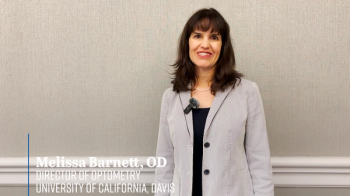
Melissa Barnett, OD, Director of Optometry at the University of California, Davis, talked about her session at IKA that focused on keratoconus from the patient perspective.

Elizabeth Yeu, MD, Executive Board Member of IKA, and a cataract and refractive surgeon at Virginia Eye Consultants, talked about cataract surgery in keratoconus, and the diagnostic considerations clinicians can take before and in the operating room.
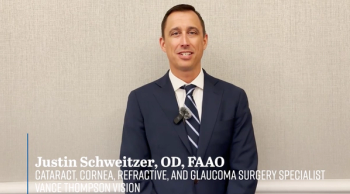
Justin Schweitzer, OD, FAAO, from Vance Thompson Vision, talked about his session at the IKA Symposium that discussed cross-linking in keratoconus treatment both now and looking toward the future.
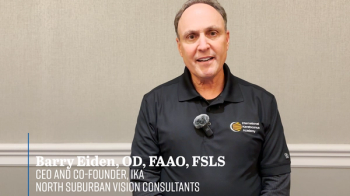
Barry Eiden, OD, FAAO, FSLS, President and Co-founder of IKA, talked about his session at the meeting centering around the pediatric prevalence of keratoconus, the importance of early diagnosis, and the impact this can have on practices.
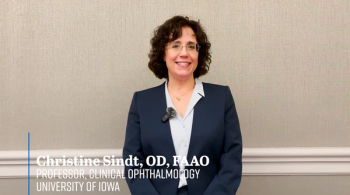
Christine Sindt, OD, FAAO, Clinical Professor of Ophthalmology and Visual Sciences at the University of Iowa School of Medicine, talked about her session at the meeting focusing on higher order aberrations and the correction of complicated optics on scleral contact lenses.
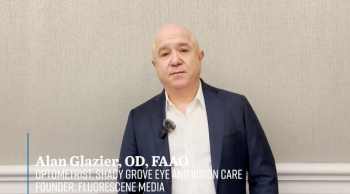
Alan Glazier, OD, FAAO, talked about moderating a session discussing the education of the public on keratoconus, from screening to diagnosis, and the roles clinicians can take to assist in the patients' anxieties.
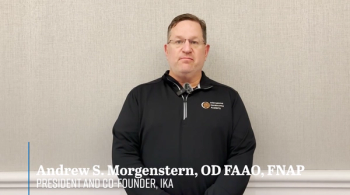
Andrew Morgenstern, OD, FAAO, FNAP, President and Co-founder of IKA, talked about his session at the meeting that discussed the prevalence of keratoconus in the pediatric population in the US.

Catch up on what happened in optometry during the week of May 13-May 17.

William Reindel, OD, discusses how pupil size affects fit and comfort in multifocal contact lens wearers.
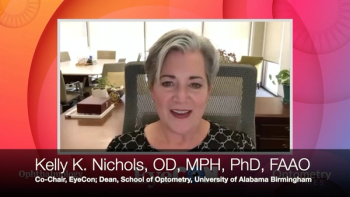
EyeCon chair Kelly K. Nichols, OD, PhD, MPH, FAAO, shares some of her favorite moments throughout her career and what inspires her to continue pushing the industry forward.

The SCANLY Home OCT device allows physicians to monitor patients’ wet age-related macular degeneration in between visits through a health cloud portal.

The microemulsion drug ocular penetration system platform technology was found to effectively formulate and deliver lipophilic molecules via topical eye drops.

The Early Detection of Vision Impairment in Children (EDVI) Act was recently introduced in the US House of Representatives with the goal of improving access, diagnosis, and treatment for children ages 2 to 17, according to Prevent Blindness.

Considering recovery time, potential adverse effects, and future eye care needs can increase patient satisfaction.
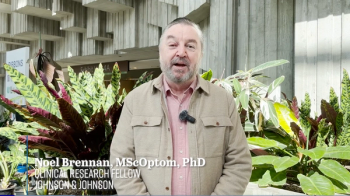
Noel Brennan, MScOptom, PhD, overviews his ARVO 2024 presentation on reimagining the prediction of longer term efficacy numbers in data from pediatric trials evaluating myopia.

Preventive options should be as important as treating symptoms

A team of Chinese researchers have been working on a way to continuously and more comfortably detect these tiny fluctuations in pressure, such as contact lenses that transmit signals to receptor glasses.

The company reported that statistically significant data was found supporting ANX007’s ability to provide vision loss protection in patients with geographic atrophy.

Honest discussions about treatments for dry eye disease can enhance compliance and simplify care.
Catch up on what happened in optometry during the week of May 6-May 10.

The clinical-stage biopharmaceutical company has enrolled 15 participants in its study to assess the safety and tolerability of ACT107 in 3 dose strengths.

Conditionally accepted by the FDA as EYO-1901, DURAVYU is a tyrosine kinase inhibitor intended to improve signs and symptoms of non-proliferative diabetic retinopathy in the PAVIA trial.

The diagnostic aid platform, C.DIAG, utilizes artificial intelligence to assist with the diagnosis and treatment of dry eye disease.