


Perfluorohexyloctane may slow evaporation to reduce dry eye.
Perfluorohexyloctane may slow evaporation to reduce dry eye.
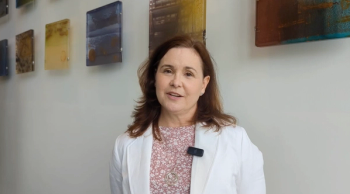
Drs Clark Chang and Tracy Lynn Schroeder Swartz give an overview of their Optometry's Meeting talk on detecting keratoconus early, providing tips for the proper technology to use and how to properly detect high-risk patients.

Key steps include getting a new refraction, nailing the add power, and managing patient expectations.

Technological advancements may improve treatment options.
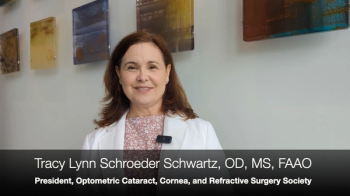
Tracy Lynn Schroeder Swartz, OD, MS, FAAO, overview the 3 questions to ask before referring a patient for refractive surgery.
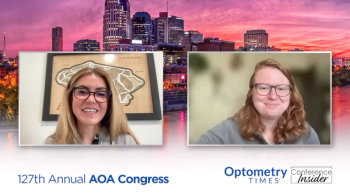
Neda Gioia, OD, CNS, FOWNS, outlines the poster entitled, "Clinical Evaluation of a Multi-Ingredient Oral Supplement on Dry Eye Symptoms and Tear Volume," in an interview with Optometry Times.
Christi Closson, OD, FAAO, details unique products from Johnson & Johnson, including a new contact lenses designed specifically for patients with astigmatism.
Drs Erin Draper and Christopher Kuc reiterate the important role optometrists play in identifying biomarkers for neurodegenerative diseases in patients.

Catch up on what happened in optometry during the week of June 17-June 21.
Susan Gromacki, OD, MS, FAAO, FSLS, emphasizes the importance of leveraging modern technology and scientific advancements in contact lenses to provide the best possible comfort and vision correction for patients with astigmatism.
Nick Bruns, OD, FAAO, talks refractive surgery, from premium IOL options for patients with cataracts to EVO ICL for patients seeking elective corrective surgery.
Walter Whitley, OD, MBA, FAAO, weighs in on the importance of staying in the know of innovations in treatment options for the sake of patient care.
Rafieetary emphasizes the importance of follow-up plans and consistent support to prevent patients from dropping out of treatment, which can negatively impact their prognosis.
Jeffrey J. Walline, OD, PhD, was this year's award winner.
Gromacki shares the importance of a dedicated approach to treating keratoconus, highlighting the need for passion, diverse tools, and a committed practice environment to ensure patient success.
Raman Bhakrhi, OD, FAAO, said that optometrists' collaboration with primary care physicians and other medical professionals can help minimize the chance for retinal damage caused by medications.
Devin Sasser, OD, gives an overview of a panel and breakout session that the American Optometric Student Association will be hosting at AOA's Optometry's Meeting.

Exploring strategies for effective management of a multifaceted condition.
Jacobi Cleaver, OD, FAAO, gives an overview of a panel on allyship given by Black Eyecare Perspective at their event hosted at AOA 2024.

Jade Coats, OD, alongside Jacqueline Theis, OD, FAAO, and Cory Lappin, OD, MS, FAAO, gave a talk on ocular pain and patient care at AOA's 2024 Optometry's Meeting.

Over 60 eye care professionals from all 50 states were selected to help shift the focus of pediatric myopia care from correction to comprehensive treatment.

Jade Coats, OD, details 2 poster presentations on the benefits found in a novel lipid-containing eye drop during AOA's 2024 Optometry's Meeting.

A patient's ethnicity and race should be considered when assessing risk factor and changing management plans, according to Ruth Shoge, OD MPH, FAAO.

The new policy will work to encourage grant-making entities to fund post-market research investigating pharmacodynamics and pharmacokinetics for generic drugs that did not adequately enroll women, and sexual and gender minority populations in their clinical trials.

Pathogenesis and detection of diabetic retinopathy.

The study also discovered a need for more blatant labeling on e-liquid containers to help reduce accidental contact with the ocular surface.

The study evaluates the efficacy, safety, and tolerability of 2 dose levels of AGTC-501 for the treatment of X-linked retinitis pigmentosa.
Catch up on what happened in optometry during the week of June 10-June 14.

When audited after completing an education training on the delivery of laser treatments found that optometrists specializing in glaucoma were competent in providing pre- and post-treatment care.

Positive data from the GALE long-term extension study showed patients developed fewer new scotomatous points with 36 months of both continuous monthly and every-other-month treatment.