
Click the links below to subscribe to the show on your favorite platform and get notified with each new episode:
Commentary|Podcasts|September 7, 2026
From Paper to Clinic, Episode 7: GLP-1s and idiopathic intracranial hypertension
Fact checked by: Kirsty Mackay
Host Hamza Shah, OD, MS, FAAO, is joined by Leonard Messner, OD, to discuss GLP-1s and idiopathic intracranial hypertension, inspired by Mitchell et al's paper, "The Effect of GLP-1RA Exenatide on Idiopathic Intracranial Hypertension: A Randomized Clinical Trial."
Advertisement
Welcome to From Paper to Clinic, a podcast focused on evidence-based eye care and real-world clinical decision-making, hosted by Hamza Shah, OD, MS, FAAO, a faculty member at the University of Houston College of Optometry. His work spans clinical patient care, education, and mentoring, and his clinical interests include ocular disease, dry eye, perioperative care, and, above all, the challenge of translating information into meaningful patient outcomes.
In Episode 7 of From Paper to Clinic, “GLP-1 Receptor Agonists and Idiopathic Intracranial Hypertension,” Leonard Messner, OD, FAAO, vice president for strategy and institutional advancement and professor of optometry at the Illinois College of Optometry, joins the show to explore what a landmark randomized trial on exenatide reveals about the underlying mechanisms of idiopathic intracranial hypertension (IIH), and what it means for how optometrists manage the disease today.
Glucagon-like peptide-1 (GLP-1) receptor agonists have reshaped obesity medicine, but their potential in IIH has less to do with weight loss than with the basic biology of intracranial pressure. The choroid plexus is dense with GLP-1 receptors, and data from animal studies have shown that GLP-1 agonists could meaningfully suppress cerebrospinal fluid production. The Mitchell et al trial translated that preclinical signal directly to human participants: 15 women with active IIH received either subcutaneous exenatide or placebo for 12 weeks, with intracranial pressure (ICP) measured via telemetry catheters at 2.5 hours, 24 hours, and 12 weeks. The results were striking: Exenatide reduced ICP by approximately 5 to 6 cm of water pressure at all 3 time points, and it did so quickly. A measurable reduction was already present at the 2.5-hour measurement.
The finding that the benefit appeared independent of weight loss was the study’s most clinically provocative result. At 12 weeks, patients had not meaningfully changed their body weight, yet ICP remained significantly lower throughout. For a disease historically managed through the slow, difficult work of sustained weight loss alongside acetazolamide, that distinction matters. It suggests GLP-1 agents may act directly on ICP physiology rather than through metabolic effects, potentially benefiting a broader range of patients, including those who struggle most with weight management.
Evidence has continued to accumulate since that 2023 trial. Data from a subsequent retrospective study examining more than 1000 patients with IIH found that those taking GLP-1 agonists showed significant improvements in papilledema, headaches, and visual function and were less likely to require surgical intervention for ICP management. The retrospective design, drawing from a billing database, limits the strength of those conclusions, but the directional signal aligns with the mechanism and the trial data. Messner is cautious about abandoning established therapies: Acetazolamide remains well supported by data from the Idiopathic Intracranial Hypertension Treatment Trial (NCT01003639) for early disease, and the potential risk of nonarteritic anterior ischemic optic neuropathy associated with GLP-1 agents warrants attention. But for patients who cannot tolerate acetazolamide or topiramate, or who have struggled with weight management programs, GLP-1 agonists represent a more realistic path to the outcomes optometrists want to see.
For ODs managing or comanaging IIH, Messner’s diagnostic framework is as instructive as the pharmacology. He emphasizes the case history—not just the current body mass index, but the trajectory of weight gain—and the 2 symptoms he drills down on above all others: chronic daily headaches and synchronous pulsatile tinnitus. Optical coherence tomography remains central, but not just for retinal nerve fiber layer thickness—the morphology of the optic nerve on a B-scan, specifically the inward displacement of Bruch membrane complex at the lamina cribrosa, is among the most clinically meaningful findings. So is the ganglion cell complex, which he treats as the critical indicator of how much time the clinician has. “It’s the glaucoma of the brain,” he notes of IIH—progressive, trackable, and consequential in ways that only become clear with consistent visual field monitoring.
The paper inspiring this discussion is “
Do you want to only listen to this episode? Check out the audio player below.
Episode 8 is coming on Monday, October 5, 2026, at 8 AM ET
The eighth episode of From Paper to Clinic debuts in early October and features Cory Lappin, OD, MS, FAAO, who focuses on dynamic muscle stimulation of the periorbital area for blinking in dry eye. Listeners are invited to join the conversation as the series explores how evidence moves––from paper to clinic.
Advertisement
Related to this article
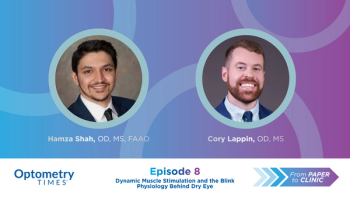
Host Hamza Shah, OD, MS, FAAO, is joined by Cory Lappin, OD, MS, FAAO, to discuss dynamic muscle stimulation for dry eye, spurred by a paper on improving blinking in dry eye patients.
CLARITY program data show significantly longer time to treatment failure and higher rates of steroid-free quiescence vs placebo.

Duravyu gained 2.5 letters vs 6.1 with aflibercept at week 52/56, missing noninferiority in a second phase 3 wet AMD trial.

From dry eye to GLP-1s, this year's conference brought a variety of insights from key experts in optometry.

Kevin Chan, OD, MS, discusses an AAOpt 2026 symposium on individualized low-dose atropine dosing for myopia and the FDA outlook ahead of the SYD-101 advisory meeting.
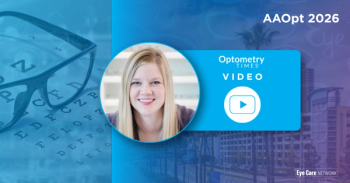
Jamie Kuzniar, OD, FAAO, FSLS, discusses a case-based AAOpt 2026 session on scleral lens complications, fitting around cross-linking, and advice for new graduates.
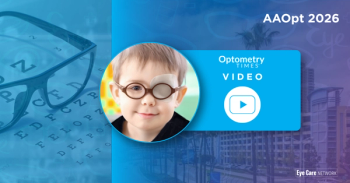
Magdalena Stec, OD, FAAO; Noreen Shaikh, OD, FAAO; Huizi Kelly Yin, OD, FAAO; and Brenda Bohnsack, MD, PhD, detail their AAOpt 2026 session in Anaheim, California.
Kwaku Osei, OD, PhD, FAAO, discussed patient-reported outcomes with a senofilcon C (Johnson & Johnson; Acuvue Vita), reusable lens, with the majority of wearers rating comfort, vision, and handling favorably.
Advertisement
Advertisement
Trending on Optometry Times - Clinical News & Expert Optometrist Insights
1
FDA approves Brytly eye drops for ocular redness relief lasting up to 12 hours
2
The Independent Advantage S02 E07: Is your front desk missing opportunities?
3
Brepocitinib for noninfectious uveitis meets all phase 3 trial end points
4
More than monitoring: Using AMD visits to promote healthy vision aging
5