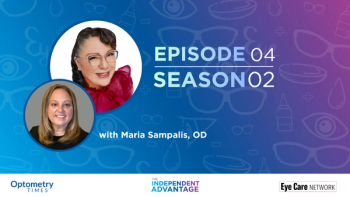
Maria Sampalis, OD, tells Diana Canto-Sims, OD, in this week's episode that the biggest impact AI has made at her practice is when used in the exam room as a scribe for routine patients.
Aleman-Moheeputh, OD, details the difficulties undocumented immigrants often face in the search for accessible care.
Glenda Aleman-Moheeputh, OD, spoke on the systemic barriers that Latino communities—particularly in Miami and Hialeah—face in accessing eye care and broader healthcare, and proposes practical, culturally responsive solutions.
Aleman-Moheeputh explained that a large proportion of Latino patients lack health insurance, which leads them to avoid or delay seeking healthcare in general, and eye care specifically. As a result, many only present to the eye doctor when something is seriously wrong. Commonly, patients report sudden blurry vision over just a few days, which is clinically alarming and often signals advanced disease rather than something that can be easily corrected.
Another frequent scenario is that patients only come in after failing a vision exam at the driver’s license office, sometimes having never had a vision exam in their lives. When they finally see the eye doctor, serious conditions such as severe diabetic retinopathy are discovered. At that point, the priority shifts from regaining driving privileges to urgent systemic care: coordinating with a primary care physician to address diabetes and referring to a retina specialist. Aleman-Moheeputh identified this pattern as part of a larger systemic problem of lack of access to care.
Aleman-Moheeputh also highlights non-medical barriers, including undocumented status and lack of transportation. In communities with many undocumented immigrants, simply leaving home can feel risky, especially in the current climate in which ICE is a prominent concern. Some individuals are afraid even to go out for groceries, leading to a decline in routine care visits in high-density Latino neighborhoods. Aleman-Moheeputh emphasized the importance of clinicians recognizing the courage and effort it takes for these patients to come to the office at all.
A major theme is the importance of trust-building and cultural/linguistic sensitivity. Aleman-Moheeputh urged providers to express gratitude (“thank you for coming to see me today”) and to learn basic Spanish phrases such as “buenos días” and “¿cómo está?”. Even these small efforts can make patients feel that the provider is trying to “come to their level,” increasing comfort and trust. Once rapport is established, clinicians can use technology for live translation, allowing them to explain diagnoses, treatments, follow-up requirements, and the consequences of non-adherence in a language the patient fully understands, while also enabling patients to respond in Spanish.
The discussion then shifts to optometry education, specifically praising the School of Optometry in Puerto Rico, where instruction is largely in Spanish, producing bilingual doctors who are well equipped to serve Latino communities. Aleman-Moheeputh argued that schools located in areas with dense Latino populations—such as NOVA in South Florida and schools in Chicago—should “go above and beyond” to prepare students for this reality. Suggested strategies include:
Aleman-Moheeputh framed these steps as simple, feasible interventions that can significantly improve care for Latino patients. She concluded by reinforcing the idea that a small greeting like “buenos días”—or even “bonjour” in another context—can go a long way in bridging cultural divides and fostering trust between providers and patients.