
Dry Eye
Latest News
Advertisement
Video Series
Latest Videos





Shorts
0:55
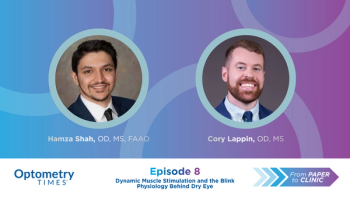
From Paper to Clinic: How Dynamic Muscle Stimulation Targets the Blink
4 days ago
by
Hamza Shah, OD, MS, FAAO(+1 more)
1:15
From Paper to Clinic: Where DMST Fits Alongside IPL and Radiofrequency
6 days ago
by
Hamza Shah, OD, MS, FAAO(+1 more)

2:01
From Paper to Clinic: The Numbers Behind Dynamic Muscle Stimulation
8 days ago
by
Hamza Shah, OD, MS, FAAO(+1 more)

1:24
From Paper to Clinic: Lid laxity isn't just a surgical problem anymore
10 days ago
by
Hamza Shah, OD, MS, FAAO(+1 more)
0:20
From Paper to Clinic: Episode 8, coming Monday, October 5
14 days ago
by
Hamza Shah, OD, MS, FAAO
0:35
Must-have products to suggest for pediatric patients with dry eye
2 months ago
by
Pamela E. Theriot, OD, FAAO

0:42
The biggest myth in dry eye disease: Mila Ioussifova
3 months ago
by
Mila Ioussifova, OD, FAAO(+2 more)

0:15
The 2 things you need to diagnose dry eye
3 months ago
by
Anna A. Tichenor, OD, PhD, FAAO(+1 more)

1:39
From Paper to Clinic: Dry eye advances in the past 10 years
4 months ago
by
Hamza Shah, OD, MS, FAAO(+1 more)

3:25
From Paper to Clinic: Is "ocular surface disease" actually a misnomer?
4 months ago
by
Hamza Shah, OD, MS, FAAO(+1 more)
Podcasts


CME Content












Advertisement
More News

Startup S5G Therapeutics aims to move ubiquinol technology from the laboratory toward treatments for dry eye, Fuchs dystrophy, and other corneal conditions.

The latest in drug and technology developments and updates from August 2026.

Periocular skin treatment is emerging as a complementary treatment for dry eye disease.
Catch up on the top stories in optometry during the week of August 31-September 4.

The industry-sponsored survey reveals most women don't recognize dry eye as a symptom of perimenopause or menopause.

Study: Tryptyr treatment associated with complex visual tasks improvement in DED patients
Published: | Updated:
Acoltremon ophthalmic solution 0.003% usage was associated with improved performance in visual acuity tasks.
Catch up on the top stories in optometry during the week of August 24-28.

The company announced phase 2 results of a dual-action lifitegrast/perfluorohexyloctane dry eye drop alongside positive phase 1b results for BL1332, a first-in-class TRPV1 antagonist for ocular surface pain.

The FDA has expanded the indication to include improvement of meibomian gland function in adult patients with evaporative dry eye disease due to MGD, making it the first treatment with this indication.

Perceived stress modestly predicted later dry eye symptoms in young adults, but significance depended on a prespecified 1-tailed test.

Recommending omega-3 fatty acids in the diet of a patient with DED could lead to improved tear osmolarity and tear breakup time and thus fewer dry eye symptoms.
Harrow will acquire Tyrvaya, the only FDA-approved nasal spray for dry eye disease, from Viatris for around $100 million, complementing its cyclosporine product Vevye.

A disconnect between the signs and symptoms of OSD can easily lead to misdiagnosis or undertreatment if clinicians rely solely on a slit lamp observation.
Esen K. Akpek, MD, speaks with the Eye Care Network in recognition of Dry Eye Awareness Month.

The approval is backed by Phase 3 bridging data—expanding EyeSol options and intensifying market rollout.

According to the survey, one in five sufferers reported that dry eye symptoms affect their self-confidence (22%) and emotional wellbeing (20%).

A retrospective study of 27 dry eye patients found adjunctive preservative-free periocular skincare significantly reduced periocular erythema and MGD severity over 28 days, with 93% of patients reporting intent to continue use.
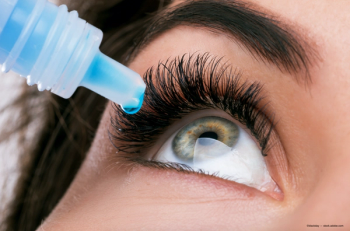
New preservative-free cyclosporine 0.05% single-use drops target dry eye inflammation, dosing, and safety.

Oculis launches a genotype-guided dry eye trial testing licaminlimab eye drops, targeting TNFR1 patients and measuring Day 29 ocular discomfort improvement.
The product is expected to be available in stores and online at Amazon, CVS, Target and Walgreens by the end of June 2026.
Upsher-Smith launched generic cyclosporine ophthalmic emulsion 0.05% in the US for tear production in inflammatory dry eye.

Mitch Ibach, OD, FAAO; Nate Lighthizer, OD, FAAO; and Austin Lifferth, OD, FAAO, share practical insights on identifying early disease and more.

NUS researchers report that plant-based photosynthetic nanoparticles restored corneal NADPH levels and reversed damage within 5 days in preclinical dry eye.
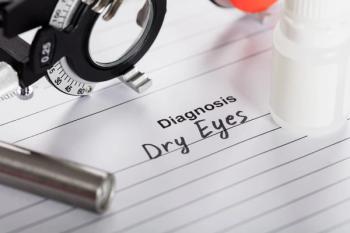
Jessilin Quint, OD, MBA, MS, FAAO, shares strategies for improving adherence, building trust through patient communication, and more.

Knowing the shared signs and symptoms can lead to proper diagnosis.
Advertisement
Advertisement
Trending on Optometry Times - Clinical News & Expert Optometrist Insights
1
The screen time question: What to ask and when to look deeper
2
FAQ: What clinicians should know as SYD-101 heads to FDA advisory committee
3
The Independent Advantage S02 E06: Taking the strain of undesirable tasks off staff with AI
4
AAOpt 2026: Understanding the gene therapy landscape for retinitis pigmentosa
5