



Myopia
Latest News

Advertisement
Latest Videos







Shorts

1:00
From Paper to Clinic: The "fitted bedsheet" retina analogy
4 months ago
by
Hamza Shah, OD, MS, FAAO(+1 more)

0:28
From Paper to Clinic: Episode 5, coming Monday, July 6
4 months ago
by
Hamza Shah, OD, MS, FAAO

0:45
High myopia carries risk beyond refractive correction
4 months ago
by
Mohammad Rafieetary, OD, FAAO, FORS, DipABO, ABCMO(+2 more)

0:40
Has optometry progressed enough to fully address myopia?
7 months ago
by
Sheila Morrison, OD, MS

0:35
What's the biggest misconception optometrists have about AI?
7 months ago
by
Jay Henry, OD,MS

0:35
What's the ideal age for a child's first eye exam?
7 months ago
by
Sheila Morrison, OD, MS
CME Content












Advertisement
More News
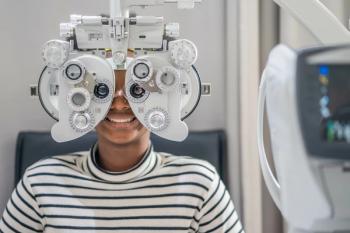
Jeffrey J. Walline, OD, PhD, shares practical perspectives on counseling families, selecting treatment options based on lifestyle and compliance, and more.
Mark Bullimore, PhD, MCOptom, consultant for Sydnexis, weighs in on the CRL received by the company for SYD-101.
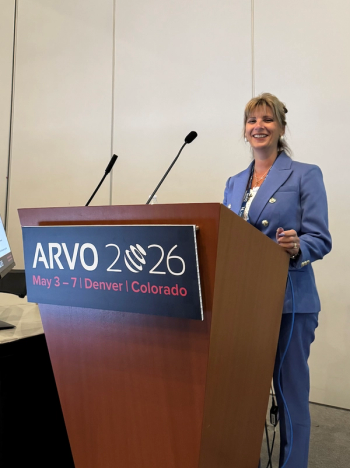

The randomized controlled trial included 196 schoolchildren in Hong Kong aged 4 to 12 years with myopia who completed the study.

Research suggests that one drop of atropine is all it takes for beneficial effects.

A global systemic review recently found that women had less access to glasses than men in low- to middle-income regions.

Myopia management is not one-size-fits-all, writes Magdalena Stec, OD, FAAO.
Study demonstrates 0.025% atropine balancing efficacy and tolerability in Chinese pediatric patients
All 3 concentrations evaluated in the study were associated with reduced myopia progression.

The analysis included studies 31 studies identified through Web of Science, PubMed, CNKI, and Wanfang databases through October 2025.

Maria Liu, OD, PhD, MPH, MBA, FAAO, is taking the recent decision as an opportunity to reassess the role atropine plays in myopia control.
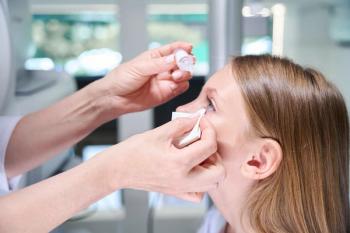
This study sheds light on use of the 0.05% atropine, which has been reported to be effective against myopia progression in some but not all studies.
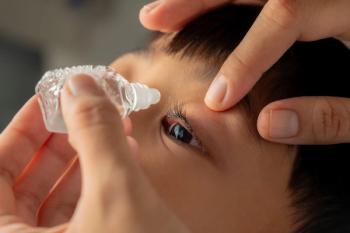
For Langis Michaud, OD, MSc, FAAO, FSLS, FBCLA, FEAOO, low-atropine options are a must for eye care providers in the treatment of myopia.

The study was carried out between July 8 and August 1, 2024, and included 127 eyes from 68 children aged 8–14 years.

The findings were presented at the 51st Annual Meeting of AAPOS in Boston, Massachusetts.

Meta-analysis finds refraction change better than axial length thresholds for tracking childhood myopia, urging growth-curve AL monitoring to flag retinal risk.

In the urge to intervene early, optometrists are turning to low-dose atropine as a tool to combat myopia progression.

This evidence-based eye care podcast seeks to turn research into practical clinical decisions, with new episodes on the first Monday of each month featuring expert guests across glaucoma, retina, dry eye, AI, and more.

The study evaluated the company’s Defocus Incorporated Multiple Segments Triple Enhanced Design (DIMS TED) myopia control lenses in children aged 4–12 with progressive myopia.


The lens was developed in collaboration with Brien Holden Vision Institute (BHVI).

Evolutions in AI, myopia management, and individualized care are on ODs' minds for the new year.
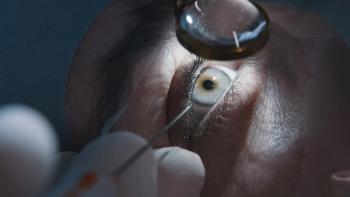
Understanding the different expectations between patients with these conditions is key to choosing the appropriate refractive surgery.

The organization reaffirmed that it stands by myopia defined as a chronic, progression disease.

An effective but underused resource with positive benefits for patients with myopia.

The trial met its primary efficacy and key secondary end points.
Advertisement
Advertisement
Trending on Optometry Times - Clinical News & Expert Optometrist Insights
1
BIM-IOL System holds 37% IOP reduction at 4 years in first-in-human trial
2
Takeaways from this week in optometry: October 16-23
3
Brepocitinib for noninfectious uveitis meets all phase 3 trial end points
4
More than monitoring: Using AMD visits to promote healthy vision aging
5