




Myopia
Latest News
Advertisement
Latest Videos





Shorts
1:57
Myopia management data underscores Stellest lens success for September
10 days ago
by
Monica Jong, BOptom, PhD, FAAO, FBCLA(+2 more)

1:14
Day 2 recap: Myopia, glaucoma, and keratoconus
23 days ago
by
Hamza Shah, OD, MS, FAAO

0:40
Viewing behavior of DOT spectacle lens wearers
25 days ago
by
David Webley, BSc (Hons), MCOptom, FBCLA(+1 more)

0:58
Myopia control lenses provide early pediatric intervention
a month ago
by
Monica Jong, BOptom, PhD, FAAO, FBCLA(+1 more)
0:36
Utilizing a patient's community to promote myopia management
2 months ago
by
Maria Sampalis, OD
1:05
Discussing children's risk of genetic predisposal to myopia with parents
2 months ago
by
Leslie Scher, OD
1:01
Comparing comprehensive eye exams to standard vision screenings
2 months ago
by
Leslie Scher, OD

1:47
From Paper to Clinic: The importance of parental influence in pediatric care
3 months ago
by
Hamza Shah, OD, MS, FAAO(+1 more)

1:59
From Paper to Clinic: Should you involve the patient in pediatric care conversations?
4 months ago
by
Hamza Shah, OD, MS, FAAO(+1 more)

1:23
From Paper to Clinic: SYD 101's nonapproval and what the data really show
4 months ago
by
Hamza Shah, OD, MS, FAAO(+1 more)
Podcasts




CME Content












Advertisement
More News

The meeting will include an Open Public Hearing.

AMA resolution backs classifying myopia as a disease, aiming to expand insurance coverage for pediatric myopia control treatments.

SightGlass Vision reports the milestone just 1 year after reaching 1 million users.

The findings extend prior Asian efficacy data to a diverse North American cohort for Stellest lenses.
Noha Ekdawi, MD, FAAP, explains why pediatric myopia demands individualized, progression-based management.

Myopia developed in 24.5% of initially nonmyopic male students over 3 years, with the highest risk among those with limited hyperopic reserve.
Catch up on the top stories in optometry during the week of August 3-7.

Myopia-control spectacle lenses reduce short-term progression in children by about 50%, though efficacy and long-term durability vary.
Segmented refractive index modeling reduced axial length errors linked to crystalline lens variation, but clinical validation is needed.

The FDA confirmed phase 1 and nonclinical data support pediatric phase 2 development of IVMED-85, a non-atropine daily eye drop for myopia progression.

NEI-funded US trial compares HALT MAX lenses, 0.05% atropine, and combination therapy to slow childhood myopia and axial elongation.

As of July 13, 2026, a meeting date has not been set.

A midyear look at 2026's biggest optometry findings, from myopia control research to safety signals on red light therapy and semaglutide.

The relationship between ALAN exposure and myopia was found to be non-linear.

Choosing the right patients for soft lenses, orthokeratology, and spectacle lenses has long-lasting effects on the vision health of those with myopia.
The lens is scheduled to become available in the US in fall 2026.

Researchers analyzed data from 13 randomized controlled trials involving children and adolescents with myopia.

Researchers from Yale School of Medicine weigh in on what everyday clinicians can take away from their findings.

Myopia management is rarely straightforward.

For Erin Tomiyama, OD, PhD, FAAO, managing myopia in pediatric patients involves decisions that extend well beyond updating a glasses prescription.

At ARVO Michael Siatkowski, MD, and Jody Summers, PhD, stopped to discuss the rising rates of myopia in children and if anti-inflammatory drugs could play a role in slowing progression.
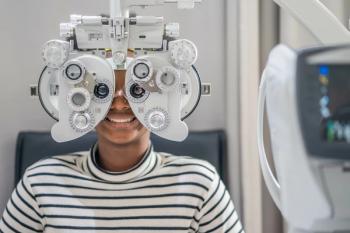
Jeffrey J. Walline, OD, PhD, shares practical perspectives on counseling families, selecting treatment options based on lifestyle and compliance, and more.
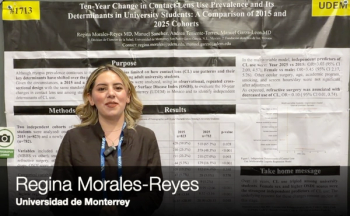
Regina Morales-Reyes details her poster presentation titled "Ten-Year Change in Contact Lens Use Prevalence and Its Determinants in University Students: A Comparison of 2015 and 2025 Cohorts."
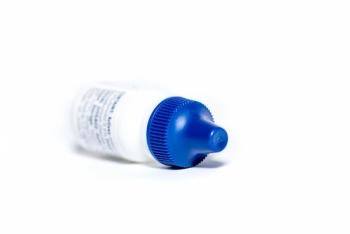
Mark Bullimore, PhD, MCOptom, consultant for Sydnexis, weighs in on the CRL received by the company for SYD-101.
Advertisement
Advertisement
Trending on Optometry Times - Clinical News & Expert Optometrist Insights
1
BIM-IOL System holds 37% IOP reduction at 4 years in first-in-human trial
2
Takeaways from this week in optometry: October 16-23
3
Brepocitinib for noninfectious uveitis meets all phase 3 trial end points
4
More than monitoring: Using AMD visits to promote healthy vision aging
5