

In the latest episode of The Independent Advantage, Maria Sampalis, OD, gives a resounding "absolutely not" when posited with the question of whether or not eye care providers will be replaced by AI.
In the latest episode of The Independent Advantage, Maria Sampalis, OD, gives a resounding "absolutely not" when posited with the question of whether or not eye care providers will be replaced by AI.

A recent study found that migraines were associated with higher adverse vision outcomes in a cohort of Norwegian adolescents.
Jem Martin, OD, discusses the accommodations and referrals any provider can offer, the red flags that should raise suspicion of CVI, and how the free TEACHCVI screening tool works in practice.

AMA resolution backs classifying myopia as a disease, aiming to expand insurance coverage for pediatric myopia control treatments.
Optometrists should know what is expected, what is concerning, and when to contact the surgeon.

Catch up on the top stories in optometry during the week of September 7-September 11.

Startup S5G Therapeutics aims to move ubiquinol technology from the laboratory toward treatments for dry eye, Fuchs dystrophy, and other corneal conditions.

Mogenry (sonpiretigene isteparvovec, MC-010) is a gene therapy for retinitis pigmentosa with severe vision loss.

Heru's PretestPro runs 4 pretesting exams in about 90 seconds on the Heru Prime wearable platform and reaches all current and future customers via free software update.
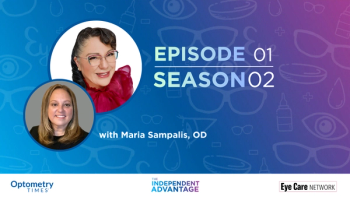
In the first episode of the second season of The Independent Advantage, Diana Canto-Sims, OD, chats with practice owner Maria Sampalis, OD, on why artificial intelligence has boomed in practice ownership spaces.

The latest in drug and technology developments and updates from August 2026.
Merabet, OD, PhD, MPH, discusses what his research on motion processing reveals about the neural roots of CVI and where diagnostic tools like neuroimaging and eye tracking are headed.

Host Hamza Shah, OD, MS, FAAO, is joined by Leonard Messner, OD, to discuss GLP-1s and idiopathic intracranial hypertension, inspired by Mitchell et al's paper, "The Effect of GLP-1RA Exenatide on Idiopathic Intracranial Hypertension: A Randomized Clinical Trial."
Periocular skin treatment is emerging as a complementary treatment for dry eye disease.
Catch up on the top stories in optometry during the week of August 31-September 4.

SightGlass Vision reports the milestone just 1 year after reaching 1 million users.
The industry-sponsored survey reveals most women don't recognize dry eye as a symptom of perimenopause or menopause.

Acoltremon ophthalmic solution 0.003% usage was associated with improved performance in visual acuity tasks.
The OTC lens is the first FDA-recognized device in its class, targeting light sensitivity in patients with episodic migraine aged 12 and older.

Cerebral visual impairment is now the leading cause of childhood vision loss. Three experts explain the history, science, and clinical signs eye care providers need to know.

The evolution of IPL is not limited to its expanding role in ocular surface disease.
Catch up on the top stories in optometry during the week of August 24-28.

The findings extend prior Asian efficacy data to a diverse North American cohort for Stellest lenses.
Optometrists share advice on the best practices for ensuring students are prepared for the new school year and how clinicians can leverage the influx to grow their practice.
The agency assigned a PDUFA target action date of April 30, 2027.

Neel S. Vaidya, MD, MPH, MBA, on why keratoconus can progress aggressively in children and teens—and how early topographic screening and prompt crosslinking protect long-term vision.
Noha Ekdawi, MD, FAAP, explains why pediatric myopia demands individualized, progression-based management.

The company announced phase 2 results of a dual-action lifitegrast/perfluorohexyloctane dry eye drop alongside positive phase 1b results for BL1332, a first-in-class TRPV1 antagonist for ocular surface pain.

Teacher-led vision screening identified about 3 in 4 children with refractive error and correctly cleared most unaffected students.

The FDA has expanded the indication to include improvement of meibomian gland function in adult patients with evaporative dry eye disease due to MGD, making it the first treatment with this indication.