


Aldeyra Therapeutics will submit a FDRR to the FDA for reproxalap, an investigational drug or dry eye disease.
Aldeyra Therapeutics will submit a FDRR to the FDA for reproxalap, an investigational drug or dry eye disease.

An independent analysis of 600 patients across 20 US optometry offices found contact lens wearers generate 29% to 86% higher annual profits than eyeglasses-only patients.
Coats explains how neurotrophic keratitis, Demodex blepharitis, cosmetic habits, and mucus fishing complicate dry eye disease.

The company reported that Acuvue Oasys Max 1-Day and Oasys 1-Day outperformed the other 5 daily disposable lenses evaluated in a recent study, among other Johnson & Johnson data highlights at AAOpt 2026.
Ashraf Ahmad, MD, explains what's driving rising dry eye rates and why eyelid evaluation is often overlooked.
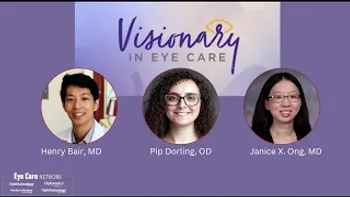
Three residents were honored for their leadership, education and research, and patient care contributions in ophthalmology, optometry, and retina.
Sharon Fekrat, MD, FACS, FASRS, of Duke University, discusses how retinal imaging fits into the diagnostic picture for CVI, TBI, and neurodegenerative disease, and when eye care professionals should suspect a neurological cause.

DOT lenses reduce retinal contrast signaling through embedded light-scattering elements while maintaining a single power across the lens, rather than creating peripheral defocus with multiple optical powers.
Are our children truly ready to see—and learn?
Ashraf Ahmad, MD, explains what tear breakup time testing shows and why results vary between clinic visits.
Catch up on the top stories in optometry during the week of September 21-September 25.
Monica Jong, OD, PhD, FAAO, FBCLA, discussed how recent developments in the field of myopia will transform eye care providers' approach to management.
American Academy of Optometry President Jeffrey Walline, OD, PhD, recommends attendees take advantage of the diverse array of educational and networking opportunities the conference offers.
The meeting will include an Open Public Hearing.
Leslie Scher, OD, is a long-time volunteer for the Special Olympic's Lions Club Opening Eyes program, which provides free vision screenings for all its athletes.
Monica Jong, BOptom, PhD, FAAO, FBCLA, discussed the latest findings on Stellest lenses' effectiveness in myopia progression control and her advice for optometrists integrating the lenses into practice.
Maria Sampalis, OD, is an advocate for getting artificial intelligence to do tasks that provide more time to spend with patients, such as letter-writing.
EyeCon is an opportunity for ophthalmologists and optometrists to sit down together.
Roman-Lantzy, PhD, gives an urgent plea to eye care providers, whom she calls "the gatekeepers of the entire story" for pediatric patients with CVI.
Mary Beth Yackey, OD, outlines all that you need to know about the role of oculomics in eye care.
Catch up on the top stories in optometry during the week of September 14-September 18.
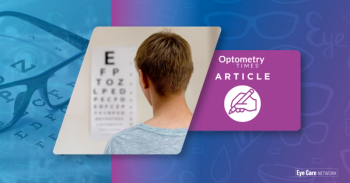
A comparison of ETDRS charts using Latin letters, Tumbling E, and Landolt C optotypes found the alternatives are comparable to letter acuity at the population level.

Vision testing results from 384 public transport drivers in Mumbai found the Visiolite 4K screener accurately matched standard assessments while cutting screening time by 65%.
In the latest episode of The Independent Advantage, Maria Sampalis, OD, gives a resounding "absolutely not" when posited with the question of whether or not eye care providers will be replaced by AI.

A recent study found that migraines were associated with higher adverse vision outcomes in a cohort of Norwegian adolescents.
Jem Martin, OD, discusses the accommodations and referrals any provider can offer, the red flags that should raise suspicion of CVI, and how the free TEACHCVI screening tool works in practice.

AMA resolution backs classifying myopia as a disease, aiming to expand insurance coverage for pediatric myopia control treatments.
Optometrists should know what is expected, what is concerning, and when to contact the surgeon.

Catch up on the top stories in optometry during the week of September 7-September 11.

Startup S5G Therapeutics aims to move ubiquinol technology from the laboratory toward treatments for dry eye, Fuchs dystrophy, and other corneal conditions.