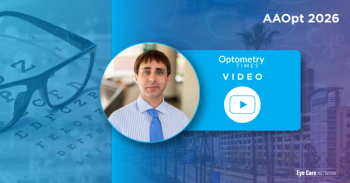
Susan Gromacki, OD, MS, FAAO, FSLS, details one of her AAOpt 2026 sessions, titled "Advances in Contact Lens Care for the New Contact Lens Technologies."
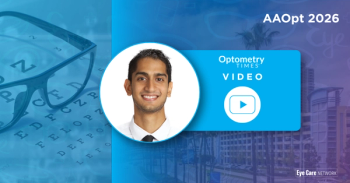
Pathik Amin, OD, FAAO, gave a presentation to the optometry cohort at the conference on glaucoma management, focusing on surgical options and recent advancements.
Pathik Amin, OD, FAAO, a faculty member at Illinois Eye and Ear Infirmary, University of Illinois at Chicago, reflected on a lecture given at EnVision Summit 2026 in Puerto Rico for an optometry cohort that focused on glaucoma management, particularly surgical options and recent advancements. The central theme was how emerging technologies—especially genetic testing, large patient data sets, and artificial intelligence (AI)—can transform glaucoma care and make it more individualized.
Amin emphasized that while large data sets for patients with glaucoma already exist, combining them with genetic risk scores and processing them efficiently using AI could allow clinicians to predict which patients are at higher risk of disease progression. This would support risk stratification, enabling closer, more frequent monitoring of high‑risk patients while safely extending intervals between visits for lower‑risk individuals. Such stratification could optimize resource use and improve outcomes by intervening earlier in those patients whose disease is likely to worsen.
A major clinical evidence pillar discussed is the LiGHT study from the UK, described as the most comprehensive evaluation of selective laser trabeculoplasty (SLT) as a treatment for ocular hypertension and primary open‑angle glaucoma. Amin contrasted the study with earlier work, such as the J-CATS study from Wills (circa 2000), and noted that the LiGHT data clearly demonstrate that SLT is safe and efficacious and should be considered first‑line therapy. The implication is that treatment patterns should evolve so that SLT is routinely offered at diagnosis or as an adjunct when therapy is escalated.
Turning to AI, Amin noted that AI is now “everywhere,” including in charting software that summarizes clinical visits, but suggested that generic AI features are not inherently clinically useful. Instead, the key is to target specific clinical problems. Concrete examples include work by Saif Aldeen Alryalat, MD, on using AI to automatically identify visual field patterns and cross‑reference them with optical coherence tomography (OCT) structural data to confirm specific glaucoma types, and research by Benjamin Yixing Xu, MD, PhD, at the Keck School of Medicine at the University of Southern California using AI with anterior segment OCT to assess risk in patients with narrow angles. These approaches illustrate how AI‑driven diagnostics could enable more accurate, timely glaucoma diagnosis.
Amin concluded with an optimistic outlook, asserting that the future is bright and that thoughtfully embracing technology—especially AI—around clearly defined clinical questions can significantly advance glaucoma care.