
Click the links below to subscribe to the show on your favorite platform and get notified with each new episode:
Commentary|Podcasts|November 2, 2026
From Paper to Clinic, Episode 9: Burnout in optometry and how to prevent it
Fact checked by: Nicole Canfora Lupo
Host Hamza Shah, OD, MS, FAAO, is joined by Melissa Barnett, OD, FAAO, FSLS, FBCLA, to discuss burnout among US optometrists, inspired by Abbott et al's nationwide survey.
Advertisement
Welcome to From Paper to Clinic, a podcast focused on evidence-based eye care and real-world clinical decision-making, hosted by Hamza Shah, OD, MS, FAAO, a faculty member at the University of Houston College of Optometry. His work spans clinical patient care, education, and mentoring, and his clinical interests include ocular disease, dry eye, perioperative care, and—above all—the challenge of translating information into meaningful patient outcomes.
In Episode 9 of From Paper to Clinic, "Burnout in optometry and how to prevent it," Melissa Barnett, OD, FAAO, FSLS, FBCLA, joins the show to discuss the first nationwide study of burnout among US optometrists. Known for her work in specialty contact lenses, keratoconus, and dry eye, she is also a credentialed coach in mindful leadership and clinician wellness. The conversation covers who is most affected, which practice settings carry the highest risk, and practical strategies for prevention and recovery.
The survey, distributed through American Academy of Optometry and optometric society email lists, drew responses from 1436 optometrists who completed a modified Mini Z instrument.¹ Of those respondents, 53.6% reported symptoms of burnout: 61.4% mild, 30.4% moderate, and 8.2% severe.¹ The findings align with a broader call, outlined in a 2025 Scientific Reports editorial, for urgent attention to burnout among health care professionals, who face long hours, heavy patient loads, administrative burdens, and a perceived lack of support.² For optometrists, the data put numbers to a problem many have already watched unfold in colleagues and family members.
Female optometrists reported higher burnout than male optometrists (60.9% vs 40.6%), a pattern also documented in ophthalmology and other health professions.¹ Possible drivers include an unequal distribution of family responsibilities, more time spent charting, and longer, more empathetic patient encounters. These factors carry added weight as women make up a growing share of the workforce. Respondents with children reported less burnout than those without (49.6% vs 61.0%),¹ which may reflect the value of a separate identity and time fully disengaged from clinical work.
Practice setting and patient volume also shaped risk. Optometrists trained through primary care residencies had the highest burnout rate in the study, at 62.9%, while those specializing in low vision had the lowest, at 37.8%, although the low vision group included only 74 respondents. Electronic health record use was associated with higher burnout,¹ and a small teleoptometry subgroup reported burnout across every respondent, consistent with the loss of in-person connection, movement, and control over pacing remote care can bring. Specialization and engagement with professional communities offer one counterweight to the isolation many clinicians report.
Prevention starts with recognizing burnout, which can be difficult from the inside, and with regular check-ins on workload and life alignment. Beyond the authors' recommendations of exercise, sleep, and time with friends, intentional choices about time and energy can make a measurable difference: a 5-minute walk outdoors, an accountability partner, or work with a professional coach. The emphasis is on starting small, with one change repeated consistently rather than a complete overhaul.
The paper inspiring this discussion is "
Do you want to only listen to this episode? Check out the audio player below.
Episode 9 is coming on Monday, December 7, 2026, at 8 AM EST
The tenth episode of From Paper to Clinic will debut in early December and will feature Ada Noh, OD, optometrist and founder of Noh Eyes, focusing on neurotrophic keratitis. Listeners are invited to join the conversation as the series explores how evidence moves… from paper to clinic.
REFERENCES
1. Abbott K, Auer E, Gioia N, DeLoss K, Seibold L, Patnaik J. Insights into burnout among optometrists in the United States: findings from a nationwide survey. J Optom. 2025;18(2):100552. doi:10.1016/j.optom.2025.100552
2. Tang YL, Raffone A, Wong SYS. Burnout and stress: new insights and interventions. Sci Rep. 2025;15(1):8335. doi:10.1038/s41598-025-92909-6
Advertisement
Related to this article
This week’s top stories include pipeline updates in dry eye, retinitis pigmentosa, contact lens hygiene, and more.
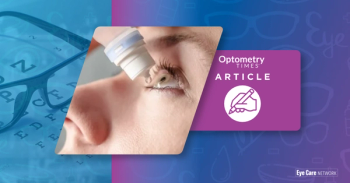
The licaminlimab trial enrolled 176 patients, two-thirds with a TNFR1 variant tied to stronger response. Data expected late 2026.

Amanda Nanasy, OD, discussed how sports can open the door to eye care for underserved athletes and what goes into her performance vision evaluations.
Raphael Rostenne discusses what a good phone call looks like and contributes to successful patient interactions with host Diana Canto-Sims, OD.
Amanda Nanasy, OD, described how her own concussion shaped her approach to athletes and why she ties every vision evaluation back to the demands of their sport.

This week's top stories include breaking FDA approvals, insights on AI-assisted front desk management, and more.
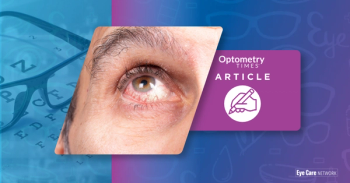
CLARITY program data show significantly longer time to treatment failure and higher rates of steroid-free quiescence vs placebo.
Diana Canto-Sims, OD, introduces the second guest of Season 2, Raphael Rostenne, who will be discussing AI-assisted front desk management.
Advertisement
Advertisement
Trending on Optometry Times - Clinical News & Expert Optometrist Insights
1
Takeaways from this week in optometry: October 26-30
2
Contact lens case hygiene among most skipped steps in lens care
3
From our Editorial Board: Comments from the FDA Advisory Committee meeting on SYD-101
4
The untapped partnership between retinal specialists and optometrists in myopia care
5