
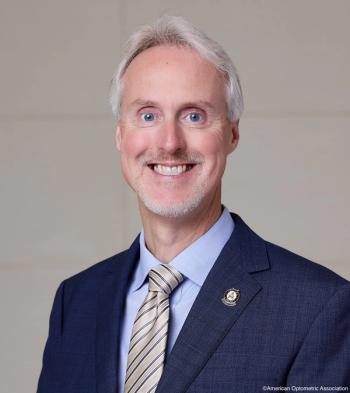
Reed will be honored with the Doctor of Ocular Science honorary degree in part of the college’s 2025 commencement.
Reed will be honored with the Doctor of Ocular Science honorary degree in part of the college’s 2025 commencement.

The law is the product of a 2-year collaborative effort by the North Dakota Optometric Association and the North Dakota State Board of Optometry.

What to know about legislative moves that have been made through May this year.

Catch up on the top stories in optometry during the week of April 28-May 2.

The CATHAY trial evaluated 186 myopic children, 6 to 13 years old at initiation, across 5 hospitals.

Rhue and Canto-Sims tackle the problem of many optometry practices losing significant revenue due to ineffective follow-up systems.

The strikes follow the University of California’s hiring freeze implemented on March 19.

This expansion marks the first FDA clearance for an amblyopia treatment for this age range in more than 2 decades.

Of participants surveyed, 36% reported a fear of cataract surgery, with more than half of those specifically feared it would lead to vision loss.

STAR-GLOBAL is an extension trial of the initial EU clinical trials investigating the long term safety and efficacy of MINIject in patients with up to 5 years of follow up.

Rhue and Canto-Sims talk about the value of contact lens patients, financial insights, and key benefits of implementing a contact lens management system.

Maxitrol has been the leading corticosteroid/antibiotic combination drop for the treatment of ocular inflammation and bacterial infections for more than 50 years.

The optimal triple-carotenoid supports daily eye health with lutein, zeaxanthin, and meso-zeaxanthin, according to the company.

Rhue and Canto-Sims discuss the benefits of implementing a contact lens management system that can help improve lens sales at your practice.
Catch up on the top stories in optometry during the week of April 21-April 25.

Matt Jones, OD; Matt Burns; and Joe Sugg, OD; detailed what optometrists can expect to change when HB 1353's regulations are enacted later this year.

Participants received either Systane Hydration UD (Alcon, Fort Worth, TX) or saline eye drops (NeilMed, Santa Rosa, CA) 4 times a day for 4 weeks each.

Arkansas Optometric Association legislative cochairs Matt Jones, OD; Matt Burns; and Joe Sugg, OD, discuss their involvement in their bill and provide context for its relevance.

According to a press release, Myatro XL is the first 0.05% atropine eye drop for pediatric myopia control. It will be commercially available in India in July 2025.

The laboratory is equipped with professional-grade technology and replicates a high-end retail optical dispensing and vision testing environment.

Vision care organizations and companies met to emphasize how tariffs are increasing the cost of eyewear and vision products.

The ONE by ONE Recycling and Biotrue Eye Care Recycling programs have collected a total of 103,169,500 units.

Dana Shannon, OD, FAAO, shares pearls on spotting red flags in need of referral and enhancing patient care with follow-up compliance.

The report outlines views and behaviors of US adults regarding vision correction, managed vision care, eye examinations, prescription eyewear, reading glasses, and nonprescription sunglasses.

Catch up on the top stories in optometry during the week of April 14-April 18.

A survey collected demographic data, ocular and medical history, and responses assessing knowledge of glaucoma and cataracts in the Qassim region of Saudi Arabia.

Dana Shannon, OD, FAAO, detailed a lecture she gave at the NOA Midwestern Symposium earlier this month.
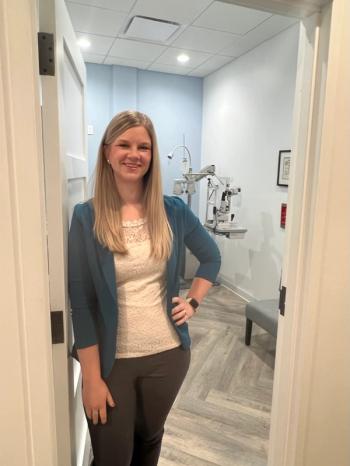
Jamie Kuzniar, OD, FAAO, FSLS, has found her niche in specialty contact lenses and individualized care at her practice, Elevate Eye Care + Eyewear.

The survey results included 11,412 patients in the general population and 964 health care providers.

The affected mandate requires that all newborns receive erythromycin ointment applied to their eyes after birth, which helps prevent ophthalmia neonatorum.