

The company expects enrollment of the GAZE phase 1, open-label clinical trial, to begin in the second half of 2024.
The company expects enrollment of the GAZE phase 1, open-label clinical trial, to begin in the second half of 2024.

The new policy will work to encourage grant-making entities to fund post-market research investigating pharmacodynamics and pharmacokinetics for generic drugs that did not adequately enroll women, and sexual and gender minority populations in their clinical trials.

The launch of the nutritional supplement follows a clinical trial that demonstrated healthy tear production and provided noticeable relief of dry eye symptoms in as little as 2 to 4 weeks.
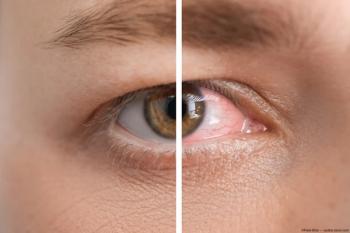
InflammaDry is a diagnostic test that detects elevated levels of MMP-9, an inflammatory marker consistently found in the tears of patients with DED.
Michael Belin, MD, weighs the ABCD and Amsler-Krumeich classifications and proposes ABCD progression displays as an effective modern alternative.

Phase 3 trials continue to investigate the efficacy of EpiSmart, a new method of cross-linking that could be utilized in the treatment of keratoconus.
Kourtney Houser, MD, and Kendall Donaldson, MD, MS, give an overview of the important role topography and tomography play in catching keratoconus early in their patients.
Annual follow-ups for patients with keratoconus can help them become better candidates for cross-linking procedures, according to William Trattler, MD.

The trial evaluates OCU410ST, a modifier gene therapy candidate utilizing an AAV delivery platform for the retinal delivery of the RORA gene. The gene therapy is being designed as a one-time treatment for life.
Early diagnosis of keratoconus is vital given the disease's prevalence in pediatric patient, according to Jennifer Harthan, OD, FAAO, FSLS.
Shelley Cutler, OD, FAAO, comments on technological advancements leading to the progression of keratoconus diagnosis and treatment options during this year's IKA symposium.
Melissa Barnett, OD, Director of Optometry at the University of California, Davis, talked about her session at IKA that focused on keratoconus from the patient perspective.

Elizabeth Yeu, MD, Executive Board Member of IKA, and a cataract and refractive surgeon at Virginia Eye Consultants, talked about cataract surgery in keratoconus, and the diagnostic considerations clinicians can take before and in the operating room.
Justin Schweitzer, OD, FAAO, from Vance Thompson Vision, talked about his session at the IKA Symposium that discussed cross-linking in keratoconus treatment both now and looking toward the future.
Barry Eiden, OD, FAAO, FSLS, President and Co-founder of IKA, talked about his session at the meeting centering around the pediatric prevalence of keratoconus, the importance of early diagnosis, and the impact this can have on practices.
Christine Sindt, OD, FAAO, Clinical Professor of Ophthalmology and Visual Sciences at the University of Iowa School of Medicine, talked about her session at the meeting focusing on higher order aberrations and the correction of complicated optics on scleral contact lenses.
Alan Glazier, OD, FAAO, talked about moderating a session discussing the education of the public on keratoconus, from screening to diagnosis, and the roles clinicians can take to assist in the patients' anxieties.
Andrew Morgenstern, OD, FAAO, FNAP, President and Co-founder of IKA, talked about his session at the meeting that discussed the prevalence of keratoconus in the pediatric population in the US.

Edmund Tsui, MD, details findings from a study that suggests that swept-source anterior segment OCT images by provide more objective ways to measure inflammation in the eye.

Michael Chaglasian, OD, details results from a study that assessed the new Monaco OCT's efficacy in glaucoma detection alongside ultra wideview imaging.
Emily Chew, MD, who won this year's Proctor Award, outlines her presentation on preparing for estimated doubling of age-related macular degeneration cases in the next 25 years at ARVO 2024.
Noel Brennan, MScOptom, PhD, overviews his ARVO 2024 presentation on reimagining the prediction of longer term efficacy numbers in data from pediatric trials evaluating myopia.

Deborah Ferrington, chief scientific officer at Doheny Eye Institute, details a session she gave on May 9 regarding mitochondria and how they change with health and in the diseased retina.
Giulia Corradetti, MD, discusses study findings that changes in microperimetry are highly localized and dependent on the OCT features.
Osamah Saeedi, MD, MS, details his ARVO 2024 presentation and the study finding's implications on monitoring and treating glaucoma.

The 2 FDA registration trials for perfluorohexyloctane resulted in scientifically significant results for improvement of mild and moderate symptoms of dry eye disease.

Neda Gioia, OD, CNS, FOWNS, CFMP, details recent findings on the efficacy of the NutriTears supplement on dry eye symptoms.

David A. Berntsen, OD, PhD, FAAO, talks through his 2024 ARVO presentation on the BLINK2 study and the findings on axial growth after discontinuing soft multifocal contact lens wear.

UPFs include fast food, energy drinks and soda, sweets such as chocolates and candies, and much more.
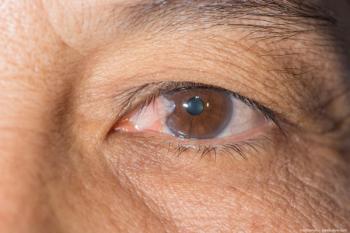
Pterygium is an ocular disease commonly referred to as “surfer’s eye,” which can result from exposure to high levels of UV radiation.