


Presented during the 2022 ASRS meeting, results find that over 60% of participants could be treated every 4 months at 2 years—an increase from 45% at year 1.
Presented during the 2022 ASRS meeting, results find that over 60% of participants could be treated every 4 months at 2 years—an increase from 45% at year 1.
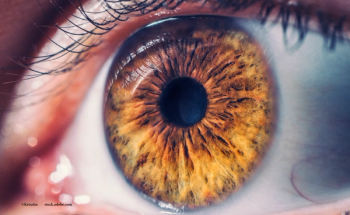
A decade after the conclusion of the NIH-funded AREDS2 study, researchers found that the AREDS2 formula also reduces the risk of lung cancer.

Best practices to help patients enjoy their trip to the fullest.

Alissa M. Coyne, OD, FAAO, FASOS, gives her number 1 tip for managing dry eye.

Thomas A. Wong, OD, FNAP, and his co-authors Elise Regina, OD, and Kelly Armstrong, OD, discuss corneal hysteresis: part three.

Thomas A. Wong, OD, FNAP, and his co-authors Elise Regina, OD, and Kelly Armstrong, OD, discuss corneal hysteresis: part two.

Drug submission of the first water-free therapy took place at the end of June, according to the companies.

The company intends to develop the AcuStream technology for potential use with its current and future front-of-eye therapies, which may include lifitegrast ophthalmic solution for the treatment of dry eye disease.
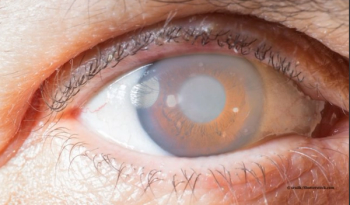
4 objectives are key for embracing a patient-focused form of care.

Thomas A. Wong, OD, FNAP, and his co-authors Elise Regina, OD, and Kelly Armstrong, OD, discuss corneal hysteresis: part one.

Knowing your glaucoma vitals is key to providing best treatment for patients.

Optometry Times'® Chief Optometric Editor Ben Casella, OD, FAAO, gives his number 1 tip for managing DED.

Dr. Koetting asks: When do you feel it is time to discuss cataracts with your patients?

The Medical University of South Carolina offers brand new, state-of-the-art surgery center dedicated solely to ophthalmic procedures.

Trial results demonstrated statistically significant improvement in the prespecified primary endpoint in BCVA at 13 months in the PBM treatment group over the sham-treatment group.

Bausch + Lomb's Bill Reindel, OD, speaks on highlights from his lecture titled “Evaluation of an Advanced Multi-Purpose Solution for Soft Re-Usable Contact Lenses."

Patients present with a plethora of complaints, with blurred near vision, headache, fatigue, need for increased working distance and brighter light to read among the most common, according to Cecelia Koetting, OD, during AOA 2022.

Richard Castillo, OD, DO, shares his expertise in, "Cryosurgery for Optometric Surgeons: A safe, noninvasive, nonaerosolizing approach to periocular lesion removal in the COVID-19 era."
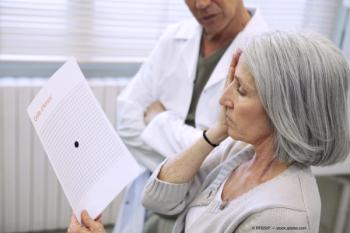
Elena Biffi, OD, MSc, FAAO, dives into AMD, a multifactorial disease that requires a multimodal diagnostic imaging approach.

Correcting refractive errors in infants and toddlers differs from that in adults. Ida Chung, OD, MS, FCOVD, FAAO, walks optometrists through the pearls and pitfalls of prescribing for this patient population.

The company has received the all-clear for a multinational market launch of Acuvue Oasys Max 1-Day and Acuvue Oasys Max 1-Day multifocal contact lenses.

At AOA 2022, Rebecca Wartman, OD, and Harvey Richmond, OD, discuss how eye care practitioners can properly and efficiently establish a telehealth program in their practice.

Mitch Ibach, OD, and Damon Dierker, OD, explore how the current landscape in cataract surgery shows an upward swing in the number of surgeries that are being performed in increasingly younger patients by an increasingly small number of surgeons.

Denise Valenti, OD, advises on why driving under the influence of marijuana is not without visual consequences.

The Revive custom soft contact lenses are designed with non-ionic material that allows for daily wear for up to 3 months.

The OYE team will release its film down under on June 17 in Australia and New Zealand during the Optometry Virtually Connected Conference.

A new study has found that having a contact lens regimen makes a difference when removing coronavirus particles, as well as the type of lens care solution that is used.

The new partnership supports Alcon's Pataday Once Daily Relief Extra Strength eye drops as treatment for eye allergies.

New solution contains 25% more moisture, company says.

This is the second FDA-approved indication for BEOVU; it was initially approved in 2019 for the treatment of wet AMD.