
From new treatments on the horizon for macular degeneration to strengthening comanagement ties, optometrists cite a lot to be excited about in the coming year.
From new treatments on the horizon for macular degeneration to strengthening comanagement ties, optometrists cite a lot to be excited about in the coming year.
EnVision Summit cofounder and program director Bonnie An Henderson, MD, chats about the new optometry track and what eye care providers can learn from each other.
Practice owners testify to the importance of trying new things, not being afraid to fail, and utilizing community as a resource when starting up a new practice.
Bonnie An Henderson, MD, shares a few of the emerging trends in eye care she and the faculty plan to tackle at the 2025 EnVision Summit.
Optometrists reflect on their residency experiences and provide advice to current residents.
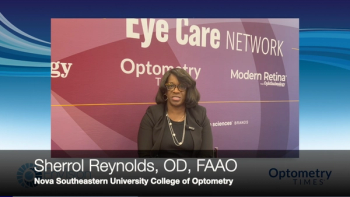
EnVision Summit optometry faculty Sherrol Reynolds, OD, FAAO; Katie Rachon, OD, FAAO, Dipl ABO; Ashley Wallace-Tucker, OD, FAAO, FSLS, Dipl ABO; Jessica Steen, OD, FAAO, Dipl ABO; and Cecelia Koetting, OD, FAAO, Dipl ABO; express excitement for the upcoming conference and why optometrists should attend.
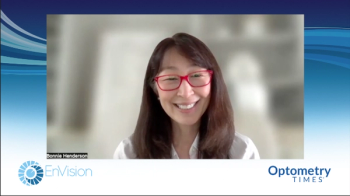
Bonnie An Henderson, MD, program director and cofounder of EnVision Summit, shares some background on the meeting, which takes place February 14-17, 2025 in Puerto Rico.
A few optometrists share which innovations in optometry they were most excited about in 2024.
In 2 weeks, the study participant's dry eye symptoms improved from 76 to 43 on a 0-100 rating scale, according to Marc-Matthias Schulze, PhD, Dipl Ing.
Eye care practitioners reported moderate to high satisfaction with lifitegrast's ability to improve signs of dry eye, according to Melissa Barnett, OD, FAAO, FSLS.
Neda Gioia, OD, CNS, FOWNS, details the positive feedback gained so far from other optometrists that have been recommending the NutriTears supplement to their dry eye patients.
Damaris Raymondi, OD, FAAO, highlighted the importance of building patient-doctor trust to learn about these practices, which can include non-traditional treatments like chamomile or manuka honey eye drops.
Noreen Shaikh, OD, Magdalena Stec, OD, FAAO, and Brenda Bohnsack, MD, PhD, emphasize that collaboration and communication are key to proper diagnosis and treatment.
Cecilia Koetting, OD, FAAO, DipABO, cited data from a recent study that found that presbyopia treatment with 0.4% pilocarpine led to up to 86% of patients achieving 20/40 or better.
Kerry Giedd, OD, MS, FAAO, was 1 of 20 investigators around the country for a study evaluating the daily disposable contact lens.
According to A. Paul Chous, MA, OD, FAAO, optometrists have an important opportunity to educate patients in their chairs about diabetes.
David Geffen, OD, FAAO, gave a poster presentation titled "Revolutionizing Comfort: Unveiling the Potential of Perfluorohexyloctane Eyedrops for Contact Lens Wearers" at this year's Academy meeting.
Jessica Steen, OD, FAAO, Dipl-ABO, discussed ophthalmic considerations for patients undergoing treatment with antibody drug conjugates for gynecologic cancers at this year's conference.
A. Paul Chous, MA, OD, FAAO, details a presentation on this year's updates on diabetes given at this year's Academy meeting.
Sherrol Reynolds, OD, FAAO, said that multimodel imaging has been a game changer in assessing the choroidal function and structural changes in various disease conditions.
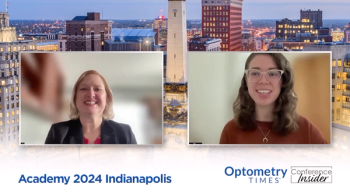
Susan Gromacki, OD, FAAO, FSLS, provides key takeaways from this year's American Academy of Optometry symposium genetics and the cornea.
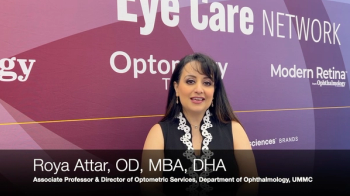
Roya Attar gives an overview of her presentation, "Decoding the Retina: The Value of Genetic Testing In Inherited Disorders," presented with Mohammad Rafieetary, OD, FAAO, FORS, ABO, ABCMO.
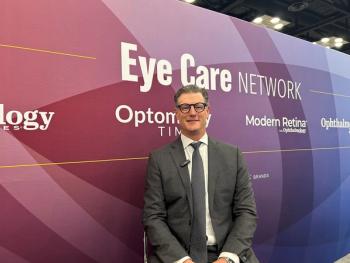
Ian Ben Gaddie, OD, FAAO, outlines key findings from a recent study evaluating lotilaner in patients with Demodex blepharitis and meibomian gland dysfunction.
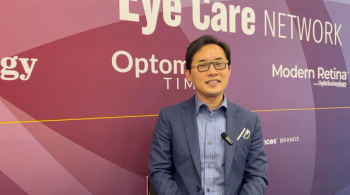
Clark Chang, OD, MSA, MSc, FAAO, discussed the complexities of diagnosing keratoconus in his Rapid Fire presentation given at the American Academy of Optometry 2024 meeting.
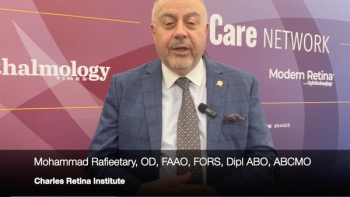
Mohammad Rafieetary, OD, FAAO, FORS, Dipl ABO, ABCMO, details the ease of genetic testing when diagnosing patients or reassessing a patient's diagnosis.
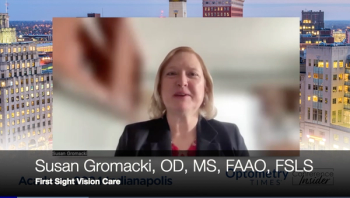
Gromacki, OD, FAAO, FSLS, emphasizes that corneal GP lenses remain an important part of a contact lens specialist's armamentarium
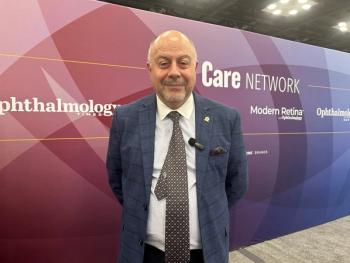
Mohammad Rafieetary, OD, FAAO, FORS, Dipl ABO, ABCMO, discusses diagnostic confusion that can be encountered when identifying macular edema in patients.
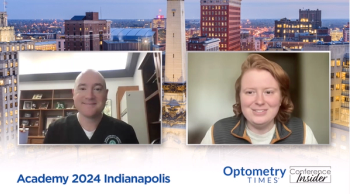
Nate Lighthizer, OD, FAAO, overviews a handful of YAG laser procedures in his AAOpt presentation.
Susan Gromacki, OD, MS, FAAO, FSLS, details a panel that provided a complete course on keratoconus.
In a study, a xenon slide illuminator was employed to mimic natural outdoor colors, allowing researchers to test brightness perception using a brightness-matching method, explains Billy R. Hammond.