








These continued studies also demonstrate a well-tolerated safety profile in a broad population of more than 1,200 patients.


Survey investigates eye care provider preferences for geographic atrophy treatments
These continued studies also demonstrate a well-tolerated safety profile in a broad population of more than 1,200 patients.
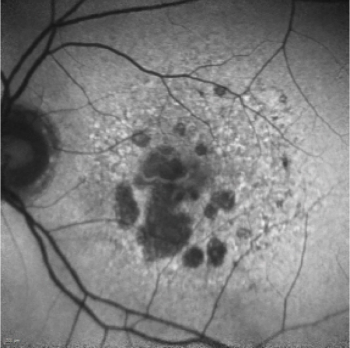
The first approved GA treatment leaves room for additional therapies.

Optometry Times sat down with Mohammad Rafieetary, OD, FAAO, FORS, Dipl ABO, ABCMO, to discuss his upcoming presentations at AAOpt.

This podcast provides a review of some of the key highlights from the Controversies in Modern Eye Care meeting held in April 2023. The program is designed for those who did not attend the live meeting and to help reinforce learnings for those who did.
Steven Ferrucci, OD, FAAO, discusses imaging techniques and treatment options for geographic atrophy as part of his AAOpt presentation alongside Carolyn Majcher, OD, FAAO.

According to the company, GATHER-2 24-month results met the primary objective of reducing the rate of GA growth in patients treated with IZERVAY compared to sham.

The complement C5 inhibitor significantly reduced GA progression.

You may be wondering: What is all this hype about geographic atrophy (GA)? If you are, let us look at the enigma.

Arshad M. Khanani, MD, MA, FASRS, sat down with Optometry Times to discuss the recent FDA approval of avacincaptad pegol intravitreal solution for treatment of geographic atrophy.
Paul Hahn, MD, PhD, shared insights on research comparing the relative efficacy of pegcetacoplan versus avacincaptad pegol in patients with geographic atrophy presented at the 2023 ASRS annual meeting.

According to the company, the therapeutic is the only approved GA treatment with a statistically significant reduction in the rate of GA progression at the 12-month primary endpoint across two phase 3 clinical trials.
Data from the 30 month GALE extension study indicated that continuous treatment with pegcetacoplan injection showed increasing beneficial effects over that timeframe in patients with geographic atrophy (GA).

The company has completed evaluation on candidates and selected a single drug candidate to move forward into clinical trials.

A single, consistent modality leads to better geographic atrophy tracking.
Jay M. Haynie, OD, FAAO, FORS, caught up with Peg Achenbach, OD, FAAO, while at the 2023 Victoria Conference to share highlights from his presentation on staying current with the AMD landscape.

CT1812 is an experimental, oral therapy for the treatment of geographic atrophy secondary to dry age-related macular edema.
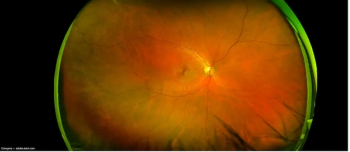
Clinical benefit of complement inhibition has been demonstrated in clinical trials, but there are possible consequences to consider.
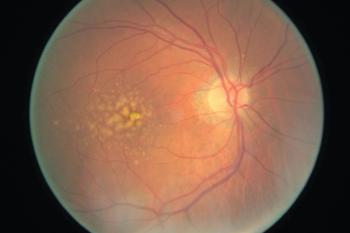
How to diagnose and monitor progression.

Diagnose, monitor, comanage—optometrists support patients throughout all stages of the disease.

David S. Boyer, MD, shares highlights from the symposium on advances in the geographic atrophy space, which he presented during the 17th annual Controversies in Modern Eye Care meeting.

The GA Won’t Wait campaign is designed to help older adults and their families understand and recognize the symptoms of this progressive and irreversible disease.

Catch up on what happened in optometry during the week of April 17-April 21.

One way to advance the current understanding of GA is to study how disease progression varies among related individuals.
A look back on what happened in optometry during the week of April 10-April 14.

Pegcetacoplan’s recent FDA approval creates an option for patients with dry AMD.