




At the 2024 American Academy of Optometry meeting in Indianapolis, Dr Andrew Pucker describes a wealth of data on enrollment in North American clinical trials.
At the 2024 American Academy of Optometry meeting in Indianapolis, Dr Andrew Pucker describes a wealth of data on enrollment in North American clinical trials.
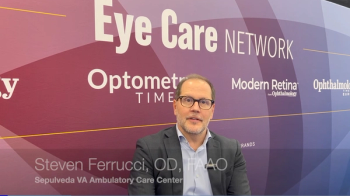
Steve Ferrucci, OD, FAAO, discussed the detection and treatment of geographic atrophy during his AAOpt 2024 lecture, "Imaging Techniques and Emerging Therapies for Geographic Atrophy."
What we know and what we do not know…yet.
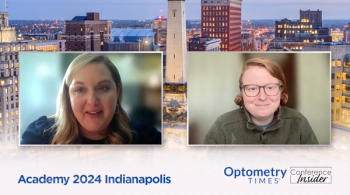
Jessilin Quint, OD, MBA, MS, FAAO, gives an overview on next steps after treating dry eye
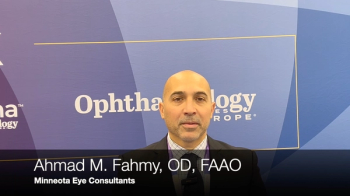
Alongside Walt Whitley, OD, MBA, FAAO, Ahmad Fahmy, OD, FAAO, gave a presentation entitled, "Management of Neurotrophic Keratitis and Corneal Neuropathic Pain," at this year's AAOpt meeting.
Raman Bhakhri, OD, FAAO, breaks down the complex process of diagnosing inherited retinal diseases.
Erin Tomiyama, OD, PhD, FAAO, discusses fitting lenses, young adults with binocular vision issues, and emerging presbyopia in patients.
Jamie Kuzniar, OD, FAAO, FSLS, overviews the basics on what to look out for complications-wise in corneal transplant patients that may require a referral.

Lisa Hornick, OD, MBA, FAAO, outlines key findings from the report on the impacts of healthy cosmetic habits and reducing digital eye strain.

Catch up on what happened in optometry during the week of November 4-November 8.

Dr. Carolyn Majcher discusses her 2024 AAOpt talk on imaging techniques and emerging therapy for geographic atrophy.
Brooke Messer, OD, FAAO, FSLS, overviews a talk on keratoconus management.
Mila Ioussifova, OD, CNS, FAAO, FOWNS, tackled new and exciting ways to tackle meibomian gland dysfunction alongside fellow ocular surface specialist Rana Taji, OD, MSc, FAAO, at AAOpt 2024.

In an AAOpt poster, Dr. Mark Bullimore investigates the definition of "normal progression" in myopic eyes and the change of efficacy over time.
At AAOpt, Dr. Justin Schweitzer talks about myths surrounding ocular surgery and comanagement of surgical patients.
Dr. Andrew Pucker presented data on the performance of toric lenses under the stress of heavy digital device use at the 2024 American Academy of Optometry meeting in Indianapolis.
The presentation covers different retinal conditions and diseases and how to utilize collaboration in order to enhance patient care.
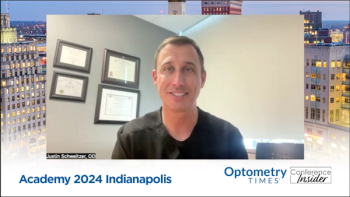
Justin Schweitzer, OD, FAAO; Selina McGee, OD; and Ian Ben Gaddie, OD, FAAO; delve into how optometry has changed in the past year.
Dr. Carolyn Majcher's lecture on posterior uveitis reinforced the need for optometrists to be vigilant in their diagnostic approach.

Jamie Kuzniar, OD, FAAO, FSLS, gives a rundown of what successful scleral lens fittings entail.
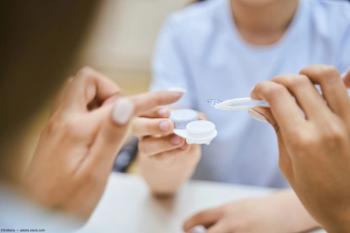
Broad commercial availability of the lens is expected in the beginning of January 2025.

Jeffry Gerson, OD, FAAO, gave a presentation on what to know about diabetes diagnostic tools and treatment alongside Paul Chous, OD, FAAO.
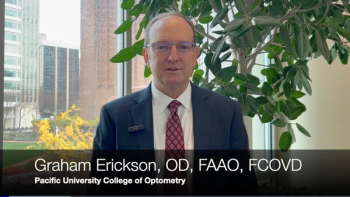
Graham Erickson, OD, FAAO, FCOVD, states that maintaining eye and brain health through proper nutrition, whether through diet or supplementation, can have a significant impact on various aspects of sports performance.
Dr. Justin Schweitzer's 2024 AAOpt talk will cover the latest advancements in ocular drug delivery, including topical, implant, and contact lens-based methods that can improve patient quality of life, adherence, and financial burden.
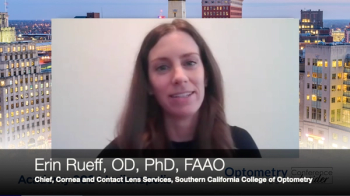
Erin Rueff, OD, PhD, FAAO, details the presentation she gave at this year's conference on the importance of validating patients' symptoms in cases of neuropathic corneal pain.

Julie Rodman, OD, MS, FAAO, details a Rapid Fire session she presented at this year's American Academy of Optometry meeting, which features a case study on retinal vein occlusion.

AMN, a rare disease, is characterized by dark reddish, wedge-shaped macular lesions.
The lipid-containing lubricating drop established noninferiority in comfort when compared to non-lipid drops, and the lipid-containing group also exhibited statistically significant improvements in visual quality at both day 7 and day 30, highlighting the potential benefits of this formulation for patients.

Increased choroidal thickness also was seen in children treated with 1% atropine for 1 week or 0.01% atropine for less than 8 weeks.


.png "Optometry Times")


