
News|Videos|April 15, 2026
The Independent Advantage S01 E02: What ODs should bring to the comanagement table

Kevin J. Kovach, MD, said that patient education as a part of the referral process can both improve care and comanagement relationships.
Advertisement
Episodes in this series
This episode of The Independent Advantage focuses on how optometrists can be better referral partners to ophthalmologists and, ultimately, how stronger collaboration improves patient care. The discussion between Diana Canto-Sims, OD, and Kevin J. Kovach, MD, flips the usual perspective: instead of only asking what makes a good ophthalmology partner, it asks what makes a high-quality optometric referral and what systems ODs can implement to optimize co-management.
A central theme is detail-rich communication. Kovach explained that vague referrals like a fax reading “blurred vision” are not helpful. For cataract referrals, ophthalmologists need to know whether the patient is already experiencing significant visual limitations, whether they are frustrated with their current correction, and whether surgery is being seriously considered now or this is an early introduction to the idea. For suspected keratoconus, ophthalmologists need specific clinical findings: changes in astigmatism over time, topography results, or keratometry changes. The more detailed the referral, the more efficient and productive the consultation, and the better the patient experience.
Another major point is patient education before referral. The optometrist should explain to patients why they are being referred, what condition is suspected, and what kinds of treatments might be discussed. Kovach noted that better-educated patients make better decisions and arrive at the ophthalmologist’s office less anxious and more prepared. They even mention the role of AI tools (like OpenAI and Gemini) as sources of information—while acknowledging that misinformation exists, on balance a more informed patient is beneficial.
The conversation also highlights technology-enabled communication systems. Kovach’s practice uses a secure online portal, integrated with their electronic health record (Compulink), to send consultation notes, procedures performed, and postoperative care instructions back to the OD, often within 24 hours. This is especially critical in co-management situations where the OD may see the patient the day after surgery. If a portal is not available, HIPAA-compliant faxes and secure emails are used. They stress that technology should make communication seamless so clinicians spend more time with patients and less time wrestling with manual processes.
When asked what single habit ODs could adopt immediately, Kovach advised to consistently send detailed, structured information and leverage existing technology (ie, EHR portals, scanned notes) to do so efficiently. This improves referral quality, speeds insurance approvals (for example, in keratoconus cases that require proof of topographic change), and strengthens trust between providers.
Ultimately, the key takeaway is that trust and collaborative communication sit at the heart of successful OD–MD relationships. Ophthalmologists are framed not as competitors but as partners who can help grow an OD’s practice when both sides stay aligned around the shared goal of delivering the highest standard of patient care. Canto-Sims closed by encouraging ODs to pick at least one idea from the conversation—whether improving referral detail, initiating contact with referral partners, or better preparing patients—and put it into practice immediately, emphasizing that small improvements can lead to significant impact over time.
Advertisement
Related to this article
For Maria Sampalis, OD, implementing AI isn't an excuse for practice owners to replace their staff with new technology; it should instead lift the burden of certain tasks to make for more patient visits.
IDOC's 2025 benchmarks from 175-plus independent OD practices put median practice net at 31% of revenue as variable costs fell for the first time since tracking began.
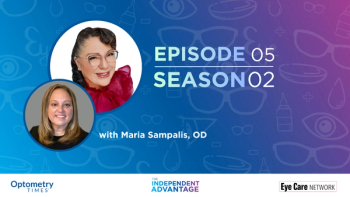
Maria Sampalis, OD, discusses her implementation of the EHR software Barti in her practice.
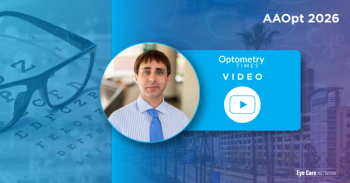
Andrew Pucker, OD, PhD, FAAO, FSLS, FBCLA, discussed how oculomics research presented at AAOpt 2026 could eventually support point-of-care diagnosis and referral decisions.

Alcon's Brytly eye drops received FDA approval for OTC temporary relief of minor ocular redness.

From dry eye to GLP-1s, this year's conference brought a variety of insights from key experts in optometry.
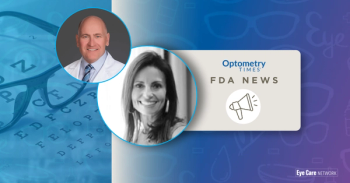
Ryzumvi gained a presbyopia indication in adults based on the phase 3 VEGA-2 and VEGA-3 trials, adding a pharmacologic option for optometrists managing near vision loss.
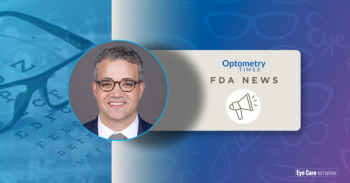
Enspryng is the first subcutaneous, at-home treatment option for TED and the first interleukin (IL)-6 receptor inhibitor approved in the indication.
Advertisement
Advertisement
Trending on Optometry Times - Clinical News & Expert Optometrist Insights
1
FDA approves Brytly eye drops for ocular redness relief lasting up to 12 hours
2
FDA approves phentolamine ophthalmic solution 0.75% (Ryzumvi) for presbyopia
3
Missed AAOpt 2026? Here are the highlights by specialty
4
FDA approves subcutaneous Enspryng for TED
5