

Feature|Videos|December 9, 2025
Crafting your own eyewear brand: An introduction to Logoproject Eyewear
Diana Canto-Sims, OD, and Nancy Gries, export sales manager at Logoproject Eyewear, discuss profit margins in creating a private label eyewear brand.
Advertisement
Episodes in this series


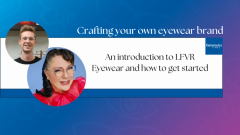








Diana Canto-Sims, OD, and Nancy Gries, a seasoned optical industry and export sales manager at Logoproject Eyewear, discuss the benefits of developing a customized private label eyewear brand. Logoproject specializes in private label eyewear collections for independent optometric practices.
Gries, with over 3 decades of experience in the optical industry and having worked across 3 countries, shares her journey from the UK to Italy, where she now leads sales and marketing for Logoproject Design. She outlines the evolution of the company — from serving large organizations to empowering independent opticians through a more accessible, international, and digital approach. Gries emphasized the transition the company made post-COVID, pivoting from traditional trade shows to investing heavily in an online platform that facilitates business-to-business relationships. Through this portal, opticians can register, validate their practice's credentials, browse collections, and build curated selections tailored to their clientele’s specific preferences in terms of color, material, and frame shape. The platform’s features allow opticians to save and share their collections with staff before finalizing orders, thus ensuring informed, collaborative decision-making.
The conversation then delves into the comparative benefits of private label frames versus established brands. Gries explains that, in a post-pandemic world where personal appearance is increasingly centered on the face, individualized and expressive eyewear is in higher demand than ubiquitous, mainstream brands. Social media trends also fuel a preference for unique, customizable styles. Private label collections allow optometrists a level of creative and business freedom not possible with big brands — there are no minimum order requirements or restrictive licensing agreements. These optometrists can set their own price points, offer special promotions, and build patient loyalty by presenting exclusive collections bearing their own branding.
Gries also discussed the profit advantages, noting that margins can range from three to as high as twenty times wholesale costs. Eliminating intermediaries and agents’ fees, opticians purchase directly from the manufacturer. Nevertheless, she cautioned about the need to consider import tariffs, fluctuations in international shipping, and the strict no-returns policy due to customization with the practice’s brand. Leftover stock, if ordered in excess, must be managed since it cannot be resold. Despite these challenges, Gries underscored the powerful combination of enhanced credibility, customer loyalty, creative independence, and financial flexibility that private label eyewear provides to modern optometry practices.
Advertisement
Related to this article
Optometrists share advice on the best practices for ensuring students are prepared for the new school year and how clinicians can leverage the influx to grow their practice.
A comparison of ETDRS charts using Latin letters, Tumbling E, and Landolt C optotypes found the alternatives are comparable to letter acuity at the population level.
In the latest episode of The Independent Advantage, Maria Sampalis, OD, gives a resounding "absolutely not" when posited with the question of whether or not eye care providers will be replaced by AI.
In the first episode of the second season of The Independent Advantage, Diana Canto-Sims, OD, chats with practice owner Maria Sampalis, OD, on why artificial intelligence has boomed in practice ownership spaces.

Catch up on the top stories in optometry during the week of September 7-September 11.

The latest in drug and technology developments and updates from August 2026.

Catch up on the top stories in optometry during the week of August 31-September 4.
SightGlass Vision reports the milestone just 1 year after reaching 1 million users.
Advertisement
Advertisement
Trending on Optometry Times - Clinical News & Expert Optometrist Insights
1
Takeaways from this week in optometry: September 14-18
2
Portable vision screener provides accurate clinical assessment for drivers, study finds
3
Study: Adolescents with migraines associated with binocular vision difficulties
4
Study findings support use of non-letter optotypes in VA testing to improve patient accessibility
5