

At every age we need adequate, uninterrupted sleep for optimal, wakeful functioning. Insufficient sleep is associated with a number of chronic diseases and conditions such as diabetes, cardiovascular disease, obesity, and depression.
At every age we need adequate, uninterrupted sleep for optimal, wakeful functioning. Insufficient sleep is associated with a number of chronic diseases and conditions such as diabetes, cardiovascular disease, obesity, and depression.
I thought I would create office policies to control my office life because the patients will follow my long list of rules just like my children listen to rules at home. Feel free to use it at your office.
Kelly K. Nichols, OD, MPH, PHD, FAAO, discusses the upcoming release of the TFOS DEWS II report and what ODs should expect with Optometry Times Chief Optometric Editor Ernie Bowling, OD, FAAO, at ARVO 2017 in Baltimore, MD.
Amy Gallant Sullivan, cofounder and executive director of TFOS, discusses what went into creating the DEWS II report with Optometry Times Chief Optometric Editor Ernie Bowling, OD, FAAO, at ARVO 2017 in Baltimore, MD.
No one individual can digest the 5,647 posters and myriad oral presentations and panel discussions, but certain themes emerged, even to the casual observer. Poster numbers are included.
One of the greatest ongoing food fights in eye care concerns the role of antioxidants and zinc in age-related macular degeneration (AMD) prevention and the movement of genetic testing from the theoretical research lab to applied science.
What is this age-defying modern technology that a young, nonmedical professional is applying to her face? It is a YAG laser combined with an intense pulse light (IPL).
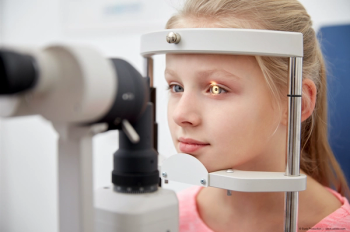
When your pediatric patient presents with irritated, itchy eyelids with reddened lid margins, diagnosing blepharitis may be the easy part of patient care. Implementing a treatment regimen for patients who are infants, toddlers, or school-age children, requires optometrists to use not only their knowledge but their clinical art of practice as well.
Social media is a great way to drive engagement from patients and word-of-mouth referrals. The same is true of the more conventional sources of media-local news, etc. The more you showcase your practice and skillset to your surrounding community, the more exposure your practice receives and the potential for new patients rises. This also helps to build you up as an expert in a specific area of eye care.
In a poll fielded to Optometry Times and Ophthalmology Times readers, we asked both ODs and MDs what they used for first-line therapy for allergy patients.
Having a family with medical issues, primarily gastrointestinal issues, combined with the difficulty that comes with timely diagnosis, has taught me quite a bit about diets. We have tried many diets in an effort to calm stomach pains as well as reduce inflammation and certainly found truth in the adage, “You are what you eat.”
The Human Tissue “box” that shows up at your hospital or surgery center and its contents go through quite a journey, which we in the eye banking world call the Cycle of Giving, to reach your destination.
Let’s examine case-based examples to emphasize the top five neuro-ophthalmic disorders that should not be overlooked.
I have been fortunate in my professional life to have not one but two mentors who have given me direction and helped expand my optical career into an amazing instrument of communication. I am now able to connect with my peers, and appreciate the opportunity to speak at various optical conferences.

Most ODs could list all the missing items in their contact lens supply line. They could construct a wish list of products they would like to see available in the future. On days when we find ourselves ransacking the contact lens trial room, ODs may think technology is moving too slowly. Perhaps it’s time for some needed perspective.
A colleague recently told me that eye doctors should “stay within the lines” of traditional eye care because we barely have enough time as it is to do our jobs. My response was that today more than half of our adult patients have either diabetes or prediabetes, so our job now requires we go ”outside the lines” to avoid the leading cause of preventable blindness.
Incorporating new technologies is a must for ODs to improve patient communication and education. Multiple platforms of communication are needed in the 21st century to communicate and educate patients of very different backgrounds.
Similar to the benefits that the primary care and pediatrics fields have enjoyed following years of rapid strep and flu testing, the uptake of rapid, single-use, point-of-care (POC) testing in optometry helps to guide clinical management and therapeutic decisions.
Almost every eyecare practice has a person, team of people, or outside service whose sole job is to manage problems related to facilitating the relationship between patients and their insurance companies.
Imagine coming into the office one day and getting word that all of your patient data, past records, tax documents, and financial statements had all been stolen-or worse yet, erased.
I don’t have periscope eyes, so I can’t peek around blind corners. Plus, my neck is stiff after years of hunching over a slit lamp. As a result, I can’t turn my head as well to get a good look around.
It’s time to dispel these preconceptions of fitting contact lenses for astigmatism and use new toric lens options as an opportunity to improve patient care.
A 26-year-old healthy ophthalmically asymptomatic female patient attended the University of Alabama School of Optometry clinic for a periodic ophthalmic evaluation. Her history was significant for myopic refractive correction, for which she wore soft contact lenses successfully.
As I reach the end of my second year out of optometry school, I find myself reflecting on how the past two years have been such a rewarding experience.
In a poll fielded on the Optometry Times website, we asked ODs, if they prescribed topical antibiotics for blepharitis, their top reason for doing so.

Just as ODs develop good habits, there are bad habits that we should avoid. Avoid the following three habits to optimize your patients’ lens wearing experience.
Practicing optometry takes place in many locales, with the majority free of barriers to practice.
While ophthalmic diagnostic lab tests-specifically those targeting ocular surface disorders-have been around for over 20 years, it is only within the past five years that they have begun to gain measurable use.
Optometrists who see Medicare patients are being graded on their performances, and this grade will affect their 2019 Medicare payments.