


Innovative technology is certainly one way to catch a patient’s attention. Most patients will appreciate ODs who are not only current but use state-of-the art technology.
Innovative technology is certainly one way to catch a patient’s attention. Most patients will appreciate ODs who are not only current but use state-of-the art technology.

How often have you heard a post-LASIK patient say his surgery “isn’t working anymore” or it has “expired?” While the corneal tissue that was ablated is gone forever, eyes can change over time, and laser vision correction does not stop time.

Best practice guidelines are just that-guidelines. They’re not religious dogma designed to herd everyone into the same line. We are rightly moving toward more evidence-based medicine, such as increased use of bandage lenses and less pressure patching in the management of corneal abrasions and erosions.

Many optometrists use the “if it aint broke, don’t fix it” excuse for not fitting multifocals. It is time for ODs to get comfortable with multifocal contact lenses and the opportunity they provide our practices as well as the ability they give us to meet modern patient demands.
Fitting toric patients is a breeze today, and we have options to allow those patients to continue to stay in their contact lenses as they become presbyopic.

Scott Schachter, OD, discusses what you should do when demodex blepharitis treatment options fail.
We ODs have an inherent advantage our patients do not-we know what’s coming.
With the Fourth of July upon us, it is important to remember these safety tips when handling fireworks. Everyone here at Optometry Times wishes our readers a safe and happy holiday!
In an attempt to bring clarity to the landscape around vision plans, I have put together this five-part blog series. In Part 1, I outlined four big topic areas where optometrists seem to have the most complaints with vison plans.
Catch up with what you missed at Optometry's Meeting in Washington, DC.
One of the most frustrating and seemingly futile battles of starting your practice from scratch is getting the medical insurance game figured out.
Optometry Times Editorial Advisory Board members Leslie E. O’Dell. OD, FAAO, and Scott Hauswirth, OD, FAAO, discuss their recent lecture on inflammation and the role it plays in ocular surface diseases at the American Optometric Association’s Optometry’s Meeting in Washington, DC.
Andrew Morgenstern, OD, FAAO, sits down to talk myopia in children and adults, how to treat it, and how to go prevent it at the American Optometric Association’s Optometry’s Meeting in Washington, DC.
Disruptive technology is here to stay, and ODs must embrace it as new technologies continue to be developed and patients are eager to get their hands on them.
ODs must take the time to ask patients about current medication use because adverse reactions are more likely in patients who previously had allergic reactions, says Blair Lonsberry, OD, MS, MEd, FAAO, at the American Optometric Association’s Optometry’s Meeting in Washington, DC.

Keeping patients informed on the latest procedures and equipment available to treat their disorders is half the battle, says Paul Karpecki, OD, FAAO, at American Optometric Association’s Optometry’s Meeting.
Dara Torres, the oldest and 12-time Olympic medalist, says your dreams shouldn’t have age limits. She addressed attendees of the American Optometric Association at Optometry's Meeting 2017, detailing her Olympic comeback after seven years away from the sport and giving birth.
Optometry missions, salsa dancing, customer service, and partying in Thailand
Learn about options for personal and practice data storage
https://www.optometrytimes.com/modern-medicine-cases/new-player-point-care-allergy-testingODs undervalue ocular point-of-care tear testing
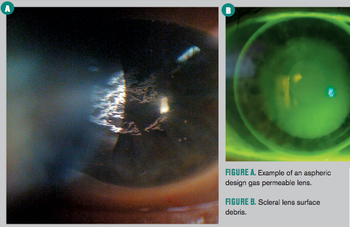
Improve your scleral fitting skills and your patients’ quality of life
Christine W. Sindt, OD, FAAO, discusses her research in the shape of corneas and constructing the proper scleral lens for each patient with Optometry Times Chief Optometric Editor Ernie Bowling, OD, MS, FAAO, at ARVO 2017 in Baltimore, MD.
Leslie E. O’Dell, OD, FAAO, discusses posters she presented about cosmetics and the ocular surface and Demodex with Optometry Times Chief Optometric Editor Ernie Bowling, OD, MS, FAAO, at ARVO 2017 in Baltimore, MD.
John G. Flanagan, OD, PhD, FAAO, talks about his research and presentations regarding eye and brain health with Optometry Times Chief Optometric Editor Ernie Bowling, OD, MS, FAAO, at ARVO 2017 in Baltimore, MD.

The British Contact Lens Association (BCLA) celebrated its 40th birthday June 9-11 at its 2017 clinical conference and exhibition in Liverpool, UK. Optometry Times was there to hear the latest and live tweet from the meeting.
Becoming an experienced multifocal contact lens fitter allows ODs to address visual needs for two patient populations: presbyopes (and emerging presbyopes) and myopic children. Knowing when to choose a soft multifocal vs. a gas permeable or specialty design will increase fitting success for the OD as well as patient satisfaction.
Know those optometric colleagues locally who have invested both time and money into the technologies and educated themselves on contemporary care algorithms.
In the past decade, several significant advancements have been made in the arena of glaucoma diagnosis. Spectral domain optical coherence tomography (SD-OCT), newer algorithms in trend analysis of visual field studies, and combined visually evoked potential (VEP) and pattern electroretinography (ERG) studies have been the hallmarks of such recent advancements.
Perhaps underlying surface fears is a basic fear of change. We humans are creatures of habit, and habits are hard to break. It takes nerves of steel to open a practice cold in today’s environment, yet several of my former students have done precisely that and are doing extremely well. So, it can be done, but I am quite sure they had their moments of fear.