

David Kading, OD, FAAO, FCLSA, discusses new products, studies, and patient education available to help combat dry eye disease.
David Kading, OD, FAAO, FCLSA, discusses new products, studies, and patient education available to help combat dry eye disease.
Optometric practice in the nursing home setting is not always very glamorous; however, there are many reasons optometrists might want to consider adding this specialty to their practice arsenal due to tremendous need.
Given this abundance of nonhuman species living on and within our bodies, it is not surprising that there is a link between specific bacteria to systemic and ocular disease-including diabetes and diabetes-related eye disease.
Avoiding sunlight entirely appears to be a misdirection. Melanoma is inversely related to latitude and inadequate acclimation (i.e., increased melanization and epidermal thickening), which carries the risk of both melanoma and non-melanoma skin cancer-common in northern latitudes.

Photorefractive keratectomy (PRK) was the original excimer laser procedure approved by the FDA-and is still a safe and effective treatment of refractive errors. PRK has the benefits of no-flap creation; therefore, there is no risk of flap complications.
Scott Schachter, OD, discusses how the Dry Eye WorkShop (DEWS I) and upcoming DEWS II announcement at ARVO in May can help ODs form an effective dry eye protocol at their practices.
When I was a resident at the SUNY College of Optometry, I was asked a to conduct a few patient question and answer sessions regarding glaucoma. The sessions consisted of me sitting with a small group of patients, family members, or whoever wanted to know more about glaucoma.
Professional courtesy, waiving all or part of professional fees, now has become a field day for lawyers and third-party carriers-and an unwary trap for the well-intentioned doctor.
So, in optometry, with online refractions, online sales of eyeglasses and contact lenses, and in the face of reduced insurance reimbursements, is true practice autonomy attainable?
If patients notice a decrease in night vision or have frequent headaches, increased eye fatigue, blurred/distorted vision, the diagnosis could be astigmatism.
The patient noticed the symptoms while suffering from fever secondary to hand, foot, and mouth disease.
I’m also noticing changes at optometric meetings I attend. First, I see lots of young, fresh faces. While I was never the youngest OD in a crowd, now it seems I’m among the oldest. The second thing I’ve noticed is the ever-growing number of female ODs.
Check out the latest industry trends and new products announced at Vision Expo East 2017.
Consumers have a voice greater than ever before with social media and the ability to like, comment, and react quicker than ever, says Kevin Wilhelm and Trudi Charest from Marketing4ECPs at Vision Expo East.
Human nature means people are engaged with visuals. We can process and understand images very quickly. This is why social media such as Instagram and Pinterest are good ways to grow your practice, say Kevin Wilhelm and Trudi Charest Marketing4ECPs at Vision Expo East.
Myopia control and prevention has become a popular topic due to more data on myopia becoming available.
What once was considered old is now new again as old styles are trending up in eyewear, says Joy Gibb, spokesperson for The Vision Council at Vision Expo East.
At its fourth annual gathering at Vision Expo East, the Global Contact Lens Forum addressed developing technologies with research and development (R&D) scientists, evidence-based eye care, and contact lens practice settings.
ODs must have the right tools in their toolboxes when treating glaucoma correctly, says Optometry Times board member Michael Chaglasian, OD, FAAO, at Vision Expo East in New York.
Meibomian gland dysfunction (MGD) may be misdiagnosed. While MGD is one of the most common chronic ocular conditions, diagnosing MGD isn’t as simple as it seems.
For the patient, perhaps the most significant symptom of DED is fluctuating or reduced vision.
Vision care plans (VCP) can be difficult to figure out because each provider tends to have its own set of rules. In an attempt to bring clarity to the VCP landscape, I have put together a five-part series of blogs.
Mom has pseudoexfoliation syndrome (PXF) clinically visible in both eyes. She experiences pops of elevated intraocular pressure (IOP) in one eye and uses glaucoma medications.

Optometrists are able to address the visual needs of stroke survivors, an underserved population.
Not all situations can be handled within one office, so sometimes it is necessary to refer patients elsewhere. Despite the logic behind them, referrals often come bundled with liabilities that can give any OD a headache.
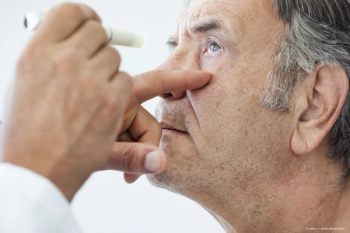
As primary-care optometrists, we are the gatekeepers for baby boomers inquiring about cataract surgery. Today’s patients have treatment options available not only to address their lifestyle complaints but to provide them with better vision and possibly reduced dependence on glasses or contact lenses.
The American Health Care Act (AHCA)-or Trumpcare-will provide fewer people with healthcare coverage than the Affordable Care Act (ACA) or Obamacare, cost more, and significantly reduce Medicaid funding, says the Congressional Budget Office (CBO) and other experts.