

Build a rapport with patients and understand they are placing trust in staffers when choosing new glasses. Tami Hagemeyer, ABOC, FNAO, offers suggestions to maximize patients' satisfaction with the process.
Build a rapport with patients and understand they are placing trust in staffers when choosing new glasses. Tami Hagemeyer, ABOC, FNAO, offers suggestions to maximize patients' satisfaction with the process.
Cleaning and laundry chemicals are commonly found around our patients' homes and not always locked away from children's access. Rich Mangan, OD, talks about how to treat and help prevent ocular chemical burns in younger patients.
Lyme disease is an infectious disease caused by Borrelia bacteria which is spread by ticks. Editorial Advisory Board member Michael Cooper, OD, explains Lyme disease and the ocular conditions associated with it.
The opioid crisis in the U.S. continues to explode as some patients are turning to street drugs once their prescriptions run out. Thuy-Lan Nguyen, OD, discusses how ODs can be part of the solution when patients show signs of prescription or non-prescription drug abuse.
Every so many years we see a shift in our workforce. Carole Burns, OD, explains how ODs can better manage the younger, millennial generation in their offices.
Sports concussions continue to make the news as long-term effects continue to emerge. Katherine K. Weise, OD, MBA, FAAO, explains how concussions and optometry are related and how ODs can help assist patients who suffer side effects of sports concussions.
Prescribing narcotics and opioids has come under scrutiny of late as the opioid epidemic continues to grow. Optometry Times Chief Optometric Editor Benjamin P. Casella, OD, FAAO, gives his three key points to consider before handing over that prescription to your patient.
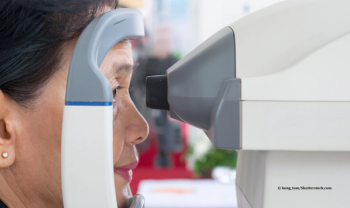
Monitoring and measuring a glaucoma patient's intraocular pressure can be challenging with patients' busy schedules. Optometry Times Chief Optometric Editor Benjamin P. Casella, OD, FAAO, gives his reasons why home tonometry can help drive a treatment partnership between doctor and patient.

ODs may wish to incorporate color vision testing when working with patients having diabetes. A. Paul Chous, MA, OD, FAAO, CDE, talks about the importance of these tests, incorporating them into day-to-day exams, and devices available.
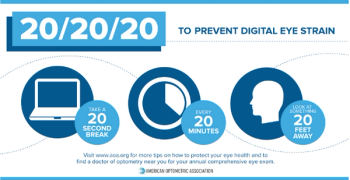
Many ODs recommend the 20-20-20 Rule to patients to help alleviate eye strain from digital device usage. But few know its origins. Brian Chou, OD, FAAO, FSLS, digs deep to discover who coined the tagline and why.
In both child and elder abuse, timely intervention can save a life. All members of the eyecare community must be aware of the signs and symptoms of abuse and their responsibilities in reporting to appropriate authorities.

Preparing a patient for ocular surgery can pose challenges with cosmetics being widely used. Marc Bloomenstein, OD, with the advice of Optometry Times Editorial Advisory Board member Whitney Hauser, OD, discusses the importance of properly preparing cosmetic users for eye surgery.
Keeping patients compliant and happy in their contact lenses can be challenging. Crystal M. Brimer, OD, FAAO, gives five practice pearls to drive contact lens success.
The key to optical success lies with the OD's involvement, according to Nazanin Galehdari, OD. She offers 5 steps to improve optical profitability.
ODs don't seem to care as much about the science behind spectacle lenses as that of medications and contact lenses. But they should, says Essilor's Howard Purcell, OD, FAAO, and here's why.
Benjamin P. Casella, OD, FAAO, and chief optometric editor of Optometry Times, discusses three things on narcotic prescribing and drug diversion.
Bryan Wolynski, OD, FAAO, and owner of Glasses on First in New York City, talks about falling into low vision, working with family, and driving blind in the latest Optometry Times Q&A.
Sudden eye dilation can cause a patient to panic and send him straight to your practice. In the first edition of Casella’s Corner, Optometry Times Chief Optometric Editor Ben P. Casella, OD, FAAO, discusses a particular patient case that began with a surprising beginning.
We checked in with our Editorial Advisory Board to see how they will be celebrating Valentine's Day both in the office and at home.
Finding your purpose or calling within your profession can lead to a more fulfilling career. Leslie E. O'Dell, OD, FAAO, shares how one OD used her "why" to create a new CE event.
As the winter season has reached its midway point, we at Optometry Times felt like a little humor could help us plow through the cold, dreary winter days.

The result of the 1804 duel between Alexander Hamilton and Aaron Burr may have come down to one thing-Hamilton's glasses. Michael Brown, OD, MHS-CL, FAAO, examines the role of Hamilton's glasses and what this infamous duel teaches optometry.

Refractive surgery is no stranger to evolving technology and research. Jim Owen, OD, MBA, FAAO, explains how recent research has changed the way he positions laser vision correction with his patients.

The significant healthcare dilemmas of substance use pose challenges to our society. Michael W. Ohlson, OD, FAAO, discusses an optometrist's role in substance abuse treatment.

The treatment of age-related macular degeneration (AMD) with supplements shouldn't be left to chance. Stuart Richer, OD, PhD, FAAO, discusses why gambling with AMD supplementation may be risky.
Comprehensive ocular examinations can provide an OD with an inside look into a patient's health. Mile Brujic, OD, and David Kading, OD, discuss the importance of using upper eyelid eversion during the exam to unleash significant information about a patient's ocular surface and systemic health.
Michael Cooper, OD, takes a look at how the Japanese treat allergic conjunctivitis to gain a different perspective on treatments. What he finds is that we aren't so different after all.
Cheryl Donnelly, CEO of the British Contact Lens Association, talks about learning from U.S. ODs, focusing on contact lenses, and shivering in Red Square in the latest Optometry Times Q&A.
Artificial intelligence (AI) is evolving around us. Thomas A. Wong, OD, looks at how AI has impacted our world and how it is set to impact patient treatment in optometry.