
News
All series
All News
Advertisement

Optometry Times Chief Optometric Editor Benjamin P. Casella, OD, FAAO, discusses how exercises including yoga impact patients who have glaucoma.

Taking these 10 steps will help lead your patients to receiving a phenomenal experience and take your technician career to the next level.

Instead of waiting to let the future happen to him, Walt Whitley, OD, FAAO, has focused on innovating and creating opportunities in his optometric career. He has made a name for himself in ocular surface disease and the opportunities for relationship-building between optometry and ophthalmology.

Many common and uncommon diagnoses mimic each other. Third-year student Shelby May offers her advice to help students diagnose patients correctly the first time.
Determining article credibility can be difficult. One OD gives her four tips to determine if a study follow-up article is fact or fiction.

There is a daily battle between online contact lens companies and the eyecare professionals who put their time and effort into providing patients with contact lenses. Ms. Hagemeyer explains the disconnect between ODs and online contact lens sales.
In the near future, eyecare providers will have devices that, given an image of a patient’s retina, can tell us the exact diagnosis at the touch of a button. AI will play an increasingly significant role in the way healthcare providers care for their patients in the clinic. There is real and imminent potential for earlier, more accurate, and more uniform diagnosis.
Every member of the office staff plays an integral part in setting the tone of competence, caring, and efficiency.
Advertisement

One OD explains why joining a registry could help ODs grasp new technologies and continue to evolve within the profession.
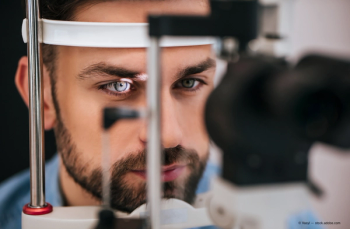
Undiagnosed ocular trauma could lead to more complicated ocular problems for patients if left untreated. Leo P. Semes, OD, FAAO, looks at one case in which optical coherence tomography angiography (OCT-A) helped diagnose and treat a patient successfully.
More than 9 percent of U.S. adults have diabetes, and those patients are sitting in your chair. Find out how diabetes affects your patients’ vision.

The effect alcohol consumption has on glaucoma has been discussed for years. Optometry Times Chief Optometric Editor Benjamin P. Casella, OD, FAAO, talks about the correlation between alcohol consumption and its impact on intraocular pressure (IOP) and glaucoma.
At the Rosenberg School of Optometry at the University of the Incarnate Word, fourth-years get hands-on experience in care for patients pre- and post-surgery, preparing them for real-world comanaging relationships.

Online sales aren’t going away. ODs and their staffs are able to match price and convenience, but they excel at outstanding customer service. One OD outlines how she adopted an innovative service process in her practices to improve relationships with patients.
There are certain habits that separate successful practices from unsuccessful practices. One OD explains why setting goals, writing them down, and sticking to them can make your practice more successful.

Every patient responds differently to contact lens best practices. Here are five methods to help get patients to comply with their contact lens prescription.
An optometric practice is worth what someone is willing to pay. ODs must plan an exit strategy well before it’s time to move on. A practice management expert offers advice.
No one else is going to explain what ODs do or how we are important to our communities. It’s our job, and no one else will do it for us.
Shalu Pal, OD, FAAO, discusses practicing in Canada, contact lenses, and riding motorcycles in the latest Optometry Times Q&A.
One OD determined that she wanted to learn to manage tough cases more efficiently, be challenged by seasoned clinicians, and improve her problem-solving skills. She got that and more with her residency.

Richard Carvajal, MD, associate professor at Columbia University Medical Center, discusses one drug potential to treat ocular melanoma at ARVO 2018 in Honolulu.

Penny Asbell, MD, professor of ophthalmology at Mount Sinai in New York, NY, discusses the Dry Eye Assessment and Management Study (DREAM) study and why omega-3s may be no better than a placebo in helping dry eye at ARVO 2018 in Honolulu.

Eric Kuklinski, clinical research coordinator at Mount Sinai in New York, NY, discusses the methodology behind the Dry Eye Assessment and Management Study (DREAM) study and its findings at ARVO 2018 in Honolulu.
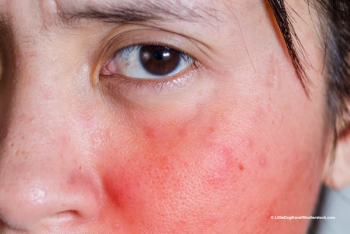
In the final part of her three-part series on cosmetic dangers, Tracy Schroeder-Swartz, OD, MS, FAAO, explains the importance of keeping patients informed of cosmetic dangers and how to properly report cosmetic problems.

Lower eyelid lid laxity impacts a variety of eye disorders. Tracy Doll, OD, of Pacific University College of Optometry, explains how patients with loose lower eyelids may present with signs of dry eye disease and how to treat those patients to make them more comfortable at ARVO 2018 in Honolulu.

Refractive surgery options continue to evolve. Jake Weber, student at Southern College of Optometry, compares newer refractive surgery devices to traditional refractive surgery weighing the pros and cons at ARVO 2018 in Honolulu.

Al Kabat, OD, FAAO, professor at Southern College of Optometry, discusses his research of the available lid cleansers on the market and how they perform at eradicating demodex in vitro at ARVO 2018 in Honolulu.
Advertisement
Advertisement
Trending on Optometry Times - Clinical News & Expert Optometrist Insights
1
Tenpoint Therapeutics submits NDS for Yuvezzi presbyopia drop to Health Canada
2
High Point University optometry school earns ACOE preliminary approval
3
Polygenic risk flags patients likely to need more glaucoma treatment
4
First patient dosed in EMERALD trial of EO2002 for corneal edema
5