

Patients with diabetes may need to add a dry eye workup to their health assessments. Scott Schwartz, OD, from Detroit, MI, discusses his poster, “Does diabetes make a difference in dry eye,” at ARVO 2018 in Honolulu.
Patients with diabetes may need to add a dry eye workup to their health assessments. Scott Schwartz, OD, from Detroit, MI, discusses his poster, “Does diabetes make a difference in dry eye,” at ARVO 2018 in Honolulu.

Some ODs find diagnosing demodex to be a challenge. Nick Pondelis of Tufts Medical Center explains how imaging may be helpful in successfully diagnosing and treating demodex at ARVO 2018 in Honolulu.

Dry eye plagues many patients who come into optometry practices, but some ODs struggle to provide the proper treatment. Scott Schachter, OD, gives his recommendations to help ODs begin to provide dry eye services at their practice.

A new study shows that omega-3 supplements offer the same benefits as the study's placebo, olive oil. Researchers and other experts discuss trial results and what's next for ODs treating dry eye.

Corneal ectasia is one of the worst outcomes of laser eye surgery (LASIK). One OD takes a look at the importance of operating on good candidates and the newest technologies to do so succesfully.
Study groups can help their members via group discussion and sharing. If you’re looking to form or join a study group, find out what leads to success.
Many technologies have hit the scene to help improve the way doctor and patients interact. One OD gives the four technologies that have helped take her doctor/patient interactions to the next level.

Corneal filaments frequently recur after removal, and resolution occurs only by treating the patient’s underlying inflammation. This case illustrates the need to move to atypical therapies, such as N-acetylcysteine.
Jeffrey J. Walline, OD, PhD, discusses working with kids, myopia, and In-N-Out Burger.
A new study shows that smart glasses reduce symptoms of attention deficit/hyperactivity disorder (ADHD) in individuals with autistic spectrum disorder (ASD). Two ODs weigh in on the study and why it shows promise for future treatment options.
Chief Optometric Editor Ben Casella refuses to turn patients away if they cannot pay. He reminds himself-and all ODs-that the burden of care can be shared instead of carried alone.


Factors such as age, family history, and race are not modifiable. One OD examines how a change in dietary habits may be beneficial in treating those suffering from glaucoma.
The evolution of e-reading had some once proclaiming books are dead. One OD tells how old and new technologies can flourish side-by-side like books and e-reading and how one book and author has influenced his life.
Genetic testing is becoming more successful and is expanding in scope. Understand how the process works and how to guide your patients through it. Find out what is involved and how to manage genetic testing…plus access a list of resources for you and your patient.

Patients present with contact lens discomfort for a variety of reasons. Mile Brujic, OD, FAAO, and David Kading, OD, FAAO, FCLSA, explain why proper lid hygiene may be the key to increasing contact lens comfort.

Even though the loss of revenue or fear of the loss of revenue is the reason ODs wish at times to join online glasses sales, consider five reasons why online glasses sales may not be in the best interest of the OD.
The general public as well as some ODs have forgotten the extend of our core training. We have to educate our patients more thoroughly about why we do what we do and why it matters that they have an annual eye exam.
With patients undergoing cataract or refractive surgery, optometrists ensure a stable ocular surface before the surgeon performs preoperative calculations.
Many patients present with dry eye, and some ODs aren’t sure how to jump into the game. Scott Schachter, OD, offers his tips on expanding or incorporating dry eye services into your practice.
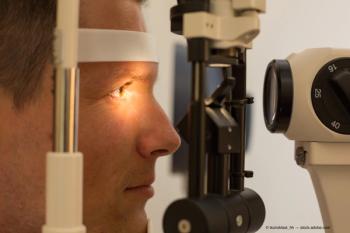
Scratches by young felines can lead to ocular complications. Find out how a patient’s floater led to a referral and diagnosis of cat-scratch neuroretinitis.
Chief Optometric Editor Ben Casella wants your feedback! Read his latest editorial about interacting with people like you at industry meetings.
Marketing your practice can seem overwhelming, but with a plan in place you will find that it is much more effective and may even save you money in the long run. Learn how to put a marketing plan together and the benefits of having a marketing plan in place at your practice.
Demodex has been associated with inflammation of the lid margin and eyelash loss in patients. Take a closer look at mites and microorganisms to consider if, in moderation, they may be beneficial.
Viola Kanevsky, OD: Owner of Acuity, NYC, discusses her uptown NYC practice, pediatrics, and the Guatemala civil war.
In Part 2 of her three-part series on cosmetic dangers, Tracy Schroeder-Swartz, OD, MS, FAAO, focuses on the dangers found in cosmetics-particularly cosmetics banned by the FDA and those that may exacerbate ocular surface disease.

It is not realistic for patients to be prepared to respond when they are given news of a disease or disorder. Many times, patients are caught off guard at the mention of disease and assume a blank stare. What questions are they supposed to ask? Will Smith, OD, anticipates these questions and provides staff with information to keep patients informed.
Third-year student Shelby May gives her three tips to improve doctor-driven dispensing skills as a student. She explains how ODs can differentiate themselves from their online competitors.
U.S. gold medal gymnast Laurie Hernandez speaks exclusively with Optometry Times and discusses how daily disposable contact lenses helped to improve her vision when competing.