





Diabetic Eye Disease
Latest News
Advertisement
Latest Videos




CME Content













Advertisement
More News

As part of the American Diabetes Association's Health Equity Now program, the organization has partnered with Genentech, piloting a partnership within Alabama to specifically focusing on tackling barriers related to diabetic eye disease.

According to the company, the study has now reached its goal of 300 patients enrolled to evaluate ILUVIEN as a first line, baseline therapy for DME.

The DR:EAM study in investigating novel eye drop OTT-166 for the treatment of diabetic retinopathy in hopes of reducing treatment burden for patients.

A look back on what happened in optometry during the week of March 20-March 24.
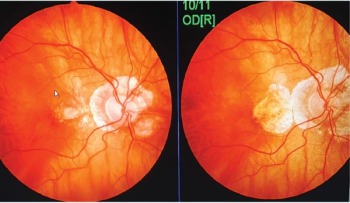
These disorders account for most of the vision loss in working-age and elderly Americans.

Paul Chous, MA, OD, FAAO, gives key takeaways from his 2023 SECO presentation on diabetes: then and now.

The Biologics License Application for aflibercept 8 mg was supported by positive data from the PULSAR study, investigating wet AMD, and the PHOTON study, investigating DME.

These results emphasize the importance of evaluating the midperipheral and peripheral retina in diabetes in addition to the posterior pole and performing ultra-widefield fluorescein angiography for not only accurate diabetic retinopathy staging, but also for likelihood of significant progression based on disease severity and predominantly peripheral lesions.

As Baby Boomers enter the at-risk age group for vision loss, optometrists must be ready to act.
Case history can give clues to a patient’s risk of developing diabetic eye disease.

Teplizumab may work by binding to certain immune system cells that attack insulin-producing cells and increase the proportion of cells that help moderate the immune response, thus delaying progression to stage 3 type 1 diabetes.

Sherrol A. Reynolds, OD, FAAO, shares highlights from her discussion, "The OD's role in addressing silent killers: diabetes, hypertension, and dyslipidemia," which she presented during this year's American Academy of Optometry annual meeting.
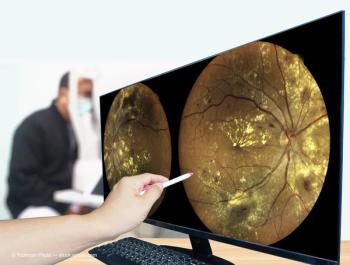
New DME treatments aim to extend time between intravitreal injections.

A recent clinical trial from the DRCR Retina Network examined a stepped regimen of anti-VEGF drugs bevacizumab and aflibercept.

Proper screenings, treatment, management needed for this increasingly prevalent disease.
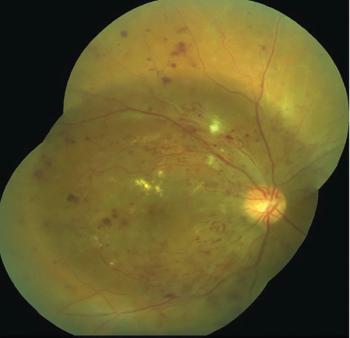
The patient’s ocular history was significant for severe nonproliferative diabetic retinopathy (NPDR) in the right eye (OD) and mild NPDR in the left eye (OS), which had been diagnosed 4 years previously at his last eye exam.
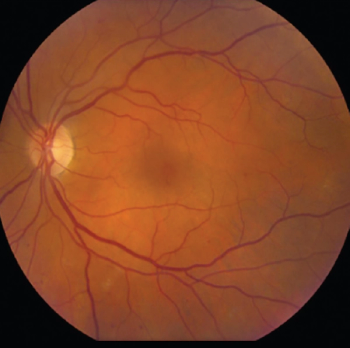
The ADA now recommends an individualized approach at diagnosis of diabetes as well as for adults who do not have symptoms to be screened at age 35 years.

Addressing common misconceptions can help avoid misconstrued scientific facts

Timing is key in reducing the risk of developing vision loss or blindness.

ASCENT, RegenXBio’s Phase III clinical trial conducted in partnership with AbbVie, is expected to enroll patients in the United States and Canada, with pivotal trials expected to support BLA submission for RGX-314 in 2024.

Dr. Kerry Gelb speaks with Dr. Jay M. Hainie in the second part of their discussion on diabetes of the eye!


Exciting news from OYE Technology!
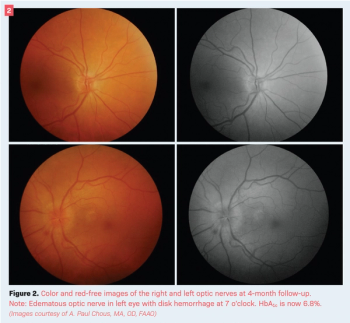
Diabetic papillitis is relatively rare, found in type 1 and 2 diabetes patients

Advertisement
Advertisement
Trending on Optometry Times - Clinical News & Expert Optometrist Insights
1
Takeaways from this week in optometry: October 16-23
2
Study: OCTA analysis tools report different macular vessel density values for glaucoma
3
Brepocitinib for noninfectious uveitis meets all phase 3 trial end points
4
BIM-IOL System holds 37% IOP reduction at 4 years in first-in-human trial
5