



















According to the company, AGTC-501 was generally safe and well-tolerated and showed improvements in visual function at the 12-month analysis. The Phase 2/3 VISTA trial for AGTC-501 in XLRP expected to begin in in the first half of 2024.
According to the company, AGTC-501 was generally safe and well-tolerated and showed improvements in visual function at the 12-month analysis. The Phase 2/3 VISTA trial for AGTC-501 in XLRP expected to begin in in the first half of 2024.

The study further defined the relationship between delayed rod-mediated dark adaptation and the status of outer retinal bands on optical coherence tomography.

A task force of eye care providers is asking for feedback on newly-developed guidelines for managing diabetic retinopathy in their patients.

Retinal imaging and genetics data was used to predict future disease risk in a recent study.

A new case-control study found that older people ages 70 and older living in South Korea’s urban areas were at a significantly higher risk for developing incident exudative age-related macular degeneration.

The 2024 EnVision Summit will feature a brand-new Optometry Program, co-chaired by Danica Marrelli, OD, FAAO, AAO Dipl, and Cecelia Koetting, OD, FAAO, DipABO.

A look back at some of the biggest stories in ophthalmology in 2023.

Catch up on what happened in optometry during the week of December 18-December 22.

The kidney and eye are structurally and functionally similar, and the diseases of the organs may present similarly and via common pathways.
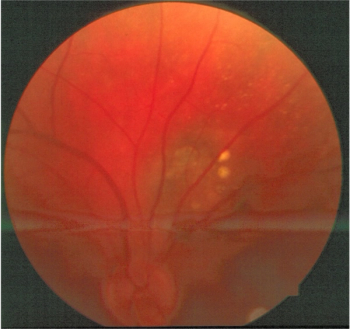
Although the differential diagnosis of pigmented fundus lesions is limited, the distinctions among these lesions are not always clear.

OCU410 is a modifier gene therapy product candidate being developed by Ocugen for dry AMD.

Etiology is crucial to substantive treatment.

Rapid macular thinning often precedes traditional symptoms.

A study surveying retina specialists found surprising results in therapy preference.

Prevent Blindness is providing free geographic atrophy educational resources for patients, care partners and healthcare professionals, including a new episode of its Focus on Eye Health Expert series.

Between 2010 and 2019, this study retrospectively examined and identified all patients diagnosed with syphilitic uveitis who were admitted to inpatient facilities in the United States.
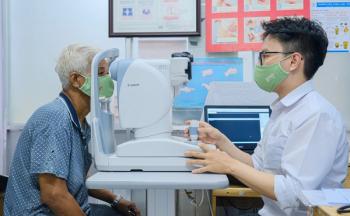
Community-based eye care is one of Orbis’s top priorities in the country.

A multicenter study in Japan examined patients to understand geographic atrophy characteristics and progression rate.

Is telemedicine through retinal images a solution to earlier intervention and increased access to care? Fortunately—and unfortunately—yes.

Counsel your at-risk patients on strategies to minimize severe hypoglycemia.

These continued studies also demonstrate a well-tolerated safety profile in a broad population of more than 1,200 patients.

According to Genentech, RVO is the third indication for Vabysmo, in addition to wet, or neovascular, age-related macular degeneration and diabetic macular edema. The approval is based on two Phase III studies demonstrating early and sustained vision improvements that were non-inferior to aflibercept.

In July 2023, Harrow received certain US and Canadian commercial rights for 6 branded products from Santen.

The good, the bad, and the questionable.
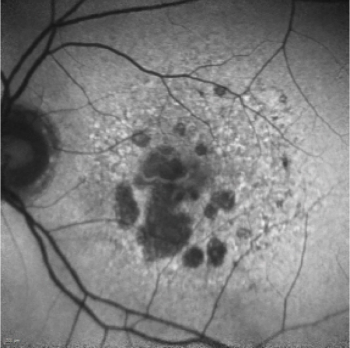
The first approved GA treatment leaves room for additional therapies.