




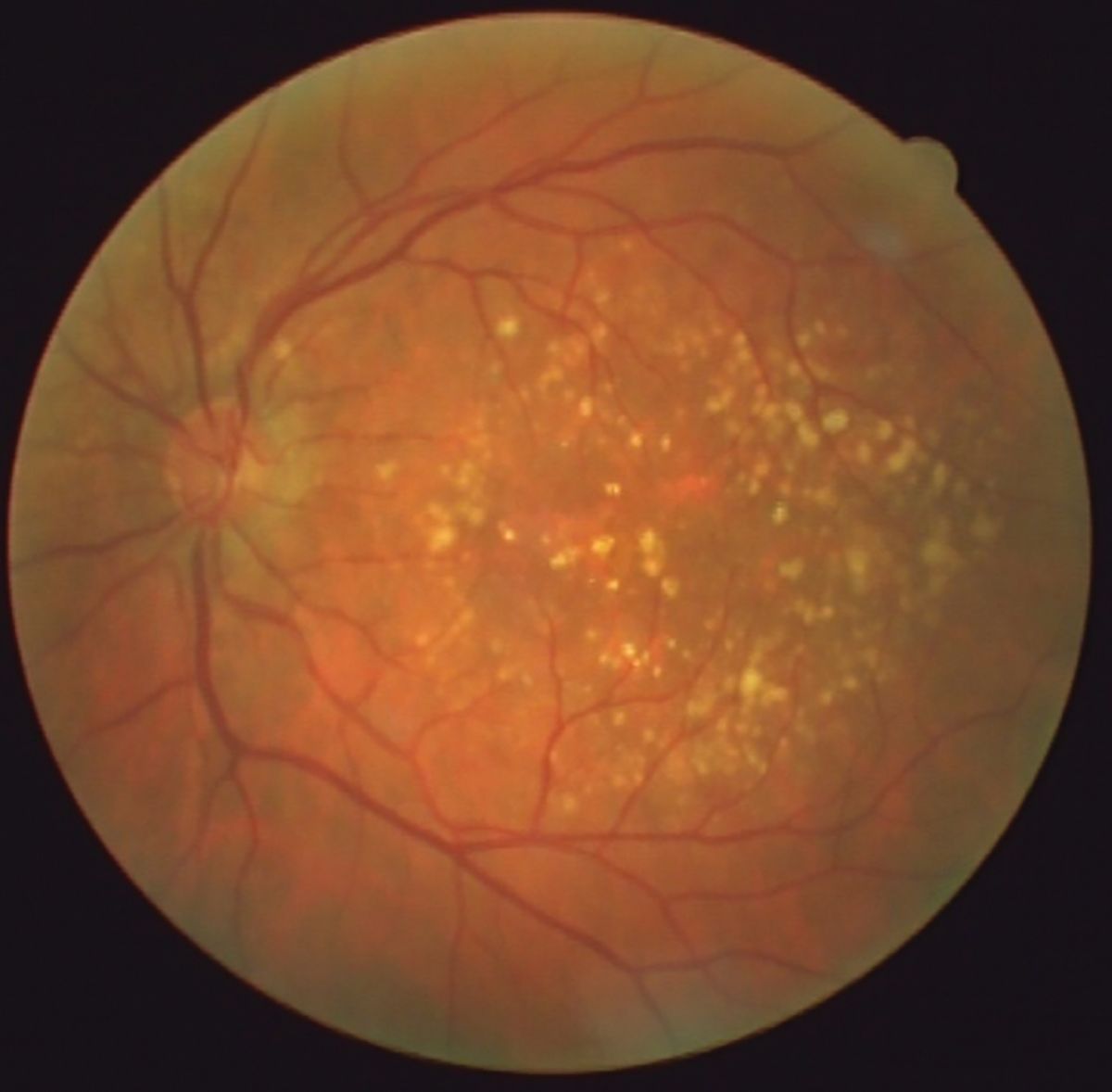














T1D is one of the most common chronic diseases affecting pediatric populations.
T1D is one of the most common chronic diseases affecting pediatric populations.

Clinicians may have difficulty in making a diagnosis.
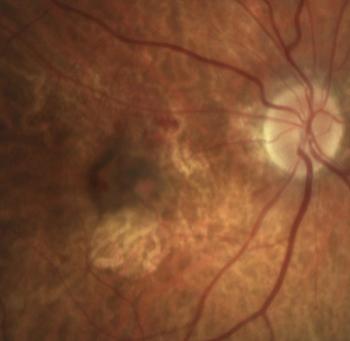
You may be wondering: What is all this hype about geographic atrophy (GA)? If you are, let us look at the enigma.

According to Regeneron, the approval was based on data in the PULSAR and PHOTON trials, in which the drug demonstrated clinically equivalent vision gains to aflibercept Injection 2 mg that were maintained with fewer injections.
Paul Hahn, MD, PhD, shared insights on research comparing the relative efficacy of pegcetacoplan versus avacincaptad pegol in patients with geographic atrophy presented at the 2023 ASRS annual meeting.

According to the company, the therapeutic is the only approved GA treatment with a statistically significant reduction in the rate of GA progression at the 12-month primary endpoint across two phase 3 clinical trials.

Data from the 30 month GALE extension study indicated that continuous treatment with pegcetacoplan injection showed increasing beneficial effects over that timeframe in patients with geographic atrophy (GA).

Unpacking the connection between type 2 diabetes and Alzheimer disease.

Opthea’s lead biologic drug candidate OPT-302, which is under investigation for the treatment of wet AMD, received nonproprietary drug name sozinibercept, which is a critical step in the FDA approval process.

The company has completed evaluation on candidates and selected a single drug candidate to move forward into clinical trials.

A single, consistent modality leads to better geographic atrophy tracking.
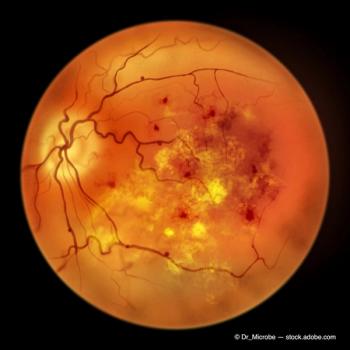
Investigators set out to evaluate how well an AI system works when integrated into a handheld smartphone-based retinal camera to screen patients for DR using 1 retinal image in each eye.
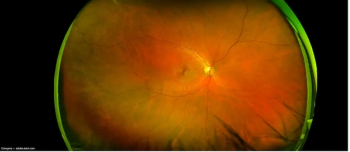
Clinical benefit of complement inhibition has been demonstrated in clinical trials, but there are possible consequences to consider.

Researchers investigated the relationship between visual functioning measured using the National Eye Institute 25-Item Visual Function Questionnaire (VFQ-25) and mortality in patients with various stages of AMD.

These 3 types of fixational eye movements play a vital role in our visual perception, cognitive function, and are instrumental for our ability to see the world around us.

The company announced the Complete Letter Response from the FDA for the Biologics License Application for aflibercept 8 mg is “solely due to an ongoing review of inspection findings at a third-party filler."
Janis Winters, OD, FAAO, shares insights from her case study that she copresented during the 2023 AOA Optometry's Meeting in Washington, DC.
Mohammad Rafieetary, OD, FAAO, shares brief highlights from his 2023 AOA presentation, "AMD updates: Staying current with its landscape," which he co-presented with Jay Haynie, OD, FAAO.
Mohammad Rafieetary, OD, FAAO, shares brief highlights from his 2023 AOA presentation, "Do you practice Eyechiatry? The psychology of vision loss," which he co-presented with Roya Attar, OD, MBA.

Roya Attar, OD, discussed, "White dot syndrome: More common than you think," which she will be presenting at AOA 2023 in Washington, DC.

Over the past decade the progress in retinal disease treatments has exploded with increased numbers of approved pharmaceutical compounds, resulting in more options for treating retinal disease with intravitreal agents and more are in the pipeline.
Jessica Haynes, OD, shares highlights from her 2023 AOA Optometry's Meeting presentation, "Application of angiography."

The organization aims to educate viewers of dangers and safety precautions ahead of the eclipses.
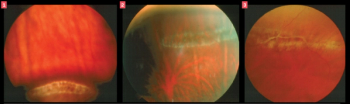
Lattice retinal degeneration is the most significant peripheral retinal change associated with retinal detachment. Generally, it is a stable condition without symptoms unless the complication of a retinal tear develops, which can lead to retinal detachment. There are a number of presentations among patients, who can be of a young age and have almost any refractive correction.

Today, Alimera Sciences announced that they have acquired the US commercial rights of Yutiq (fluocinolone acetonide intravitreal insert) 0.18mg for the treatment of chronic non-infectious uveitis. Yutiq now joins Iluvien (fluocinolone acetonide intravitreal insert) 0.19 mg for DME in Alimera’s retina portfolio.